


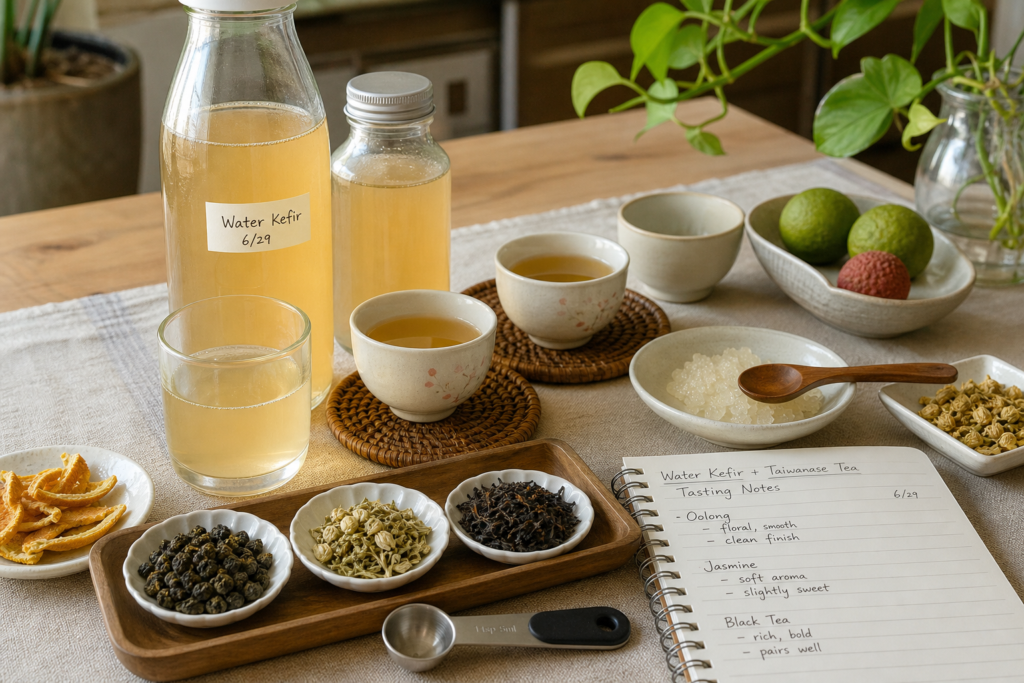
Tea-Infused Water Kefir with Taiwanese Oolong, Jasmine, and Black Tea
If you like the idea of something less sugary than hand-shaken tea or soda, but more layered than plain water kefir, Taiwanese tea is one of the most useful second-fermentation tools you can use. The trick is not to treat tea as a random flavoring. Tea brings aroma, tannin, roast, body, bitterness, and sometimes caffeine; finished water kefir brings sweet-tart acidity and light effervescence. When they are blended well, the result is a grown-up, chilled drink that feels familiar to Taiwan tea culture without tasting like a dessert beverage.
This guide focuses on tea infused water kefir made after the primary ferment is finished and the grains have been strained out. You will brew the tea separately, cool it completely, then add it to finished water kefir for a short second fermentation. We will cover how much tea to add, how long to bottle in Taiwan’s warm rooms, how to avoid bitterness, and which tea families—oolong, jasmine, and black tea—make the most sense for different flavor styles.
Seasonal Tea-Shop Inspired Pairings Without Making It Too Sweet
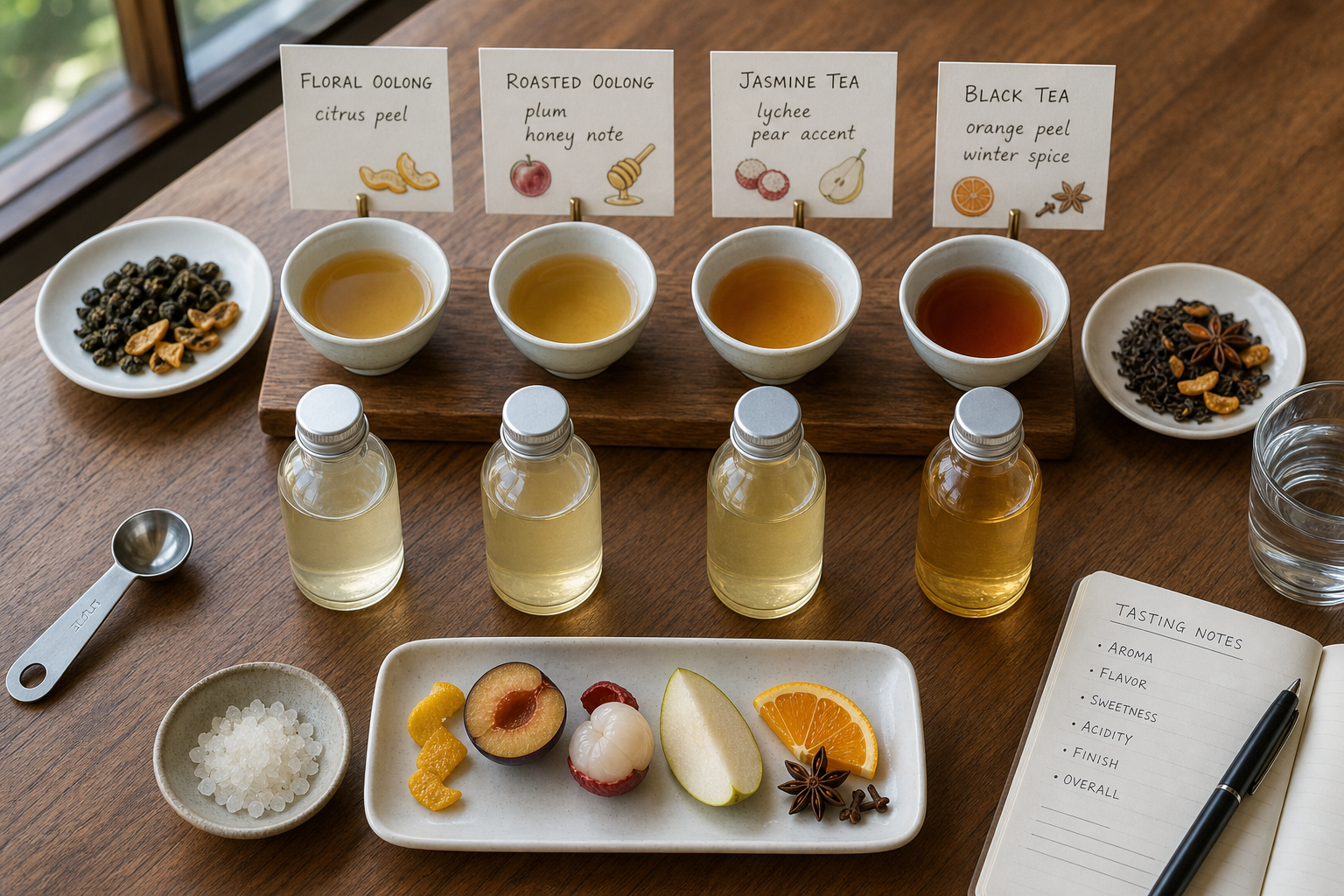
You can borrow from Taiwan tea-shop flavor memory—citrus, floral, honey, roasted notes, winter spice—without copying the sugar level of a hand-shaken drink. Keep fruit as an accent: peel, a splash of juice, or 1–2 tablespoons chopped fruit per 300 ml when needed. If you want a fuller fruit-season framework, see Seasonal Water Kefir Pairings: Utilizing Local Taiwan Fruits.
- Jasmine tea + lychee accent: Use about 10% jasmine tea and a small lychee piece or splash of lychee juice. Jasmine gives perfume; lychee extends the floral fruit note. Watch sweetness and pressure.
- Light oolong + lemon peel: Use 10–15% concentrated oolong. Lemon peel lifts the aroma without adding much sugar. Avoid too much white pith, which can add bitterness.
- Roasted oolong + plum note: Use 15–20% roasted oolong with a tiny plum accent. The tea gives roast and depth; plum adds a sweet-sour memory. Monitor because fruit sugars can carbonate quickly.
- Black tea + orange peel: Use 15–20% black tea. Orange peel brightens the malt and tannin. If the drink feels thin, add only a small splash of juice.
- Black tea + apple: Use 15% black tea with a tablespoon of chopped apple or a teaspoon of apple juice per 300 ml. Apple rounds the tannin but can increase pressure.
- Oolong + pomelo peel: Use a floral or medium oolong at 10–15%. Pomelo peel gives a Taiwan seasonal citrus cue without turning the bottle into a fruit drink.
- Jasmine + pear: Use 10% jasmine tea with a pear-like accent. Keep it delicate; too much fruit can make the jasmine disappear.
A Small-Batch Testing Method Before You Scale Up
Test in 250–330 ml bottles before making a liter or more. This keeps pressure lower, reduces waste, and helps you learn how your specific water kefir, tea, and room temperature behave. Your notes do not need to be laboratory-like. A simple template is enough:
- Tea type and brew strength
- Finished water kefir volume
- Cooled tea volume
- Added sugar, juice, peel, or fruit accent
- Room temperature
- Hours bottled
- Final taste: aroma, sweetness, acidity, tannin, pressure
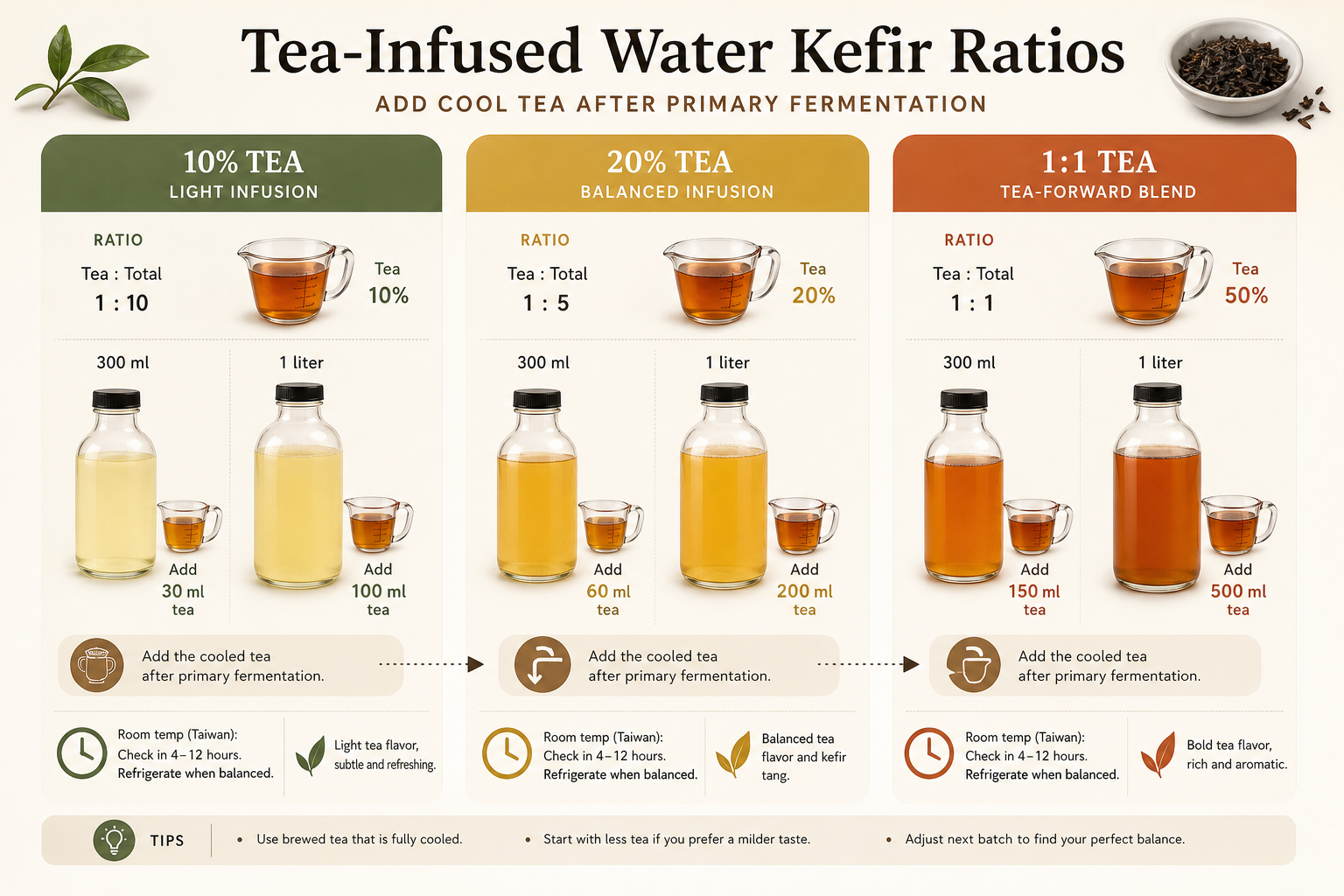
Try side-by-side bottles: 10% tea versus 20% tea, or no added sugar versus a tiny sugar addition. Next time, reduce tea if bitter, shorten time if too sharp or too pressured, add a small sweet accent if thin, or chill earlier if the balance is already good. The endpoint is not maximum fizz. Aroma should feel integrated, acidity should be refreshing, sweetness should not taste like plain sugar water, and tannin should support rather than dominate.
If you do not want to ferment at home, a finished Water Kefir can be used as a tasting reference or base for small tea-blending trials, as long as you still treat bottling and pressure with care.
Troubleshooting: Bitter, Flat, Too Sweet, or Too Pressurized
Bitter or tannic: Use less tea, brew cooler or shorter, switch to a softer tea, or add a small citrus peel or fruit accent for aroma. Do not automatically add more sugar; sweetness can hide bitterness for a moment but make the bottle heavy.
Flat or thin: Use slightly more concentrated tea, add a tiny amount of sugar or juice, or choose a tea with more body such as roasted oolong or black tea. If the base water kefir is already very dry, a small sugar support can help.
Too sweet: Bottle a little longer only with careful pressure monitoring, use less added sugar next time, or dilute with plain finished water kefir. A sweet fizzy bottle is not necessarily balanced.
Too sharp or vinegary: Shorten second fermentation, refrigerate earlier, lower tea-forward ratios, or blend with a fresher batch to taste.
Too much pressure: Chill thoroughly before opening, open carefully, reduce sugar and fruit next time, and shorten the room-temperature time, especially around 25–30°C.
Weak tea aroma: Increase tea concentration modestly rather than over-steeping into bitterness. Aromatic teas such as jasmine or floral oolong can help when the goal is fragrance.
Remember: dramatic bubbles are not the main readiness test. Balance, aroma, acidity, and sweetness tell you more.
A Simple House Formula to Start With
Start here, then adjust one variable at a time:
- 300 ml finished, strained water kefir
- 45 ml cooled concentrated tea
- Optional: 1 teaspoon juice or a small strip of citrus peel
- Optional: a tiny pinch or small measure of sugar only if the base tastes very dry
- Bottle 4–8 hours in warm Taiwan conditions, then refrigerate
Choose floral oolong for a light aromatic style, or black tea for a deeper café-style body. The finished drink should taste less sweet than bottled tea drinks, gently tart, clearly tea-scented, refreshing when chilled, and free of harsh tannin.
Once you understand the ratio ladder—10%, 15–20%, and cautious tea-forward blends—tea infused water kefir stops being guesswork. Taiwanese tea becomes a blending language: aroma, roast, tannin, sweetness, acidity, and timing, all adjusted in small bottles until the drink tastes like your house style.

