
















Kefir Grains
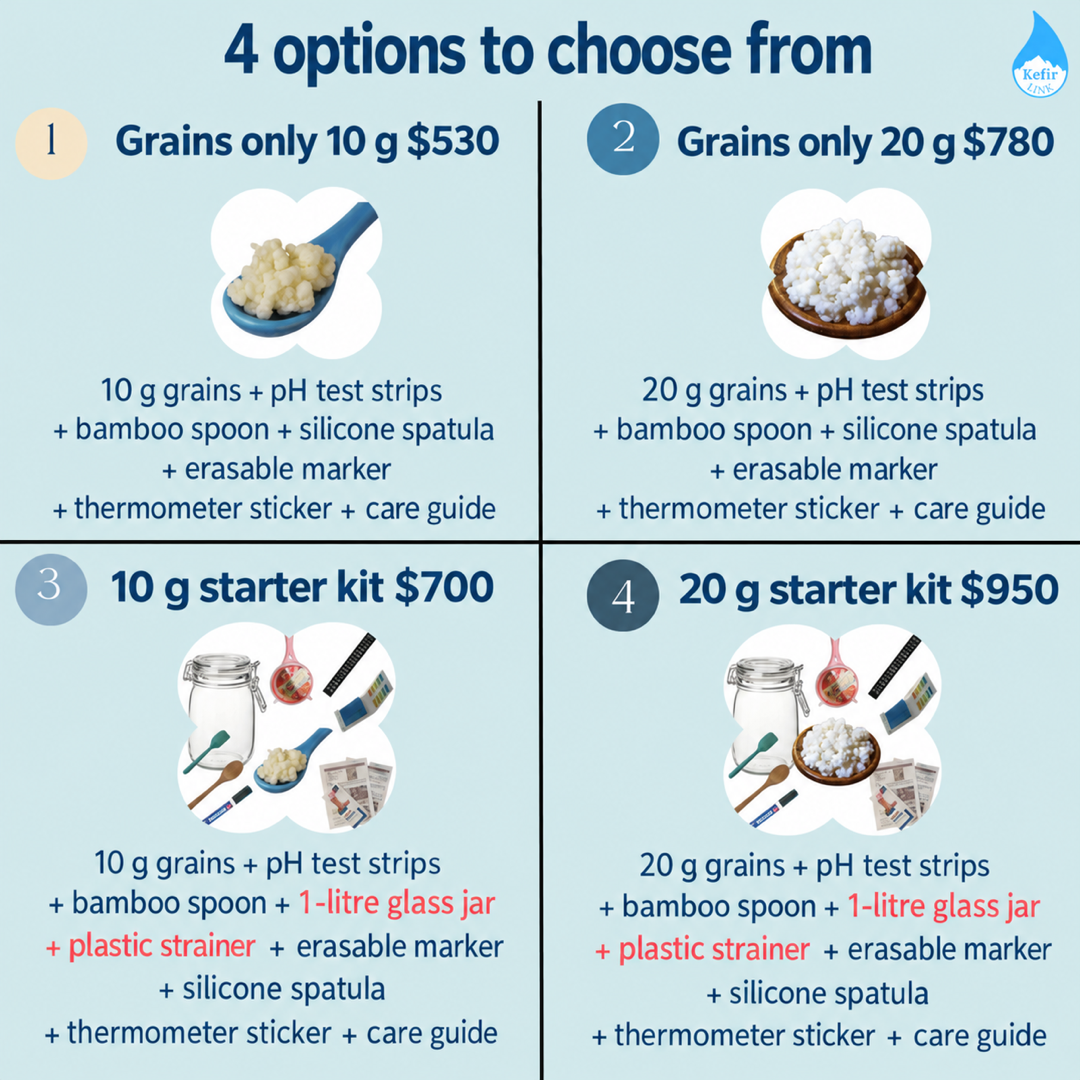
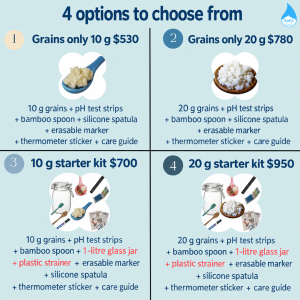
Price range: NT$530 through NT$950
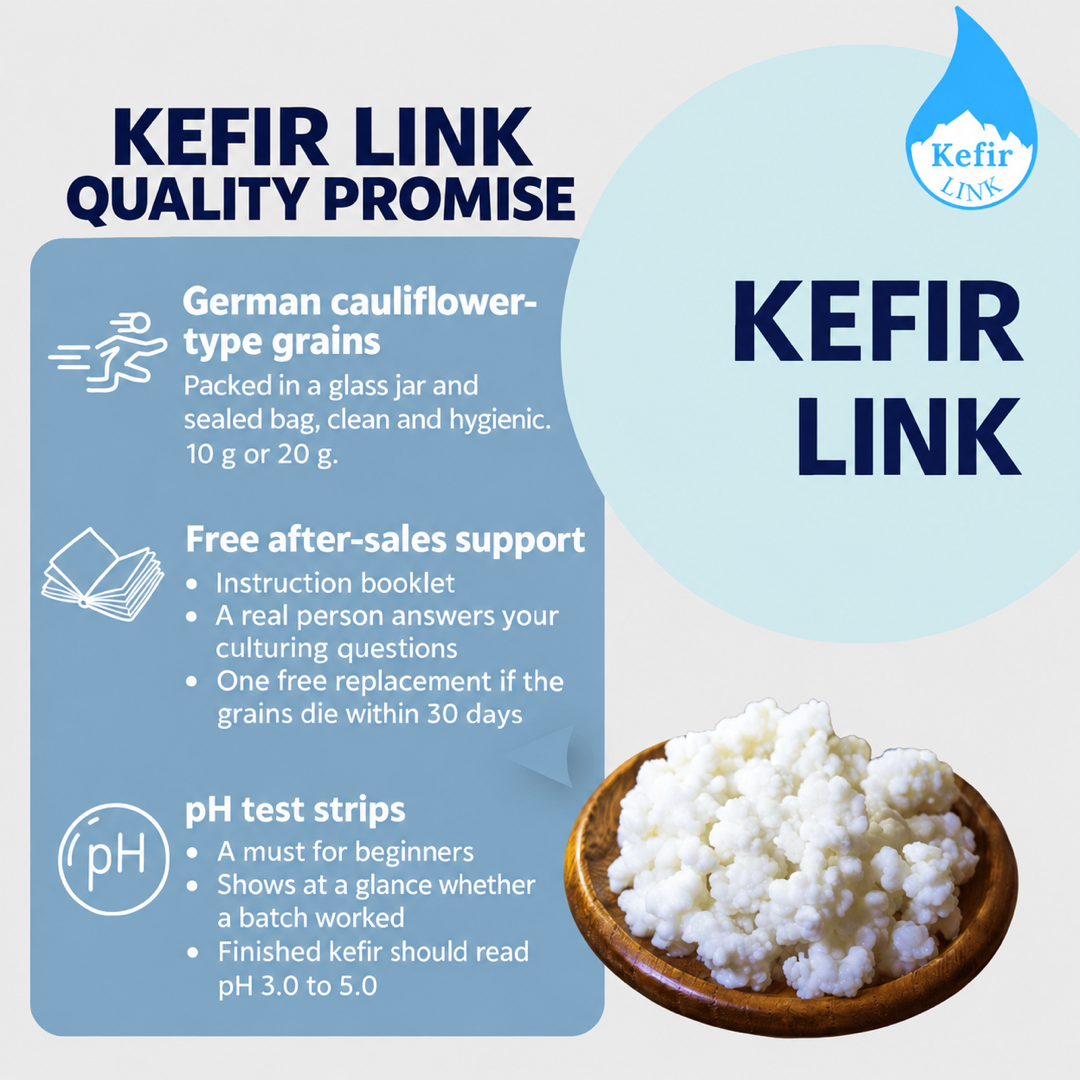
- German cultures, carefully cultivated: active grains from a 2,000-year kefir tradition. We feed them fresh milk every day so they multiply naturally.
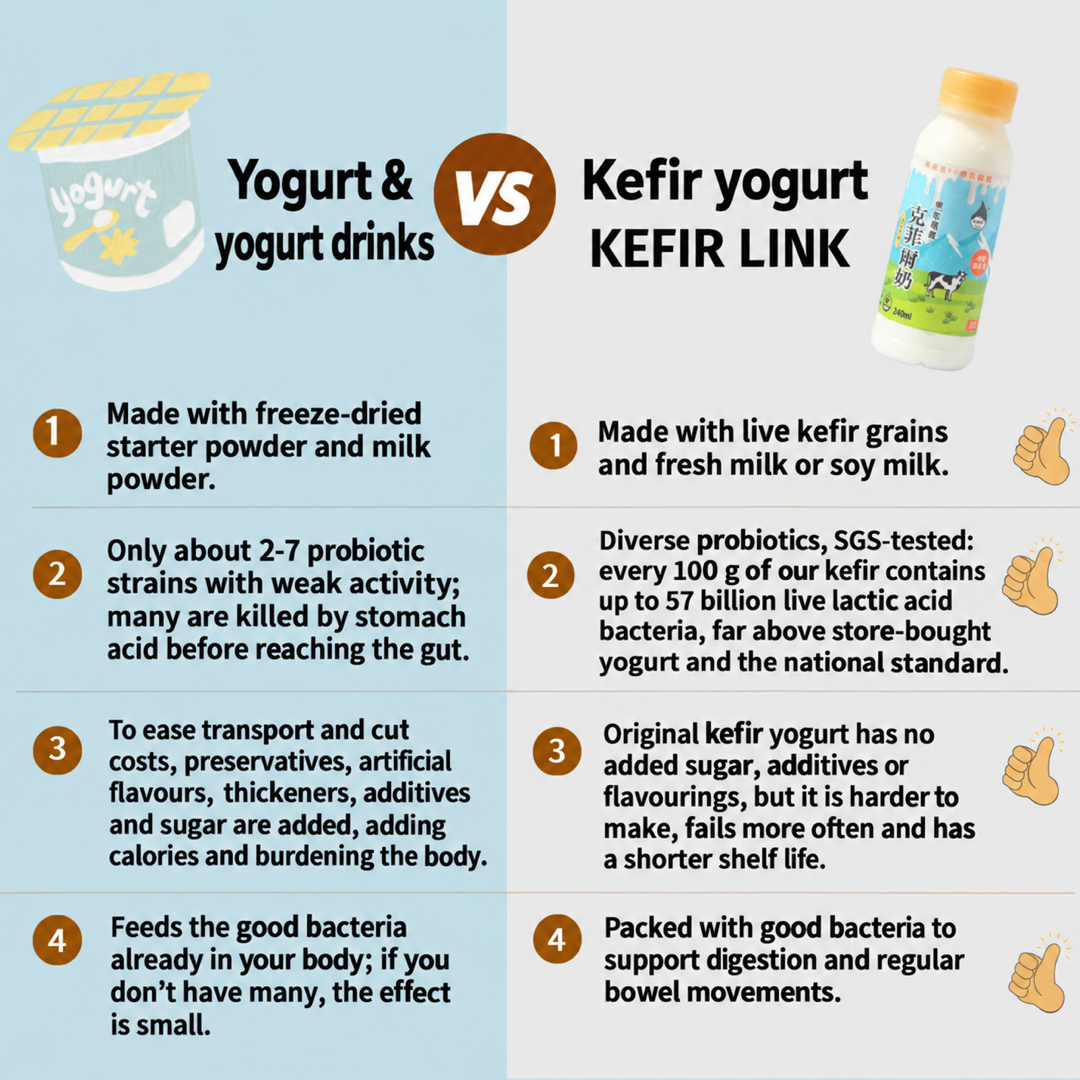
- Buy once, keep culturing: with proper care the grains keep multiplying, better value than powdered yogurt starters.
- Step-by-step guidance, easy to start: a detailed 5-page manual and after-sales support for beginners. If an accident such as insects or stray bacteria happens within 30 days, we send a new portion of grains free (you pay the shipping).
- Chilled home delivery, Black Cat 7‑ELEVEN chilled pickup, 7‑ELEVEN or FamilyMart room-temperature pickup for grains and tools only, and shipping to Hong Kong.
Your choice
- Friendly after-sales supportA real person on LINE guides you step by step.
- 30-day guaranteeInsects or stray bacteria within 30 days? A new portion, free.
- Clean grains, tested regularlyWe test them in-house for coliforms with 3M test plates.







 Cash on delivery
 Bank transfer
Kefir grains
A small living culture that turns fresh milk into kefir
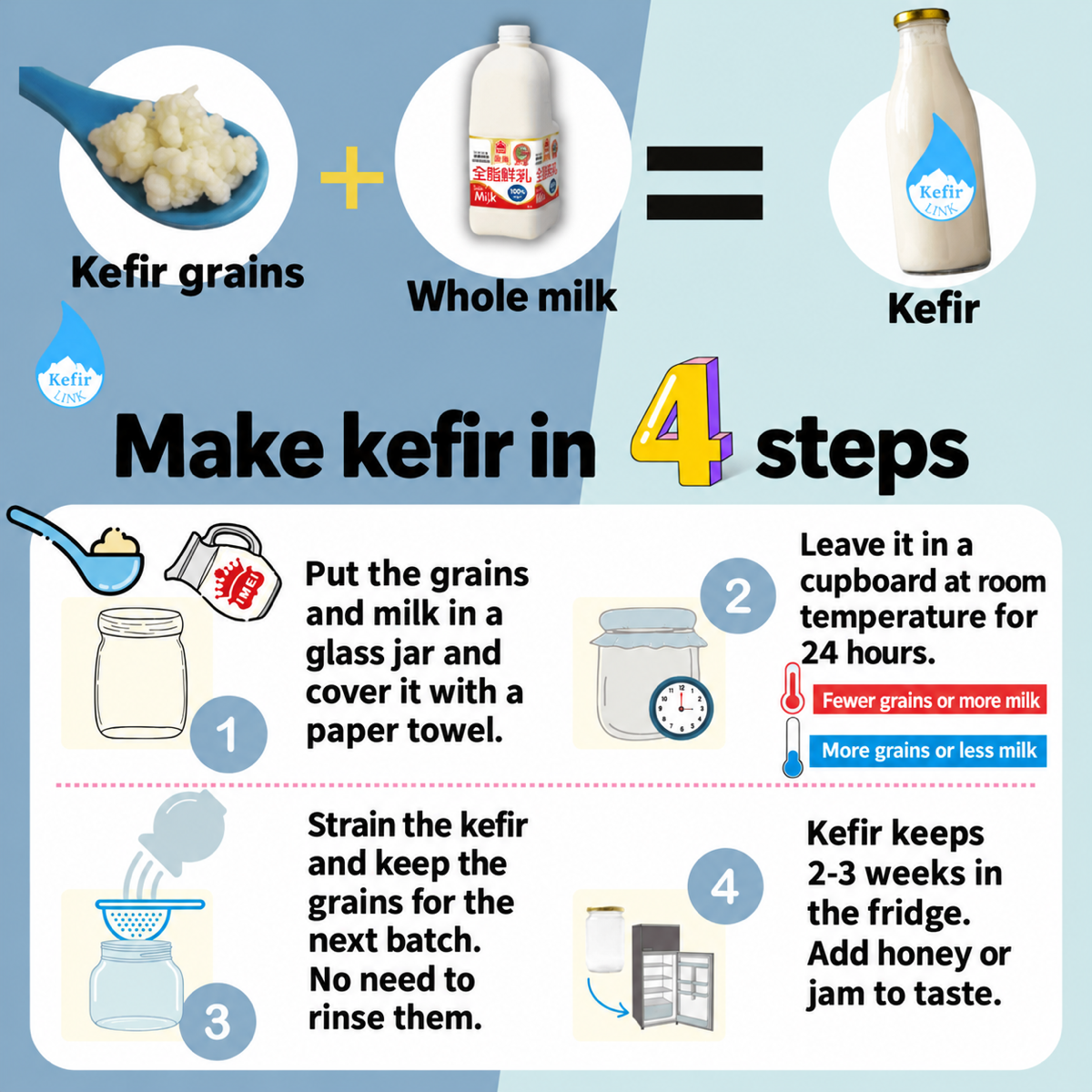
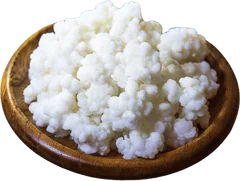
Kefir grains are small clusters in which lactic acid bacteria and yeasts live together. They look like tiny white cauliflower florets. Put them in fresh milk, leave the jar at room temperature for a day, and the milk turns into tangy, thick kefir.
- Fresh milk
- About 24 hours
- Kefir
- Grains back into fresh milk
The grains are never used up
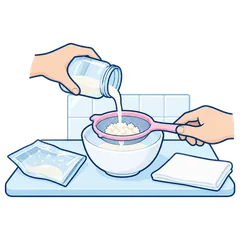
After each batch, strain the grains out and put them back in fresh milk for the next one.
Fresh milk every day, and they slowly multiply
At a suitable temperature, with fresh milk every day, the grains grow little by little. They grow slowly just after delivery or a rest in the fridge, and every batch of grains grows at its own pace. As they grow, give them more milk.
No yogurt maker, summer or winter
They ferment at room temperature out of the sun; 24 °C suits them best. A 30 °C summer room or an 18 °C winter one works too: the milk tool below works out the right ratio of grains to milk. In summer keep the jar in the coolest spot at home; 35 °C and above kills the grains.
What’s in the box
Open the parcel: everything for your first batch is inside
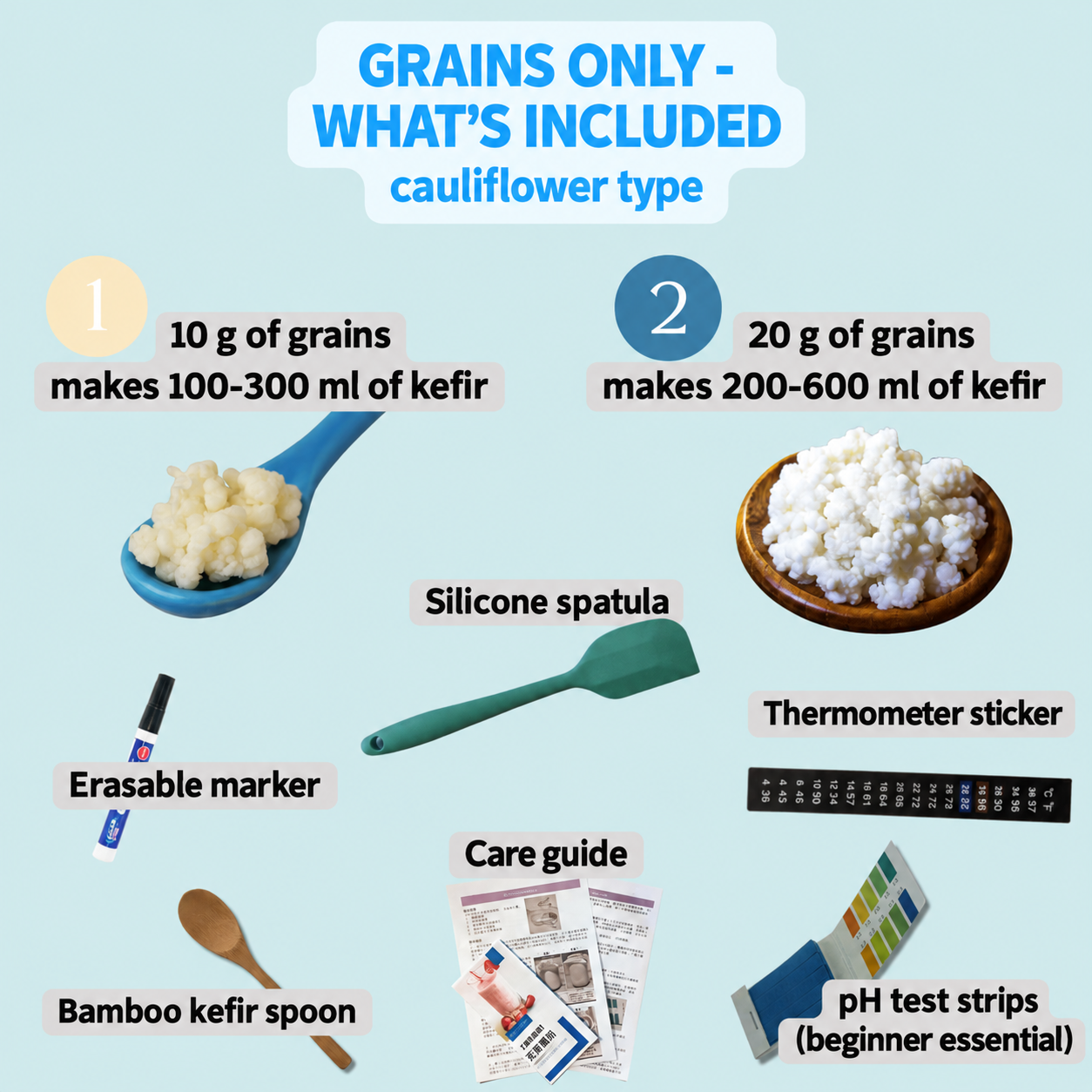
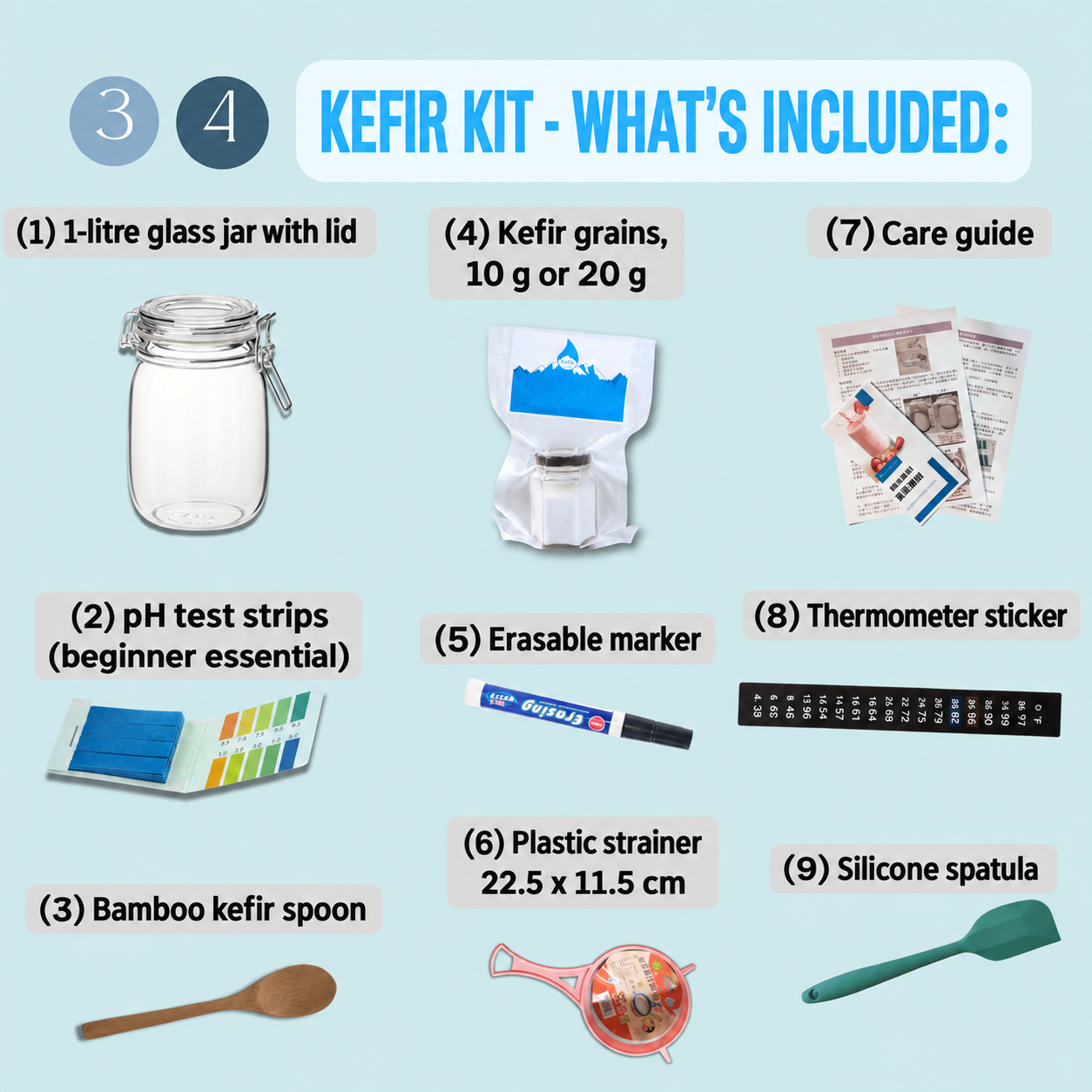
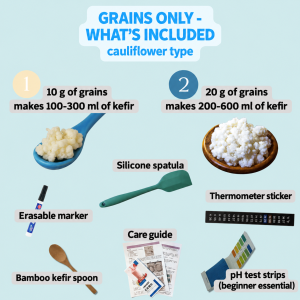
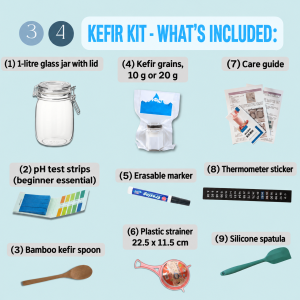
All four options come with the same 6 tools and the detailed 5‑page manual; the starter kit adds a 1‑litre glass jar and a plastic strainer. Tap an item to see what it is for.
Kefir grains
- The 10 g or 20 g of grains travel in milk in a small glass jar, sealed inside a plastic bag.
- Open it soon after it arrives and strain out the grains. The milk in the jar was the grains’ food for the journey. It has turned very sour, so pour it away instead of drinking it.
- The grains keep fermenting even in chilled transport, so sometimes milk overflows into the plastic bag. It means the grains are lively, and the sealed bag is there to catch it. Just open it over the sink with a paper towel nearby.
- There is gas in the jar, so open it slowly. If you can’t start straight away, put it in the fridge and start before the date written on the bag. Past the date? Don’t throw them away; message us on LINE first.
1-litre glass jar with lid
- This is the clear glass jar you ferment the kefir in. It is ordinary soda-lime glass and does not take high heat: wash it with warm water and dish soap, never pour boiling water into it, and keep it out of hot dish dryers and dishwasher sanitise cycles, so the glass does not crack. Dry it completely after washing.
- While it ferments, take the lid off together with its metal wire. Cover the opening with kitchen paper and hold it tight with a rubber band. Dust and insects stay out, and the gas from fermenting can escape.
- Put the lid back on when the kefir or the grains go into the fridge. The white seal inside the lid stops leaks; you don’t need it while fermenting.
- The video below shows how to take the lid off and put it back.
Plastic strainer
- 22.5 cm long and 11.5 cm wide. It separates the kefir from the grains.
- Rest the strainer on a cup or jug and pour in the finished kefir. The kefir runs into the cup and the grains stay in the mesh, ready to go straight into fresh milk for the next batch.
- Use the plastic strainer and the bamboo spoon for kefir, and keep metal tools away from it.
pH strips and dropper
- The strips tell you whether the batch has worked. They are especially helpful for your first batches.
- Shake the kefir first, take a little with the dropper and put one drop on a strip. Keep the strip out of the kefir itself.
- The strip starts dark blue. Green means the batch is just right. Yellow means it fermented longer and tastes more sour. Anything from pH 3.0 to 5.0 is a success.
- Soy milk doesn’t turn as acidic, so judge a soy batch by how thick it is and how it smells, without a strip.
Thermometer sticker
- Stick it on the outside of the jar to see the temperature around the grains at a glance.
- The grains like about 24 °C best. In hot weather, use a little more milk or strain earlier. In cold weather, use a little less milk.
- The milk tool further down works out how much milk to use for your temperature.
Erasable marker
- Write the date and time you started on the jar, so you know when to check it and when to strain.
- When the grains rest in the fridge, write down the day they went in. The writing wipes off, so you can write again for the next batch.
Bamboo spoon
- Use it to scoop the grains and to stir while you strain.
- When the kefir is thick, stir it slowly in the strainer. The kefir flows through and the grains stay in the mesh.
- After use, wash it and dry it completely before putting it away.
Silicone spatula
- Use it to scrape the kefir off the sides and bottom of the jar, so none goes to waste.
- If the kefir in the strainer is very thick, press it gently with the spatula to help it through. Keep it gentle so the grains stay whole.
5‑page manual
- It covers everything with photos: opening the parcel, your first batch, reading the test strip and 15 common questions.
- QR codes in the manual take you straight to our chef’s videos and the milk calculator.
- If you still have a question, ask us on LINE any time.
You only add whole fresh milk, kitchen paper and a rubber band. Wash new tools with soap and dry them completely before the first use.
How to make it
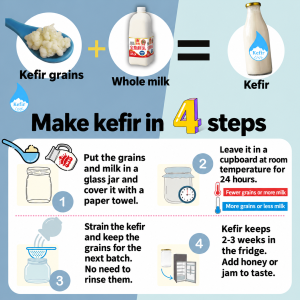
Six steps to your first batch
Wash the tools with soap and dry them completely; no water spots. Then you need only the grains, whole fresh milk, kitchen paper and a rubber band.
- 1
Grains into the jar
Spoon the grains into the clean, completely dry jar with the bamboo spoon. Don’t use a metal spoon.
- 2
Add fresh milk
For the first 3 batches after delivery, use less milk than usual: start at 1:20 in summer (10 g of grains to 200 ml) and 1:5 in winter (10 g to 50 ml). From the 4th batch, about 1:30 in summer and 1:10 in winter, or use the milk tool below. In cold weather, let the milk warm up at room temperature for 1–3 hours first.
- 3
Lid off; paper and a rubber band on
Dust and insects stay out, and the gas from fermenting can escape.
- 4
About 24 hours at room temperature, out of the sun
24 °C is best. It goes faster when it is hot and slower when it is cold, but never longer than 36 hours in all. Above 30 °C, move it to the coolest spot at home.
- 5
Shake gently, then one drop on a strip
The milk has thickened, starts to separate and smells sour. Put one drop on a strip with the dropper: green or yellow means it is done.
- 6
Strain, and the grains go back into fresh milk
Stir and shake it slowly through the plastic strainer with the bamboo spoon; no metal tools. The kefir keeps 21 days in the fridge. The grains need no rinsing: add fresh milk and the next batch begins.
How much milk
How much milk do your grains need today?
Choose how much grain you have and how warm your room is. You’ll see how much fresh milk to add for a 24-hour batch, worked out with our milk kefir calculator.
Did it work?
Shake, smell, then one drop on a strip
Thick and starting to separate
Shake the jar gently: the milk has thickened and clear whey starts to separate.
A sour smell
A clean sour smell like plain yogurt, with a light yeasty note.
One drop on a strip
Shake it even first, then put one drop on the strip with the dropper; don’t dip the strip in.
Read the strip
- Dark blue: the strip before testing
- Green: just right (about pH 4)
- Yellow: fermented longer and sourer, still fine to drink
- Still dark blue (above pH 5.0): not ready. Leave the paper cover on and keep fermenting, no longer than 36 hours in all.
- No change after 36 hours: pour it away, use less milk and try again.
- Soy milk hardly changes the strip; judge soy kefir by its thickness instead.
All of this is normal
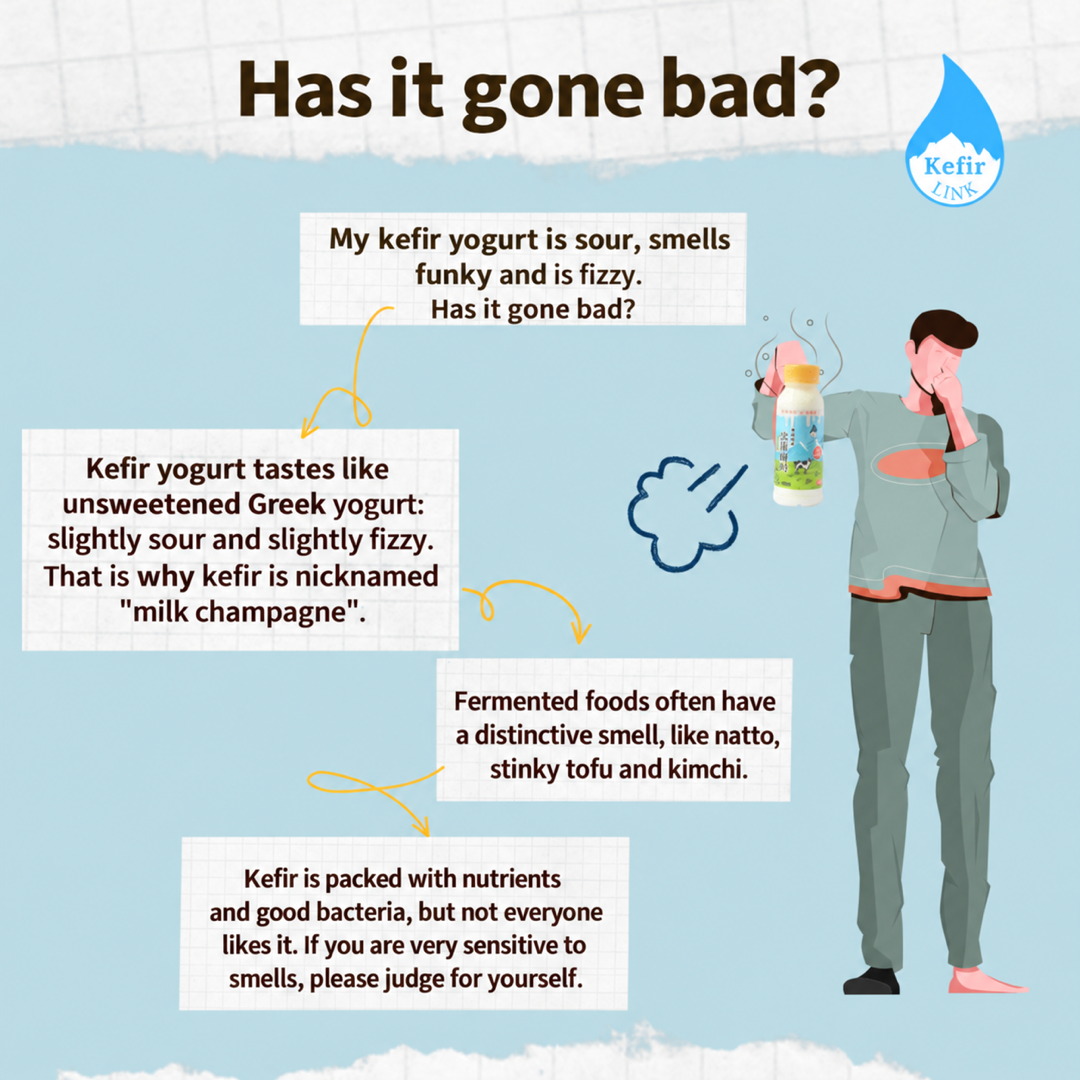
Creamy-yellow kefir (that is the yeast), clear whey, fine bubbles, and grains that are slimy and stringy like natto (that is kefiran, a sign of healthy grains).
If you see this, throw it all away
Green, pink, red, blue or black on the grains or the kefir may be mould. Throw away all the grains and kefir, even parts that look fine, and send us a photo on LINE.
When it arrives
The parcel is here: three steps to get started
 1
Open the parcel soon
The grains travel submerged in milk and keep fermenting on the way, feeding on it. That milk slowly turns sour and gets used up, so open the parcel soon after it is delivered or after the pickup notice, and give the grains fresh milk. Chilled delivery and room-temperature pickup both work; once home, keep the parcel out of the heat.
- 2
Open it and strain out the grains
A little overflow is normal: the grains are healthy and fermenting, which is why the jar is in a sealed bag. Strain out the grains. The clear or thick liquid left is the milk they travelled in; pour it away, don’t drink it.
 3
Whole fresh milk for the first week
The grains need the lactose in fresh milk to recover, so use whole fresh milk for the first week. Use less milk for the first 3 batches: 1:20 in summer, 1:5 in winter. Not starting today? Put them in the fridge and start before the date on the bag.


Reviews
What first-timers say
Fast dispatch, and the protective packaging was good too. The little grains have been working for three days and producing consistent results. This is my first time making kefir. Fortunately, the instructions were clear and customer service answered my questions promptly! Thank you!Anonymous · 2023.03.09
Thank you 🙏 for the quality product and detailed instructions. Even a beginner like me could get started quite easily. Now I can drink homemade milk kefir every day 👍👍👍陳 亮光 · 2024.01.04
The shop provided very detailed information. Following the steps, my kefir fermented successfully in no time!林 · 2023.05.28
My order arrived quickly in Hong Kong. It was extremely hot in both Hong Kong and Taiwan at the time (about 33–36°C), so I was very worried the grains would not survive the journey. Fortunately, everything went well! I’ve now made five batches, using about 1 L of milk each time, with both UHT and fresh milk. I’m gradually getting the hang of adjusting the amount of grains and milk, the milk temperature and room temperature. The results taste very good, better than the dried kefir powder I used before. The shop also included an instruction booklet and some tools, which made it easier 👍🏻Check Christine · 2026.06.14
Fast dispatch and excellent products. The instructions are in colour and include pictures. A very thoughtful, attentive company.黃 錦龍 · 2024.10.10
Easy to ferment and unlikely to fail.Anonymous · 2023.11.08
The cultures are very active. A lot of care went into the packaging, and most of it can be recycled or reused.Anonymous · 2023.04.16
Lively little cultures. I’ve had good kefir every day so far.金 · 2023.05.22
The DIY equipment set and kefir grains make it very easy to get started.劉 · 2024.04.15
Show more reviews
The packaging was very thoughtful and the instructions were thorough. I hope the fermentation goes well.吳 · 2026.06.03
It worked on my first try. I used 20 g of grains and made just 250 ml of a runny yogurt drink. After two days in the fridge, it became thicker, like yogurt. I’m not sure whether that’s right. For my third batch I added 900 ml of milk, and I’m waiting to see how it turns out.Anonymous · 2026.01.21
Very good, and some small tools were included too 👍廖 雅玲 · 2026.01.18
Everyday care
Six things your grains like
Clean, completely dry tools
No water spots on the jar, strainer or spoon. Kefir’s biggest enemy is stray bacteria, and water drops and tap water easily bring them in and make the grains change colour.
No tap water, no rinsing
The grains protect themselves and need no rinsing. If they get a hard crust or orange patches, or fall on the floor, rinse them gently with fresh milk.
Never heated
Yogurt makers, rice cookers, microwaves and ovens kill the grains. In summer keep the jar in the coolest spot, and strain earlier above 30 °C.
Whole fresh milk is best
Choose ordinary whole fresh milk (pasteurised, not UHT): the grains are liveliest on it. Avoid UHT milk and milk powder.
Paper and a rubber band
Paper held tight while it ferments; the lid goes on only in the fridge.
After washing, dry the jar completely
Every time you wash the jar, dry it completely with a clean cloth or kitchen paper and leave no drops of water inside, because water drops easily bring in stray bacteria that make the grains change colour. Some people prefer not to wash it every time: making 2 or 3 batches in the same jar before washing it is perfectly fine.

Going away? The grains can rest in the fridge for a month
Put the grains in a big glass jar, cover them with fresh milk, close the lid and put the jar in the fridge. They can rest there for up to a month. When you are back, use the just-arrived ratio for the first 3 batches (1:20 in summer, 1:5 in winter): the grains need a bit more time to recover, then they are back to full strength.
How to pause your grains ›
More grains than you need
Keep a spare portion in milk in the fridge, in case your main grains ever die. Share the rest with friends, blend some into a smoothie, or give them to your plants as fertiliser.
Troubleshooting
Something looks odd? Start here
Pick what you see. If you’re not sure, send us a photo on LINE before you throw any grains away.
Too sour
As the grains increase, the batch over-ferments if the milk doesn’t increase with them. Add milk gradually so each batch takes 20–26 hours. If you like it sour, it is perfectly good to drink.
Thin, as if it failed
Test first: shake, then one drop on a strip. If it changes colour, it worked and only the ratio needs adjusting. Grains that just arrived or left the fridge make thinner kefir for the first 3 batches; give them a little time.
Separated into layers
The clear part is whey: the batch is done or a little past it, and fine to drink. Shake it before straining, and strain a bit earlier next time.
Cold weather, still milk at 24 hours
If the strip hasn’t changed, leave the paper cover on and keep fermenting, no longer than 36 hours in all. Still no change? Pour it away; next time cut the milk to 1:5 (for example 10 g of grains to 50 ml) and let the milk warm up for 1–3 hours first.
Creamy-yellow on top
The creamy-yellow colour comes from the yeast in kefir. It hasn’t gone bad.
Slimy grains
Slimy, stringy grains, like natto, are a good sign: that is kefiran, a gel the healthy grains make.
Pink, green, red, blue or black
It may be mould. Throw away all the grains and kefir, even parts that look fine. Within 30 days of delivery, send us a photo on LINE and we send you a new portion of grains free; you pay the shipping.
The grains aren’t growing
Grains fed fresh milk grow gradually. If they still haven’t gained weight after 3 weeks or more on fresh milk, or 5 batches in a row fail, send us a photo on LINE. Grains kept on plant milk or often in the fridge don’t grow, and that is normal.
Our promise
For your first batches, we’re here
A new portion within 30 days
If something goes wrong within 30 days of delivery, such as an insect getting in or stray bacteria taking over, send us a photo on LINE and we send you a new portion free; you pay the shipping. Grains killed by a yogurt maker, rice cooker, microwave or oven are not covered.
A real person on LINE
Not sure it’s going right? Send a photo and we’ll tell you what to do next.
Manual and videos
Every option comes with the 5‑page illustrated manual, plus our chef’s YouTube how-to videos.
At a glance
Want to taste it first, or do more with it?
Make it yourself
 Kefir grains
- Buy grains once, make kefir every day
- Tools and a 5‑page manual included
Taste it first
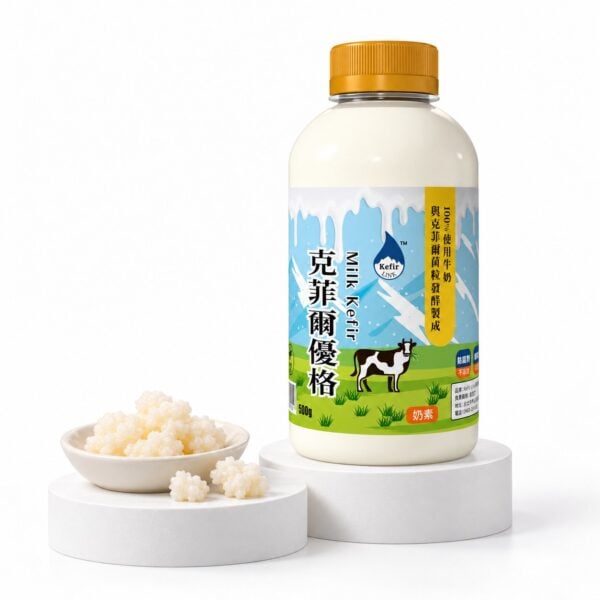 Original milk kefir
- Kefir we make for you
- Straight from the fridge
Make Greek-style yogurt
 Greek yogurt strainer box
- Drains the whey from your kefir
- Thick after a few hours in the fridge
Lacto-vegetarian
 Soy milk kefir
- Kefir fermented from soy milk
- Original and six fruit flavours
Delivery & payment
Chilled home delivery, store pickup, and Hong Kong
New to kefir? Order a bottle of our ready-made kefir with the grains. It all arrives chilled together, so you can taste what finished kefir should be like before you make your own.

Black Cat chilled home delivery, or Black Cat 7‑ELEVEN chilled pickup
NT$160 · NT$80 from NT$1,300
Pick a date and time slot, or collect it chilled at a 7‑ELEVEN near you.

HCT chilled home delivery
NT$150 · free from NT$999
Chilled to your door; pick a delivery date at checkout.

7‑ELEVEN / FamilyMart room-temperature pickup
NT$60 · free from NT$899
For orders of grains and tools only. It goes to a store near you, and you get a notice when it arrives.
- Hong Kong tooSF Express to Hong Kong, NT$280.
- Tracking number by emailWe also email you when it reaches the store or is delivered.
- Defective, wrong or damaged? Resent or refundedSend photos of the parcel and product on LINE within 72 hours; we cover the shipping.
Payment
Card · LINE Pay · cash on delivery · bank transferFull delivery information ›Payment details ›Returns policy ›
FAQ
What customers ask us most
First time: grains only or the starter kit?
If you have a glass jar of about 1 litre and a plastic strainer, grains only is enough. If not, the starter kit is easiest. Both include 6 tools (pH strips, a dropper, a bamboo spoon, a silicone spatula, an erasable marker and a thermometer sticker) and the detailed 5‑page manual.
What’s the difference between 10 g and 20 g?
How much you can make each time: once settled, 10 g makes about 100–300 ml a batch and 20 g about 200–600 ml; the first 3 batches after delivery are smaller. The grains slowly multiply, so your batches can grow too.
Which milk should I use?
Ordinary whole fresh milk (pasteurised, not UHT) is best; the grains are liveliest on it. UHT milk and milk powder are not recommended because the taste is poor, and lactose-free or flavoured milk doesn’t work, because the grains feed on the lactose in milk.
Can I use goat’s milk, soy milk or oat milk?
Yes. Goat’s or horse milk work, and so do soy, coconut, rice and oat milk. Use whole fresh milk for the first week; after that, give the grains one day of fresh milk after every six days of plant milk, so they get the lactose they need. Soy takes about 18 hours at 1:50 in summer and 1:30 in winter; judge it by thickness, not with a strip.
Should the grains go chilled or at room temperature?
Either works. Chilled, choose HCT or Black Cat home delivery, or Black Cat 7‑ELEVEN chilled pickup. For grains and tools only, 7‑ELEVEN or FamilyMart room-temperature pickup is also available. Ordered with our kefir, the whole order goes chilled. A little milk overflow on the way is normal, and the jar is sealed in a bag. If an accident such as insects or stray bacteria happens within 30 days, we send you a new portion of grains free; you pay the shipping.
I can’t start today. How long can the grains wait?
Put them in the fridge and start before the date on the bag. The longer they wait, the slower the first batches: use the just-arrived ratio for the first 3 (1:20 in summer, 1:5 in winter). Past the date? Don’t throw them away; message us on LINE first.
The grains look smaller than in the photo.
Grain size changes with temperature, milk and age, from rice-sized to cauliflower-sized. Small grains ferment just as well.
How long does homemade kefir keep?
It is ready to drink once strained and keeps 21 days in the fridge; the longer it waits, the sourer it gets.
Do I need to wash the jar after every batch?
You can wash it every time, but you don’t have to. Some people like to make 2 or 3 batches in the same jar before washing it, and that is perfectly fine. What matters most: after washing, dry the jar completely and leave no drops of water inside.
How do I make it thick like yogurt?
After straining, pour the kefir into the Greek yogurt maker, or drain it in a cloth, and chill it for a few hours: it becomes thick.
How do I make it fizzy?
After straining, put the kefir in a bottle, close it tightly and keep it in the fridge for about 3 days: fine bubbles appear.
Can you ship to Hong Kong, or can I take grains abroad?
Yes, we ship to Hong Kong with SF Express. To take grains abroad yourself, pack them in a leak-proof container in checked luggage and check the destination’s import rules first.
How long do the grains last?
For ever, if you look after them. They slowly multiply, so there is enough to share with family and friends, and some people even eat the extra grains or blend them into a smoothie.