



1. What are kefir grains?
- Origins:
Kefir grains originated in fermented dairy products in the Caucasus Mountains 2,000 years ago. They look like tiny white cauliflower florets and form a symbiotic community of more than 30 types of probiotics and yeasts. These microorganisms supply one another with the nutrients they need, maintaining a stable balance during fermentation. In suitable conditions, with lactose to feed on, the grains continue to grow and multiply. - Texture and taste:
Kefir is thinner than set yogurt, with a texture between yogurt and a yogurt drink. Its slight fizz has earned it the name “milk champagne” in Europe. - Types:
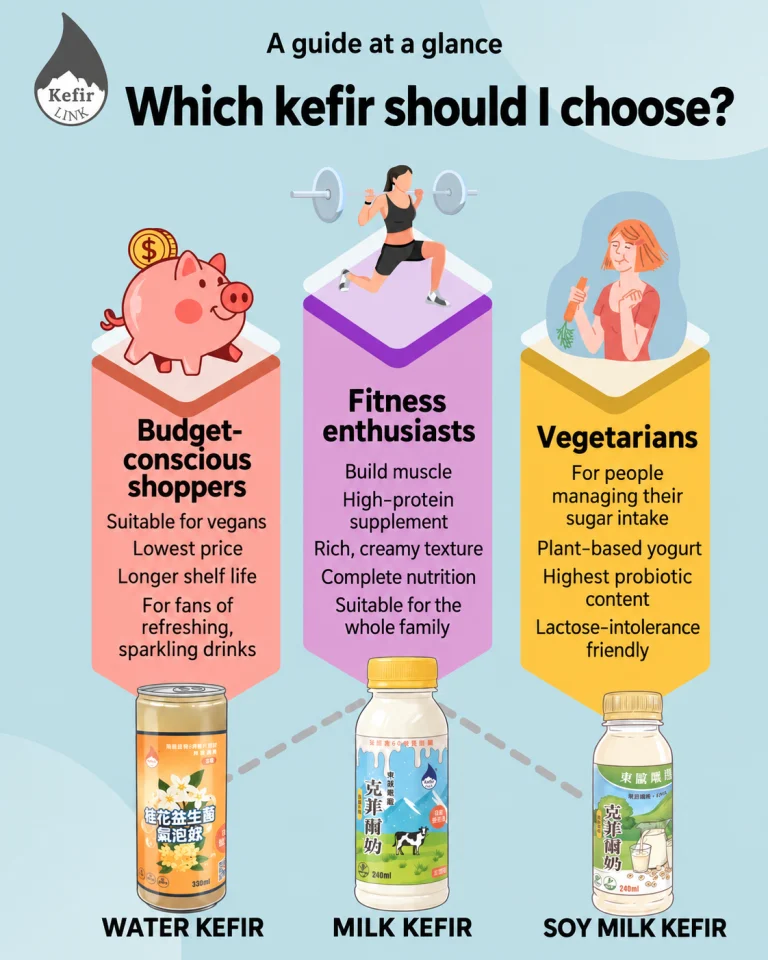
Any animal milk can be used to ferment kefir. Milk kefir is the most common. In Taiwan, soy milk kefir is also popular for religious dietary reasons or because of lactose intolerance. There is also water kefir, which has a water base. - Probiotic benefits:
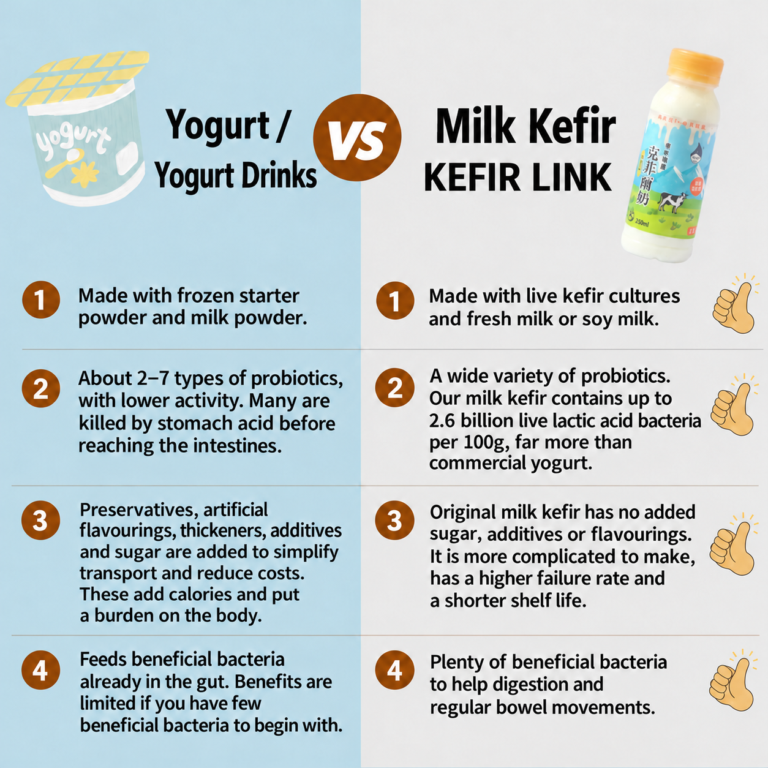
Kefir provides a variety of nutrients, including probiotics, calcium, B vitamins and protein. According to the 2024 SGS food testing report, every 100g of Kefir Link milk kefir contains 57 billion live lactic acid bacteria, far exceeding the national standard. Its probiotic content is several times that of ordinary commercial yogurt sold at PX Mart.
Compared with soured milk or yogurt, kefir contains a wider variety of probiotics to help maintain digestive function and regular bowel movements. It supports the body’s balance and is suitable for daily drinking.

2. Benefits of kefir probiotics
- Support the body’s balance:
Milk kefir is rich in probiotics, helping maintain a healthy community of bacteria. - Provide calcium:
Milk kefir made with a base of 100% milk helps the development of teeth and bones. - Aid digestion:
University research in the United States, Germany and Ireland has found that probiotics promote digestion and help maintain a balanced community of microorganisms in the body. - Help you unwind:
Ease tension from the day and relax your body and mind. See Dr. Berg’s YouTube video, “Drink a Glass Before Bed.” - Care for your skin:
High-quality protein and B vitamins nourish the skin and help maintain youthful vitality.
⚠️ Taiwan’s regulations limit how fully we can describe the benefits. For more information, see specialist books and YouTube videos, such as Kefir: A Gift from the Gods by National Taiwan University professor Lin Qingwen, and Dr. Berg’s probiotic videos, “The Best Probiotic Food” and “Drink Half a Cup Before Bed.”
3. Who can drink kefir?
- General use:
Anyone aged one year or older with no specific dietary restrictions can drink it. - People with lactose intolerance:
Research from The Ohio State University in the United States shows that kefir cultures can break down the lactose in milk, making it safe for most people with lactose intolerance. Adjust your intake to suit your own body. - Pregnant women:
According to the American Pregnancy Association, pregnant women can drink milk kefir in moderation for calcium and probiotics. Consulting a doctor is still recommended. - People following a ketogenic diet:
Kefir is similar to yogurt, but has fewer carbohydrates and more beneficial bacteria, making it an ideal choice for a ketogenic diet.
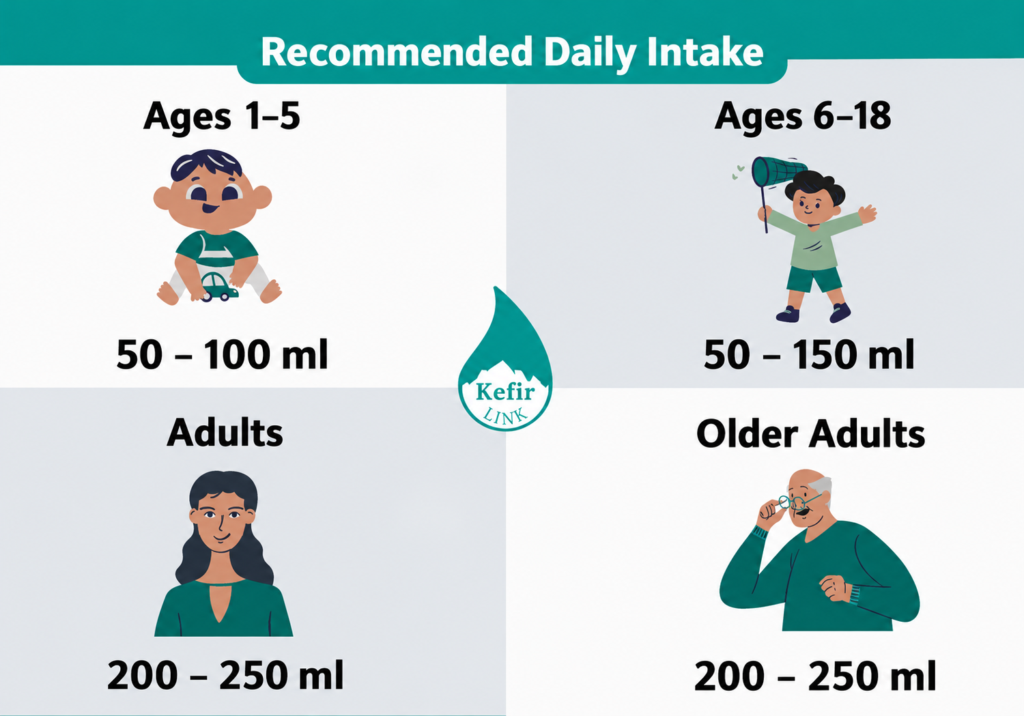
4. How much milk kefir should I drink, and when?
- When trying kefir for the first time:
Start with 50g. If you have no discomfort after three hours, you can increase your intake by another 100g. - Daily amount:
About 240g (one bottle) a day, or up to 500g when used as a meal replacement. Drinking it in smaller portions throughout the day gives better results. - When to drink it:
On an empty stomach, such as before a meal or before bed. If you have sensitive digestion, drink it after a meal instead. Please consult your doctor or dietitian first.
5. How is kefir different from yogurt?
Kefir far surpasses commercial yogurt sold at PX Mart in probiotic content and activity, and offers greater support for women’s intimate health.
6. Kefir grains versus kefir powder
- Kefir powder:
Frozen, for a single use, with fewer live bacteria. You need to buy it again for each batch. - Kefir grains:
Can be used to ferment batch after batch, with higher numbers and a wider variety of live bacteria. - Cost:
Grains are more cost-effective over time, offer excellent value for money and can be continually cultured.
7. How to store milk kefir
- Refrigerate:
Like yogurt, kefir needs refrigeration. Store below 4°C; its shelf life is about three weeks. - Avoid heating:
Do not heat it in a microwave or electric rice cooker, as this destroys the probiotics. - After opening:
Pour it into a cup to drink, avoiding contact between your mouth and the bottle opening. Finish within seven days of opening. - Fruit-flavoured kefir:
Shake well. It is best consumed that day. - How can I tell if kefir has spoiled?
Pink or blue discolouration or an unusual smell indicates contamination by unwanted bacteria. Discard it immediately.
8. Where can I buy kefir?
In Taiwan, fresh milk kefir is available at a small number of organic shops and restaurants, or online. Kefir powder is stocked in many organic shops, but kefir is not currently available at PX Mart. If you want to buy kefir grains for home fermentation, look for specialist suppliers of fermented foods.

9. Does kefir contain alcohol?
Yes. Kefir produces a trace amount of alcohol during fermentation, about 0.08%. For comparison, bananas with dark spots (0.05%) and yeast bread (0.03%–1.2%) also contain naturally occurring alcohol.
According to U.S. CDC standards, kefir with an alcohol content below 0.5% is not classified as an alcoholic drink. National Taiwan University professor Lin Qingwen also writes in Kefir: A Gift from the Gods that pregnant women and young children can safely consume kefir.
Drink kefir while it is fresh and pay attention to its storage temperature. The longer it ferments, the stronger the alcoholic taste becomes. Everyone’s body is different; if you have any questions, consult your doctor or dietitian.
10. Recipes and ways to enjoy kefir
- Smoothie: Blend milk kefir, nut butter, honey and banana for a quick protein boost after exercise.
- Breakfast with granola: Pour it over oat and nut granola for a healthy breakfast or afternoon snack.
- Salad dressing: Use it in place of high-calorie mayonnaise or Thousand Island dressing to make your salad more delicious.
- Kefir ice cream: A healthy, sugar-free dessert that is light on the body. It is still in development — stay tuned!





Comments
No comments yet.
Comments could not be loaded.
Join the discussion