

Mastering Water Kefir Second Fermentation: Control Fizz, Flavor, and Bottle Pressure
If your first ferment is already working but your bottled water kefir swings between flat, too sweet, too sour, or frighteningly fizzy, the problem is usually not one magic ingredient. It is the control panel: sugar, fruit, temperature, time, bottle strength, headspace, starter activity, and chilling.
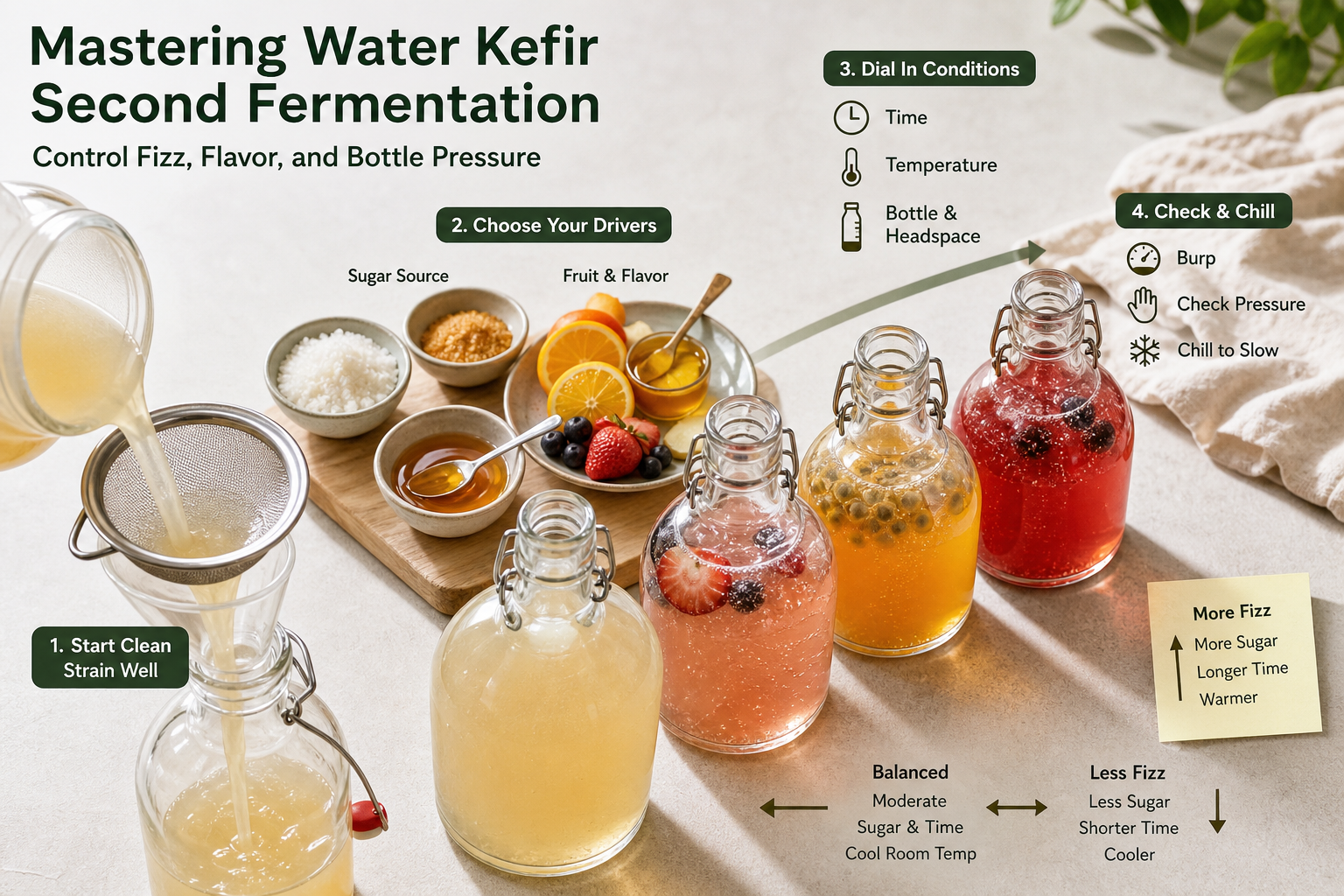
Water Kefir Second Fermentation means this: after the grains are removed, finished water kefir is bottled with a small sugar source or flavoring in a closed container so it can develop carbonation and flavor. The remaining microbes consume available sugars and produce carbon dioxide inside the bottle, which creates fizz. This is also why pressure management matters.
The key move is to flavor after straining. Keep grains out of acidic fruits, juices, spices, peels, and strongly flavored additions; the second ferment is for the drink, not the grains. From there, you can deliberately tune for more fizz, less sweetness, brighter fruit aroma, gentler acidity, or safer opening.
Second Fermentation Is Where Water Kefir Becomes Intentional
Think of the second ferment as a short, sealed finishing stage. You are not trying to restart the whole first ferment. You are giving finished water kefir a small amount of fresh fuel and aroma, then stopping when the drink tastes balanced.
Several fermentation educators describe the same basic pattern: strain out the grains, add fruit, juice, sugar, honey, maple syrup, molasses, or dried fruit to the finished kefir, and bottle it for a short second ferment to build flavor and carbonation. For a practical overview, see Fermentaholics’ guide to bottling, flavoring, and carbonating water kefir and Cultured Food Life’s explanation of how to second ferment water kefir.
But your bottle does not read a recipe. A warm Taiwan kitchen, pineapple juice, a very active first ferment, and a tight swing-top bottle will behave differently from a cool room, guava, a weaker starter, and a cap that leaks. That is why fixed hour counts are less useful than a repeatable control routine.
The Control Panel: What Each Variable Changes
Use this table before you bottle. It helps you predict what will change and what risk you are increasing.
| Variable | What it changes | Practical control note |
|---|---|---|
| Sugar source | Carbonation potential, sweetness reduction, pressure risk | A little juice, fruit, sugar, maple syrup, molasses, dried fruit, or non-vegan honey can feed carbonation. More sugar is not always better; it can stay too sweet or over-pressurize. |
| Fruit or juice choice | Fruit aroma, acidity, sediment, speed | Pineapple and passion fruit can taste vivid and ferment actively; guava and lychee are softer; citrus peel can turn bitter. |
| Temperature | Speed, sourness, yeastiness, pressure buildup | Warm rooms generally move faster; cooler rooms slower. Batch activity still varies. |
| Time | Sweetness reduction, acidity, aroma loss, carbonation | Use ranges and sensory checks, not universal promises. |
| Bottle strength | Safety margin and carbonation retention | Use round, pressure-safe bottles designed for carbonation. Avoid weak decorative bottles, square bottles, and jars not made for pressure. |
| Headspace | Pressure behavior and opening experience | Do not fill to the top. Leave practical headspace so expansion and foam have room. |
| Starter activity | How quickly sugars are consumed | A lively base may carbonate faster than a sluggish one even with the same fruit. |
| Chilling | Slows fermentation and makes opening safer | Refrigerate when the fizz and flavor are where you want them; open cold and slowly. |
A Safe Baseline Method You Can Adjust
Start with strained, finished water kefir. If you are still building your plain base, a DIY culture such as Water Kefir Grains Starter Kit|100g can be used to make the first ferment before any second-ferment flavoring is added.
- Taste the plain water kefir first. Notice sweetness, acidity, aroma, and any fermented note.
- Add a modest flavor or sugar source. A simple starting point is finished water kefir plus a small splash of juice or a small amount of chopped fruit. Use less when the room is warm, the fruit is very sweet, or your base is highly active.
- Bottle in pressure-safe bottles. Choose bottles designed for carbonation, not decorative glass or canning jars.
- Leave headspace. Do not fill to the top.
- Ferment at room temperature with caution. Timing changes with room temperature, sugar level, bottle type, starter activity, and flavoring choice.
- Burp while learning. Briefly release pressure when testing a new fruit, warm-weather batch, or sugar level.
- Refrigerate when balanced. Cold slows fermentation and makes opening safer.
- Open cold, slowly, over a sink. Point the bottle away from your face and valuables.
Good second-ferment additions include fruit, juice, sugar, maple syrup, molasses, dried fruit, or honey if you are not keeping the drink vegan. These are options, not mandatory formulas.
Choose Flavorings by What You Want to Taste
Instead of asking “what can I add?”, ask “what do I want the bottle to do?”
- Brighter fruit aroma: passion fruit, pineapple, citrus juice, berries, or lychee. Chill earlier if the fresh top note starts to fade.
- More tropical sweetness: pineapple, mango-style juices, lychee, or ripe guava. Watch pressure because sweeter fruit can feed more carbonation.
- Sharper acidity: passion fruit, lemon juice, roselle, or tart berries. Use shorter timing if the base is already sour.
- Floral aroma: osmanthus, roselle, or caffeine-free floral infusions. These can add fragrance without tea leaves.
- Spicy warmth: ginger gives a spicy-aromatic lift that works well with lemon, pineapple, or guava.
- Cleaner refreshing finish: use less fruit, strain before serving, avoid overripe fruit, and refrigerate as soon as the drink tastes clean and bright.
Fruit sugar and acidity differ. The same spoonful of pineapple, guava, lemon, or roselle will not create the same carbonation, sweetness, or acidity. Citrus peel deserves special care: zest can smell wonderful, but pith and long peel contact can create bitterness.
Sensory Checkpoints: Stop When the Drink Is Balanced
Bubbles are not the only proof of success. A good second ferment can be lightly sparkling, not soda-level fizzy, and still be excellent.
Before bottling, taste the plain kefir. Is it still quite sweet? Already sharp? Clean and refreshing? Yeasty? This tells you whether to add a lively fruit, a small sugar source, or almost nothing.
During learning batches, use burping and cautious inspection to understand pressure. Do not casually open warm, pressurized bottles. If you need to test a bottle, chill it first whenever possible and open slowly.
After second fermentation, check for: refreshing character, lightly sparkling carbonation, fruity aroma, sweet-sour balance, reduced sweetness, spicy-aromatic ginger notes, floral aroma, and a pleasant fermented note. Stop when the drink tastes balanced, not when a recipe clock says you must wait longer.
Fizz Without Fear: Bottle Pressure Safety
Carbonation is part of the fun, but bottle pressure is real kitchen risk. Mastery means controlled fizz, not maximum fizz.
- Use pressure-safe bottles designed for carbonation.
- Avoid weak decorative bottles, square bottles, and jars not made for pressure.
- Leave headspace instead of filling to the top.
- Burp bottles when learning, using warm-room conditions, using high-sugar fruit, or when unsure.
- Refrigerate once carbonation and flavor are where you want them.
- Open chilled bottles slowly over a sink, pointed away from your face and valuables.
Fermentation can also produce trace alcohol, and the amount can vary with sugar, time, temperature, and sealing. Do not describe water kefir as guaranteed alcohol-free.
If you see mold, rotten odors, slimy contamination, or abnormal growth, do not try to “fix” it with second fermentation. Discard questionable batches and inspect your process.
How to Adjust for More Fizz, Less Sweetness, or Stronger Aroma
Use your next batch to change one or two levers at a time.
For more fizz
Check bottle strength first. Then look at starter activity, available sugar, room temperature, headspace, cap seal, and time. Increase cautiously and burp while learning. Do not solve every flat bottle by dumping in more sugar.
For less sweetness
Use less added sweetener, choose lower-sugar flavorings, or allow a slightly longer second ferment with pressure management. Stop when the drink reaches sweet-sour balance. Water kefir should not be assumed sugar-free just because it fermented.
For brighter fruit flavor
Use aromatic fruit or juice after grains are removed. Avoid overlong fermentation that dulls fresh notes. Chill once the aroma is where you want it.
For gentler acidity
Shorten the second ferment, use milder fruits such as guava or lychee, refrigerate earlier, or blend with a fresher clean batch when serving.
For cleaner flavor
Avoid overripe fruit, too much citrus peel, or leaving heavy sediment too long. Strain before serving if texture gets muddy.
If your batch finishes faster than expected, that can be normal. Fermentation time can change with temperature and culture activity; the Kefir.link FAQ on whether fermentation time can be shortened is useful background for thinking in sensory checks instead of rigid hours.
Troubleshooting Matrix: What Went Wrong and What to Try Next
| Outcome | Likely causes | What to try next | Safety note |
|---|---|---|---|
| Flat bottle | Low sugar, weak starter, cool room, too little time, leaky cap, wrong bottle, too much headspace | Use a fresher active base, a small amount of juice or fruit, a better-sealing pressure-safe bottle, and slightly warmer conditions | Do not add lots of sugar and seal for a long time without burping |
| Too sweet | Too much added sugar or short second ferment | Reduce juice/sweetener next time or ferment slightly longer with pressure checks | More time can also mean more pressure |
| Too sour | Too long, warm room, acidic fruit, already sour base | Refrigerate earlier, use milder fruit, or start with a less acidic base | Do not mask rotten or abnormal odors |
| Gushing or over-carbonated | Too much sugar/fruit, too warm, too long sealed, not enough burping | Chill fully before opening, reduce sugar or time next batch, burp sooner | Open slowly over a sink, pointed away from face |
| Yeasty flavor | Warm or long ferment, very active yeast, overripe fruit | Shorten time, chill earlier, use cleaner fruit additions | Discard if odor is rotten or unpleasantly off |
| Citrus peel bitterness | Pith or peel contact too long | Use juice, brief zest contact, or strain sooner | Bitterness is a quality issue; visible contamination is a safety issue |
| Dull fruit flavor | Over-fermented aromatics or too little flavorful fruit | Use more aromatic fruit or chill earlier | Do not extend indefinitely just to chase aroma |
| Floating fruit and sediment | Normal with many fruits, pulp, dried fruit, or ginger | Strain before serving if desired | Watch for mold, slime, or abnormal growth |
| Off odors, mold, slime | Contamination or poor ingredient/equipment condition | Discard and review sanitation, ingredients, and storage | Do not rescue by second fermentation |
Sugar, Vegan Choices, and What Second Fermentation Does Not Promise
Water kefir generally needs sugar because sugar feeds the bacteria and yeasts during fermentation. Some sugar is consumed, but the remaining sugar depends on recipe, time, temperature, and microbial activity. For deeper context, see Kefir.link’s FAQ: Do you have sugar-free water kefir?
For vegan choices, fruit, many juices, plain sugar, maple syrup, and molasses may fit depending on processing. Honey is not vegan. Second fermentation should be judged by taste, aroma, pressure safety, and cleanliness—not by assumptions about predictable probiotic increases or medical effects.
Putting It Together: Three Example Flavor Paths
Refreshing citrus-ginger
Use lemon juice and a small amount of ginger for a refreshing, lightly sparkling, spicy-aromatic profile. Avoid long peel contact. If it gets too sharp, shorten the second ferment or use less lemon next time.
Tropical pineapple-passion fruit
Pineapple brings tropical sweetness and passion fruit brings strong fruity aroma and acidity. This path can become active quickly, so use pressure-safe bottles, burp while learning, and chill as soon as the sweet-sour balance is right.
Floral osmanthus-lychee or roselle
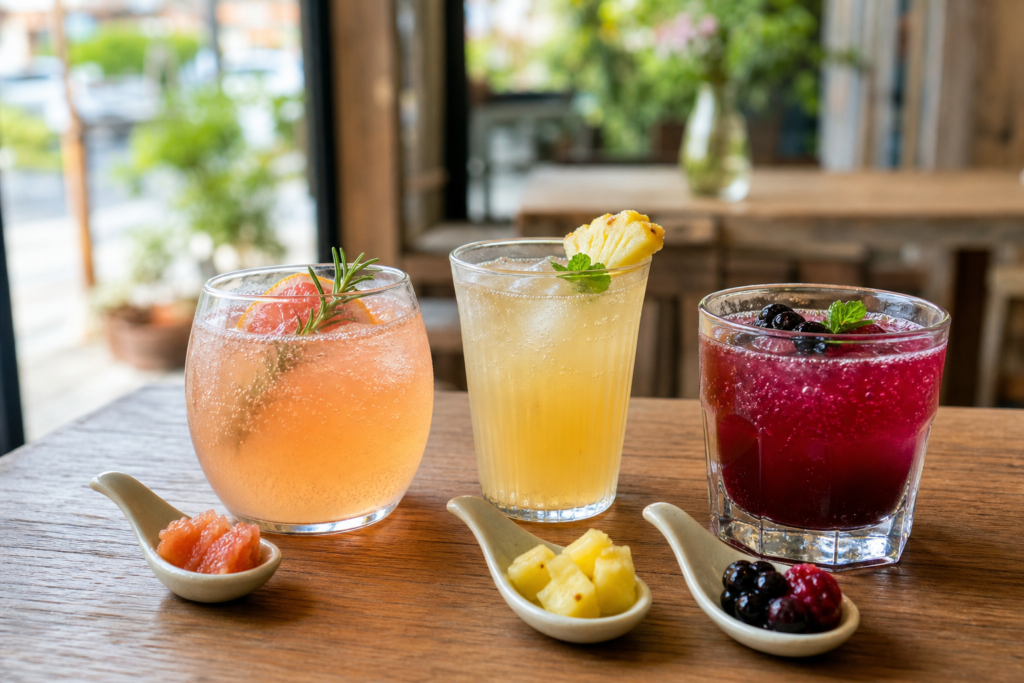
Lychee gives delicate sweetness, osmanthus adds floral aroma, and roselle brings tart color and acidity. If too sweet, reduce juice or fruit. If too sour, shorten time or choose milder fruit. Aim for light fizz and clear aroma rather than maximum pressure.
If you want a taste benchmark, compare your DIY bottle with a ready-to-drink water kefir, then ask what is different: more acidity, less sweetness, stronger fruit aroma, or finer bubbles. Use that comparison to adjust your next batch rather than copying a formula blindly.
A Repeatable Second-Fermentation Routine
Here is the habit loop: taste the base, choose one flavor goal, change only one or two variables, bottle safely, check pressure, chill, open cold, and record what worked.
Keep simple notes: room temperature, flavoring amount, bottle type, time, fizz, sweetness, acidity, aroma, sediment, and whether you burped. Within a few batches, patterns become obvious. Pineapple may move faster in your kitchen. Guava may need a little more aroma support. Ginger may taste best when chilled earlier.
The goal of Water Kefir Second Fermentation is not the biggest possible pop. It is controlled carbonation, balanced flavor, and a bottle you can open safely.