


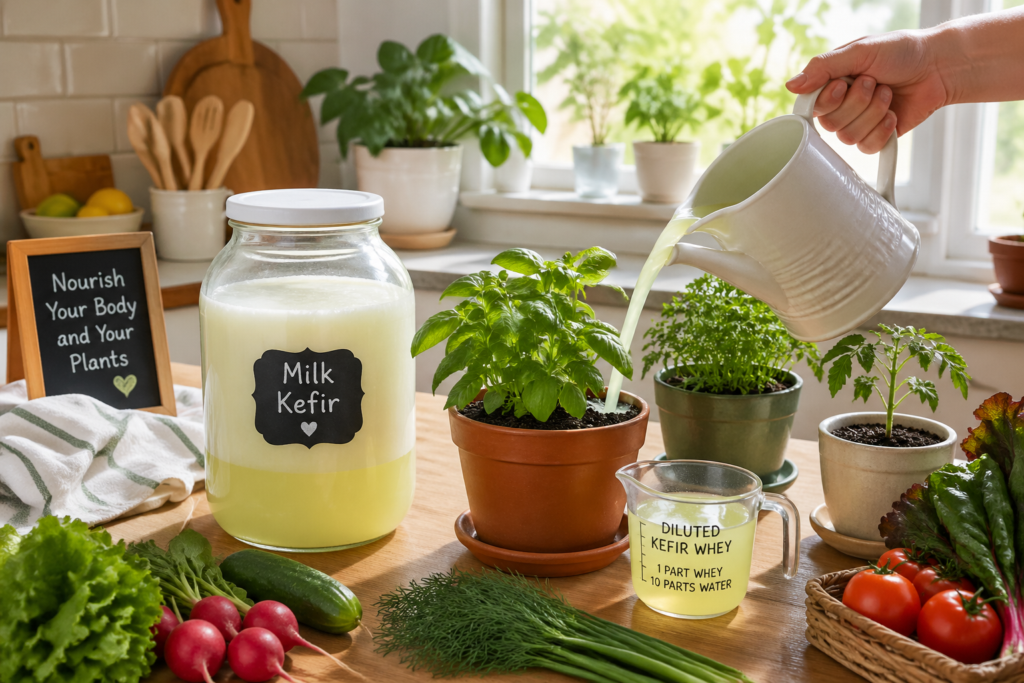
You might have poured it down the drain before—but that pale yellow liquid on top of your kefir is more valuable than it looks. In home fermentation, every drop tells a story of transformation. The same microorganisms that thicken milk into kefir also leave behind a nutrient‑rich liquid called whey. With a bit of creativity, you can turn this by‑product into a zero‑waste ally in your kitchen and garden.
What Kefir Whey Really Is—and Why It Forms
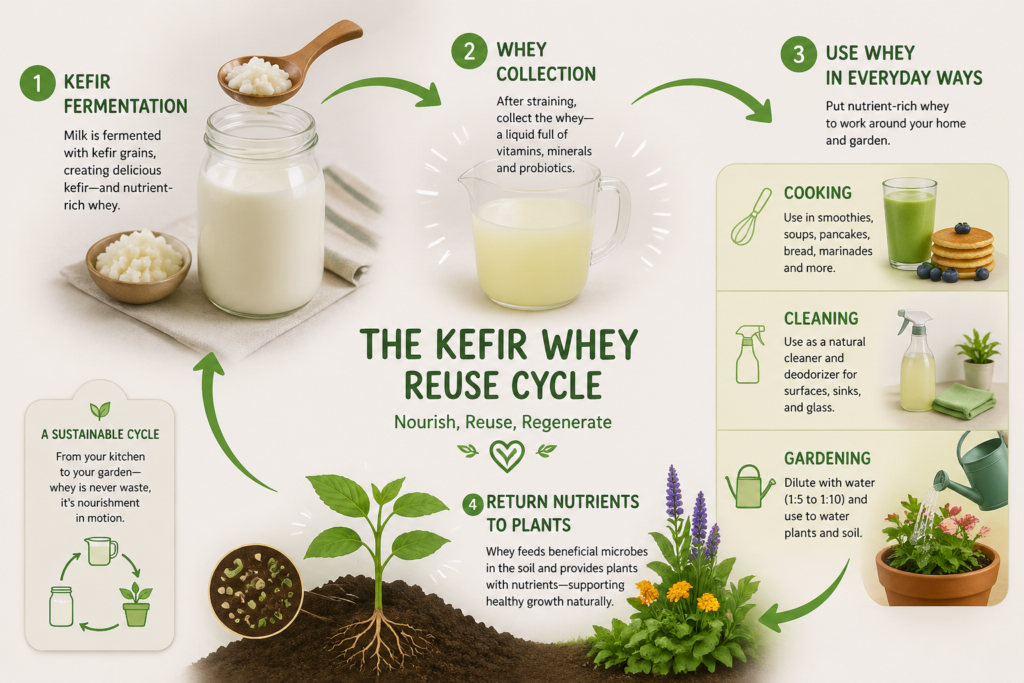
When kefir is fermented a little longer, it naturally separates into two layers: a thick white curd and a translucent yellowish liquid. As described in our post “Is my kefir grains dead?”, this clear layer is whey, produced when lactic acid bacteria break down milk sugars and proteins. It’s slightly acidic, rich in lactic acid, and carries trace minerals, peptides, and residual milk aroma.
The same principle applies whether you’re fermenting dairy or plant‑based kefir. Longer or warmer fermentation (see our second fermentation guide) increases whey separation. Instead of discarding it, you can store it in a clean glass jar in the fridge and reuse it in several ways.
Kitchen Uses: Cooking and Cleaning the Natural Way
1. For cooking. Kefir whey’s mild acidity makes it perfect for soaking grains, marinating vegetables, or adding gentle tang to bread dough. Replace a tablespoon of lemon juice or vinegar with whey in salad dressings or sourdough starter refreshes. Its subtle lactic aroma pairs especially well with rustic breads and fermented pickles.
2. For cleaning. The lactic acid in whey helps loosen stains and neutralize odors on kitchen surfaces. Mix two parts water with one part kefir whey, apply to cutting boards or fridge shelves, let sit for a few minutes, then wipe clean. According to a study on the inhibitory activity of cheese whey fermented with kefir grains, such liquids show natural antimicrobial activity against common spoilage bacteria—though for household use, they work best as mild cleaners rather than disinfectants.
Always test on small areas first, and avoid using on porous stone or unsealed wood due to acidity.
Garden Applications: Feeding Plants Naturally
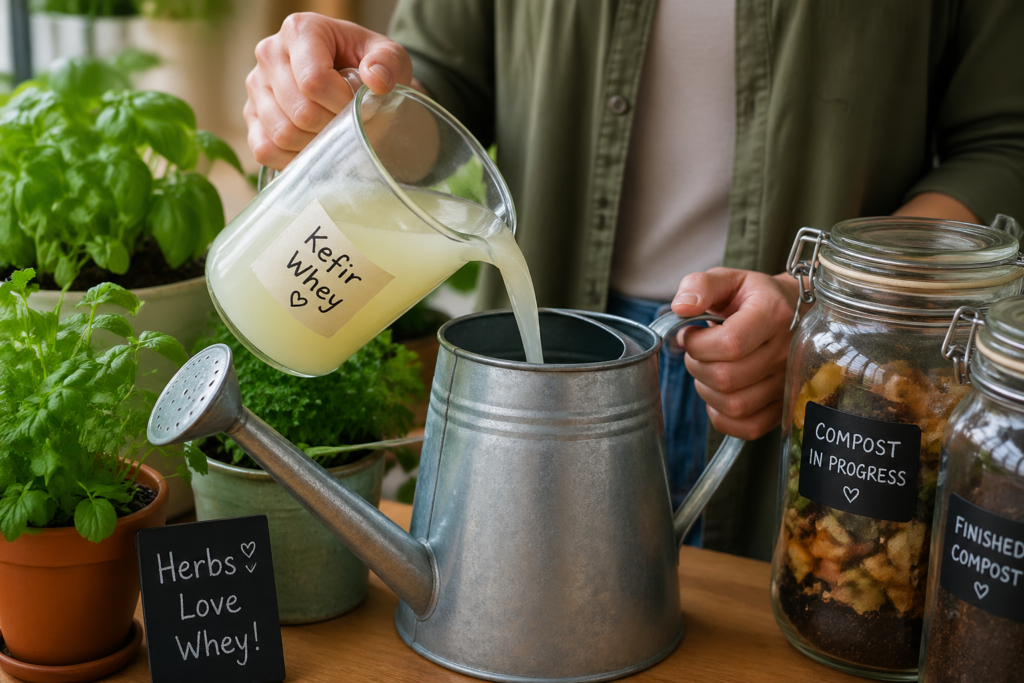
Kefir whey’s acidity can also benefit soil microbes when diluted. Mix about one part whey to ten parts water and use it as a light soil drench or compost accelerator. The organic acids help balance overly alkaline soil, while trace nutrients return to the earth instead of being wasted.
Environmental studies, such as the biological treatment of a mixture of cheese whey and white wastewaters using Kefir grains, show that kefir‑based fermentation liquids can reduce chemical oxygen demand and support seed germination comparable to clean water. Another trial on fermented whey as poultry feed additive to prevent fungal contamination noted its ability to suppress undesirable fungi—an encouraging sign for gardeners managing compost or potting mixes.
However, moderation is key. Use diluted whey sparingly—about once every few weeks—to avoid over‑acidifying the soil. For potted plants, rinse occasionally with plain water afterward.
Safety Notes and Storage Tips
Fresh whey from active fermentation smells pleasantly sour and slightly yeasty. If it turns musty, moldy, or develops a rancid odor, discard it. Whey produced during long dormancy (see how to pause kefir fermentation) should not be consumed. Store usable whey in a sealed jar under refrigeration for up to one week. Shake gently before using, as solids may settle.
Sustainability Starts from the Jar
Zero‑waste fermentation isn’t just about reusing by‑products—it’s about designing each step for reuse. Choose wide‑mouth glass jars that double as strainers or storage containers. Recycle the whey, compost your curd scraps, and rinse with the same mild whey solution you just made. Every reuse shortens your waste loop and deepens your understanding of fermentation ecology.
At Kefir.link, our in‑house tests show that a single batch of milk kefir, fermented at 24 °C for about 24 hours (see our complete guide), yields roughly 10–15% whey by volume—plenty to start your own zero‑waste experiments.
Sources and Further Reading
- Inhibitory activity of cheese whey fermented with kefir grains – Journal of Food Protection
- Fermented whey as poultry feed additive to prevent fungal contamination – Journal of the Science of Food and Agriculture
- A practical approach for the biological treatment of cheese whey using Kefir grains – Environmental Science and Pollution Research International
All information provided here is for general food and sustainability education, not medical advice. Kefir.link products are ordinary fermented foods, not Taiwan Health Food certified products.

