

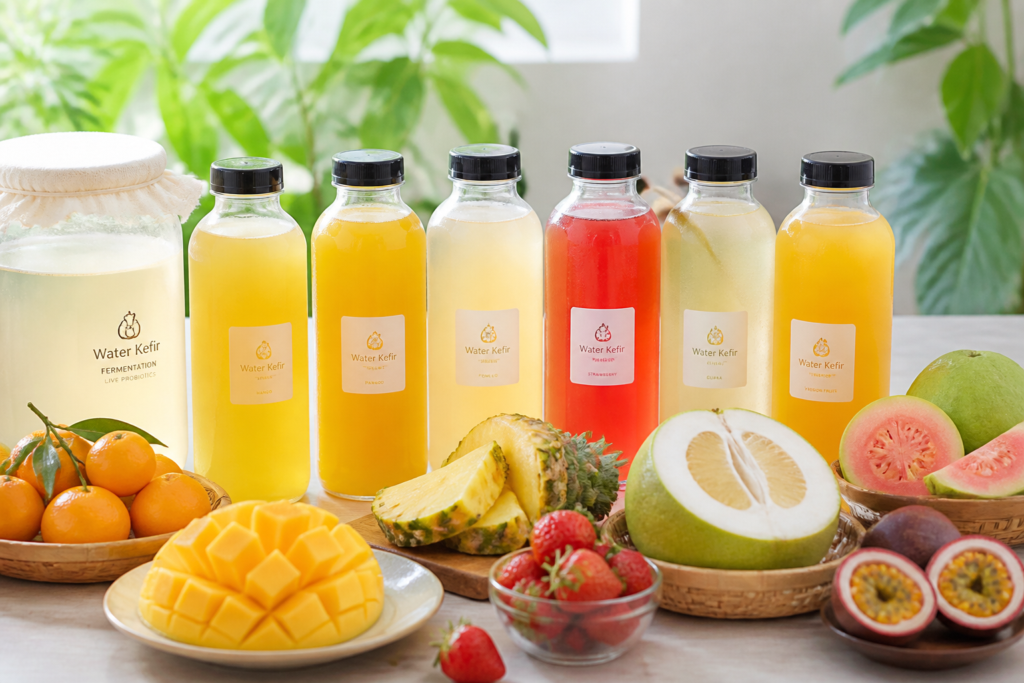
Taiwan’s fruit calendar gives water kefir a big advantage. Winter mandarin, spring strawberry, summer mango, autumn pomelo, and year-round guava can each change the drink’s sweetness, acidity, aroma, and fizz. But better flavor does not come from adding fruit at random. In water kefir, fruit also changes fermentation speed and bottle pressure, especially during the second fermentation.
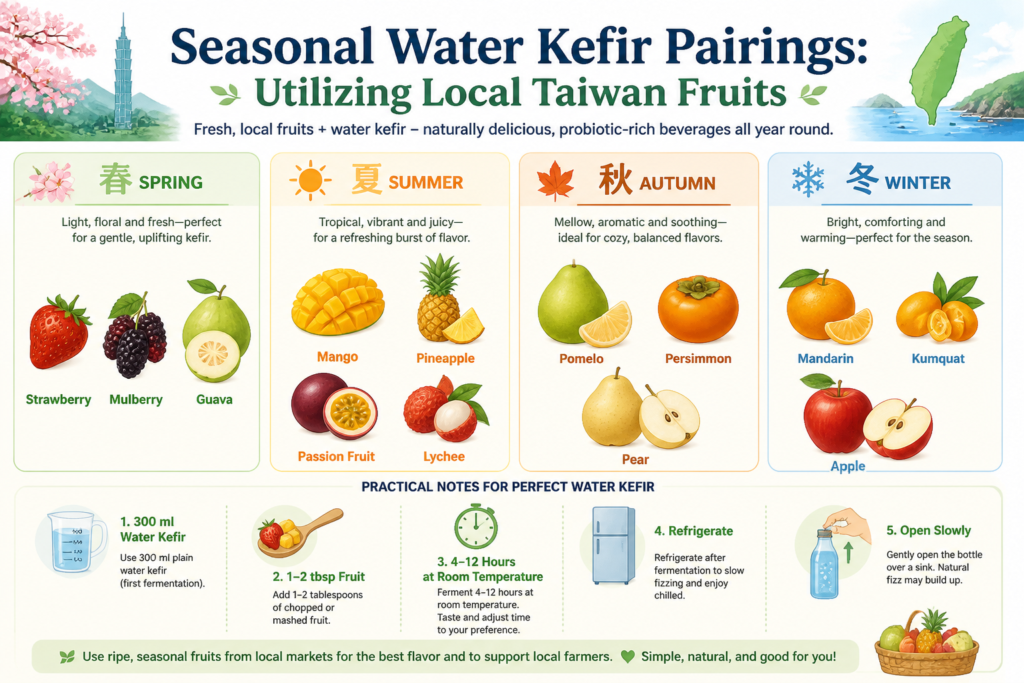
If you want a simple place to begin, use this starter formula: for water kefir second fermentation fruit flavoring, combine 300 ml finished water kefir with 1 to 2 tablespoons chopped fruit or juice. Bottle for 4 to 12 hours at Taiwan room temperature, then refrigerate. Open slowly, because fruit sugars can build strong carbonation surprisingly fast.
That basic approach matters because Taiwan’s climate is warm for much of the year, and warm temperatures can push second fermentation along quickly. A fruit that tastes light and refreshing in the bottle can still create a lot of pressure if left too long. Once you understand how each local fruit behaves, though, seasonal pairing becomes one of the easiest ways to make water kefir more interesting at home.
Why seasonal Taiwan fruits matter in water kefir
Water kefir is light, tangy, caffeine-free, and naturally fizzy when handled well. Adding local fruit during the second fermentation can make it taste fresher and more nuanced than a soft drink, without relying on artificial flavoring.
Seasonality matters for more than flavor. Different fruits contribute different amounts of sugar, acid, juice, pulp, and peel oil, and each of those affects the final bottle in a different way.
- Sweet fruits such as mango, lychee, and pineapple feed fermentation quickly and may create more gas.
- Acidic fruits such as passion fruit, calamansi, and citrus bring brightness but can turn sharp if fermented too long.
- High-pulp fruits such as guava, banana, and mango can make the drink cloudy or thick.
- Peel-heavy fruits such as citrus and pomelo can become bitter if too much peel or pith is included.
That is why the same plain bottle of water kefir can become gentle and floral with lychee, tropical and lively with pineapple, or crisp and clean with mandarin orange. Choosing fruit by season is practical because seasonal produce usually tastes better, is easier to find, and gives you a more predictable starting point.
If you prefer a ready-to-drink option, our Water Kefir is a lactose-free choice and is listed with SGS inspection and live probiotic information on the product page. If you are fermenting at home, the guide below offers a practical starting framework.
What second fermentation means
Before pairing fruits, it helps to define the stage where flavoring happens.
First fermentation is when water kefir grains ferment sugar water. After the grains are removed, the finished liquid is water kefir.
Second fermentation is the flavoring stage. You place finished water kefir into a clean bottle with fruit, juice, herbs, or spices. The remaining microbes continue working on the sugars in the liquid and the added ingredients. This can create more aroma, more acidity, and often more carbonation.
The idea is similar to the process explained in our guide to milk kefir second fermentation, but water kefir usually feels lighter and more soda-like. It also tends to react faster to fruit sugars, which is why second fermentation should be treated as an active fermentation step, not just storage.
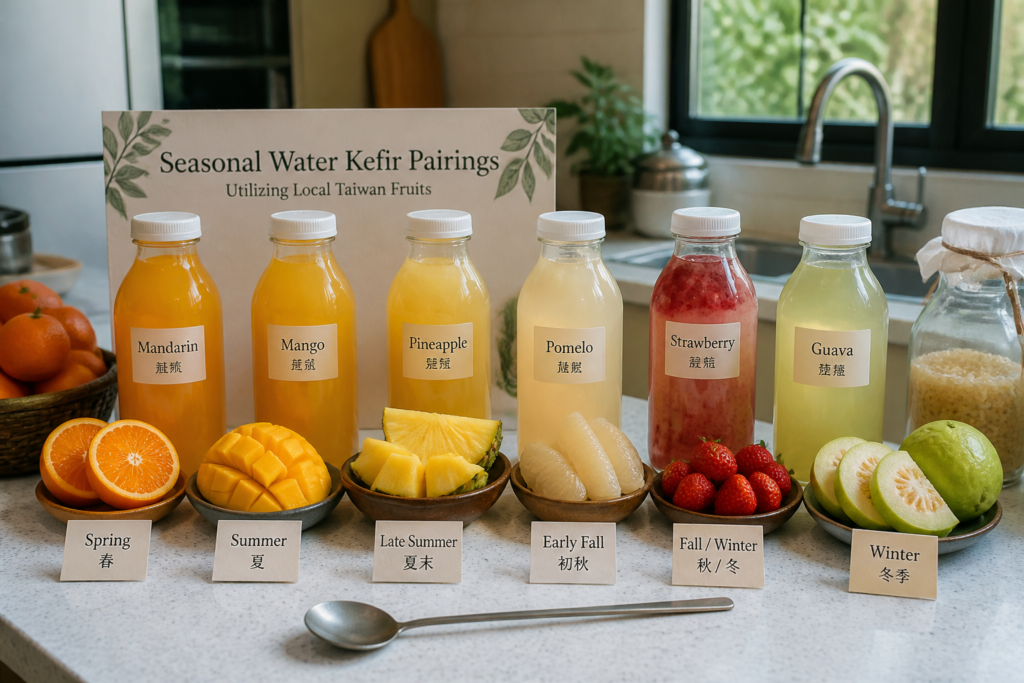
Best Taiwan fruits to use by season
Once you know that fruit affects both taste and pressure, the next step is choosing fruits that fit the season and your skill level. In general, beginners do best with fruits that add clear flavor without creating too much pulp or bitterness.
Spring: strawberry, mulberry, plum, guava
Spring fruits usually give bright, fresh flavors with a gentle tart edge. This is a good season for beginners because many spring fruits add aroma quickly without overwhelming the kefir base.
- Strawberry: 2 sliced berries per 300 ml bottle. Easy to use, aromatic, and beginner-friendly.
- Mulberry: 1 tablespoon fresh mulberries per 300 ml bottle. Deeper berry flavor, but expect staining and sediment.
- Green plum: 1 to 2 thin slices or a small spoon of plum syrup. Start small because the flavor can sharpen quickly.
- Guava: 1 tablespoon diced ripe guava. Good aroma, but strain before drinking if you dislike pulp.
If you want a low-risk first batch, strawberry or guava is usually easier to control than plum.
Summer: mango, pineapple, passion fruit, lychee, watermelon
Summer fruit in Taiwan is intensely fragrant and often high in sugar. These fruits can make especially lively, sparkling water kefir, but they can also raise bottle pressure much faster than cooler-season fruits.
- Mango: 1 tablespoon diced mango for a smooth tropical flavor.
- Pineapple: 1 tablespoon small cubes. Expect strong fizz.
- Passion fruit: 1 to 2 teaspoons pulp for a tart, aromatic finish.
- Lychee: 1 peeled lychee, lightly crushed, for a floral flavor.
- Watermelon: 2 tablespoons juice. Best for early drinking because the flavor is delicate.
In warm weather, these are the bottles to monitor most closely. Pineapple, mango, lychee, and passion fruit often need shorter room-temperature time than you expect.
Autumn: pomelo, persimmon, dragon fruit, pear
Autumn pairings are often softer, rounder, and more fragrant than summer ones. They can be excellent when you want a gentler bottle with less aggressive acidity.
- Pomelo: 1 tablespoon pulp only. Avoid thick peel and white pith to prevent bitterness.
- Persimmon: 1 tablespoon diced ripe persimmon or a small piece of dried persimmon.
- Dragon fruit: 1 tablespoon diced fruit for color and mild sweetness.
- Pear: 1 tablespoon diced pear with a thin slice of ginger if you want extra warmth.
Research has also explored mandarin and persimmon in water kefir, showing that these fruits can be used as fermentation substrates in controlled water kefir experiments. For home use, the practical lesson is simple: these fruits are workable, but your results will still depend on temperature, fruit amount, and time.
Winter: mandarin orange, kumquat, apple, strawberry
Winter is one of the easiest seasons for clean, refreshing citrus-based bottles. Mandarin orange is especially beginner-friendly because it gives juice, aroma, and natural sweetness without too much pulp.
- Mandarin orange: 1 to 2 segments, lightly crushed.
- Kumquat: 1 thin slice or a small squeeze of juice. Use lightly because the flavor is concentrated.
- Apple: 1 tablespoon diced apple, with cinnamon if desired.
- Strawberry: 1 to 2 sliced berries when winter strawberries are available.
If you are completely new to fruit flavoring, mandarin is one of the best first choices.
How to do water kefir second fermentation with fruit
With fruit selected, the next step is using a repeatable method. Keeping your process small and consistent makes it much easier to learn how each fruit behaves.
- 1. Finish the first fermentation and remove the water kefir grains. Do not bottle the grains with fruit unless you are following a specific tested recipe.
- 2. Use a clean bottle suitable for fermentation pressure. If you are new, choose a bottle that is easy to open and monitor.
- 3. Add 300 ml finished water kefir.
- 4. Add 1 to 2 tablespoons chopped fruit, lightly crushed fruit, or fresh juice.
- 5. Leave headspace at the top. Do not fill to the rim.
- 6. Close the bottle and ferment at room temperature for 4 to 12 hours in warm Taiwan weather. In cooler weather, it may need longer.
- 7. During testing, open carefully once to release pressure if needed. This is often called burping the bottle.
- 8. Taste with a clean spoon or pour a little into a cup. When the flavor tastes balanced, refrigerate.
- 9. Drink cold and open slowly, especially if you used mango, pineapple, passion fruit, or lychee.
A helpful habit is to change only one variable at a time. If you test mandarin one day and pineapple the next, keep the bottle size and fermentation time similar. That makes it easier to tell whether a fruit creates more sweetness, more acidity, or more pressure.
Easy fruit pairing ideas for beginners
If you are unsure where to start, keep things simple. Choose one main fruit and one accent flavor, and make a small batch first. This gives you a clear sense of what each ingredient contributes.
- Mandarin ginger: mandarin segments plus one thin slice of ginger.
- Pineapple mint: pineapple cubes plus a small mint leaf.
- Mango lime: diced mango plus a few drops of lime or calamansi juice.
- Passion fruit honey aroma: passion fruit pulp only. Avoid extra sweetener until you understand your carbonation speed.
- Guava lemon: diced guava plus a small squeeze of lemon.
- Pomelo rosemary: pomelo pulp plus a tiny sprig of rosemary, removed before drinking.
- Strawberry basil: sliced strawberry plus one small basil leaf.
These combinations work because they balance fruit character with a small herbal or acidic accent, rather than crowding the bottle with too many flavors at once.
For a thicker drink idea using kefir and fruit, you can also see our fruit kefir smoothie guide. Smoothies are different from bottled second fermentation because they are blended and usually consumed soon after making.
Common mistakes to avoid
Most disappointing batches come from a few repeat problems. The good news is that they are easy to prevent once you know what to watch for.
Overfilling the bottle
Fruit creates gas. If the bottle is too full, pressure can build quickly and lead to a messy opening or, in extreme cases, bottle breakage. Always leave headspace.
Letting sweet summer fruit ferment too long
Mango, pineapple, lychee, and passion fruit can become very fizzy. In Taiwan’s warm weather, check early. A few hours may be enough.
Using moldy, bruised, or dirty fruit
Fermentation does not rescue spoiled fruit. Wash fruit well, remove damaged parts, and use clean tools.
Adding too much citrus peel
Peel can smell wonderful, but the white pith can taste bitter. Use zest or a very thin slice only, and remove it if the flavor starts turning harsh.
Expecting every fruit to create strong bubbles
Some fruits contribute more aroma than carbonation. Watermelon, dragon fruit, and pear may taste gentle. Pineapple and passion fruit usually act faster and more vigorously.
When to discard a fruit-flavored water kefir batch
Even with good technique, it is important to know when a batch is not worth saving. When in doubt, choose safety.
Discard the batch if you notice:
- Fuzzy mold in white, green, blue, black, or pink patches.
- A rotten, sewage-like, or strongly unpleasant smell.
- A slimy texture that is not just normal fruit pulp.
- A bottle left warm for far too long that gushes violently and smells off.
- Fruit that was already spoiled before it was added.
Normal signs can include bubbles, light sediment, fruit floating, cloudiness, and a tangier fermented smell. Those are common in fruit second fermentation. The key question is whether the batch smells fresh-tart and fermented, or clearly rotten and unsafe.
The simplest way to get good results
The easiest takeaway is this: start seasonal, start small, and write down what you did. Water kefir fruit experiments become much easier when you control three things every time: fruit amount, temperature, and time.
- Use 300 ml water kefir as your test size.
- Add 1 to 2 tablespoons fruit.
- Check after 4 hours in warm weather.
- Refrigerate when the flavor tastes balanced.
- Open slowly and enjoy cold.
For a simple Taiwan-inspired first bottle, try mandarin orange in winter, strawberry in spring, pineapple in summer, or pomelo in autumn. Once you learn how each fruit behaves, you can build your own seasonal water kefir menu at home with much more confidence.