

The ‘Liquid Gold’ Trend: Why Whey for Skin?
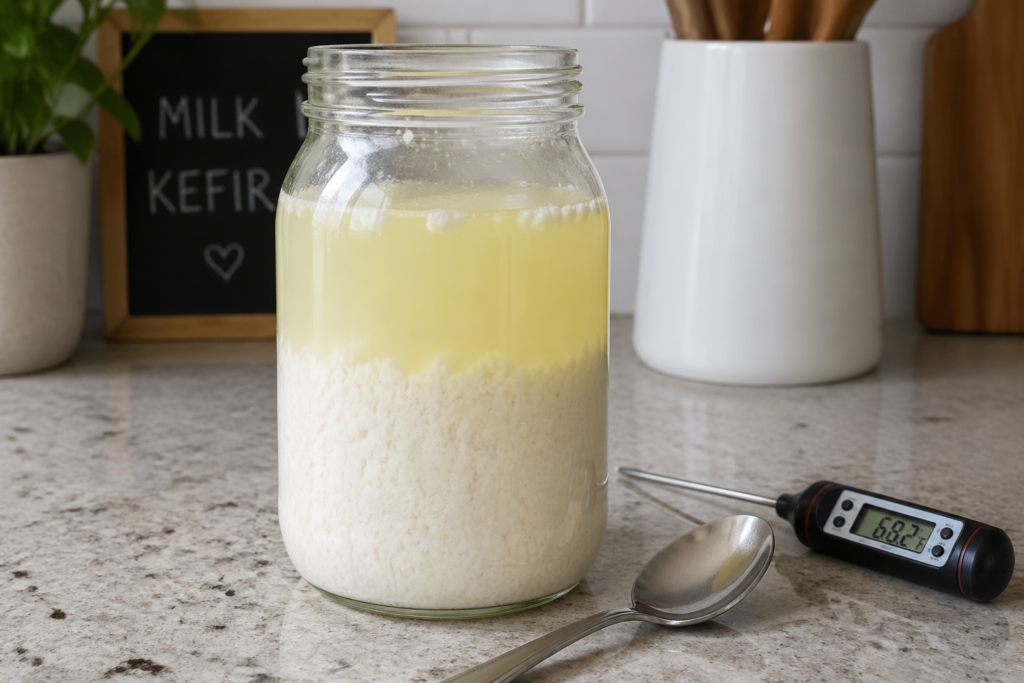
You’ve likely heard kefir whey described as “liquid gold” for a glowing complexion. It is that translucent, champagne-colored liquid that pools atop your curds during fermentation. While many toss it down the drain, a single batch of milk kefir yields about 10–15% whey by volume—a byproduct brimming with bioactive peptides and lactic acid.
Lactic acid is a celebrated Alpha Hydroxy Acid (AHA) found in premium serums to refine texture and brighten skin. In fact, research on kefir whey skin care properties suggests its lactic acid concentration can even inhibit Propionibacterium acnes, the bacteria linked to breakouts. However, there is a hidden risk: because this is a living, unstandardized product from your kitchen, the potency of this “natural” acid can fluctuate from a gentle glow-maker to a harsh irritant.
The pH Battle: Your Skin Barrier vs. Fermentation
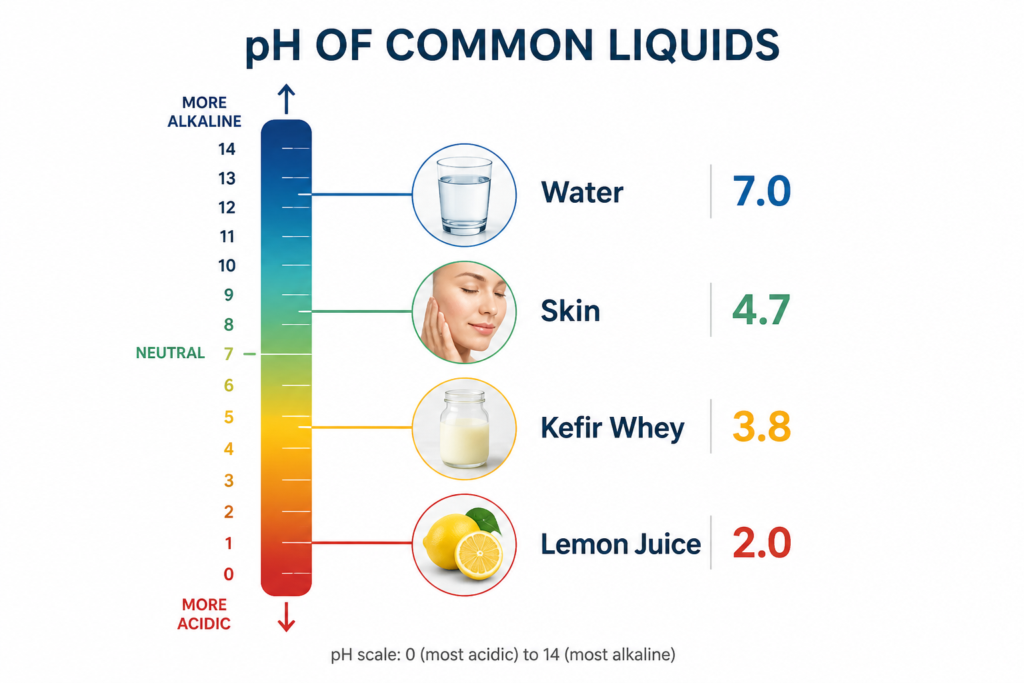
To use whey safely, we must respect the chemistry of the skin’s “acid mantle.” This protective film naturally maintains a pH between 4.7 and 5.7, creating a slightly acidic shield that keeps the barrier resilient and locks in moisture.
Fresh milk begins at a nearly neutral pH of 6.5–6.7. As kefir grains feast on lactose, they churn out lactic acid, causing the pH to plummet. According to the science of kefir separation, once the liquid hits a pH of roughly 4.5, proteins coagulate into curds. If fermentation continues, the resulting whey can drop to a sharp pH of 3.5 or lower.
Applying a liquid with a pH of 3.5 directly to your face isn’t just toning; it’s a DIY chemical peel. Without proper caution, this acidity can strip your mantle, leading to transepidermal water loss (TEWL). This is why a kefir skin barrier clinical study notes that while kefir consumption improves hydration from the inside out, topical use requires a more calculated, precise approach.
Why ‘Natural’ Doesn’t Always Mean ‘Gentle’
A common DIY misconception is that home-fermented ingredients are inherently safer than lab-formulated products. In reality, natural AHAs demand the same respect as store-bought exfoliants. As whey over-ferments, it becomes increasingly aggressive, moving from a mild tonic to a potent acid.
Stability is also a factor. Whey harvested from dormant, refrigerated batches left for several weeks is not ideal for your face. These older batches can undergo unpredictable microbial shifts. For skincare, always use fresh whey from a balanced, active batch. If you find yourself with an over-fermented surplus, consider using kefir whey in your garden or kitchen instead of on your skin.
How to Test Your Whey’s pH at Home
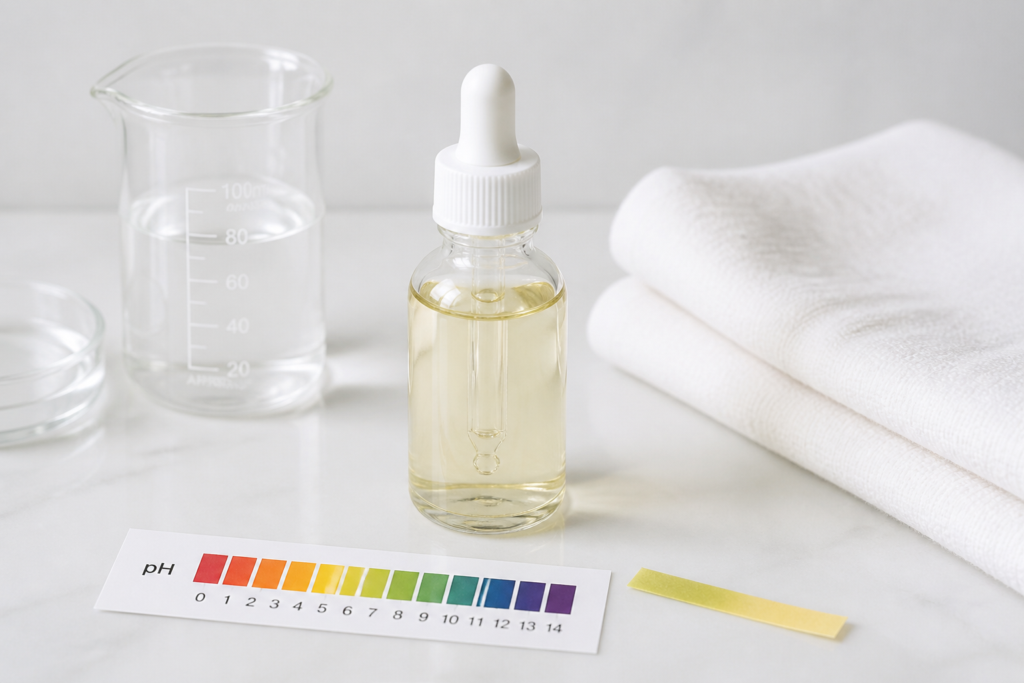
Precision is the bridge between a successful treatment and a damaged barrier. Treat your kitchen like a mini-lab by using high-quality pH strips or a calibrated digital meter to verify your batch before it touches your face.
- The Safe Zone: Aim for a pH no lower than 3.5 to 4.0 for leave-on use. Anything lower should be diluted.
- The Sensory Check: “Sweet” young whey has a mild, milky aroma. If your whey smells sharply like vinegar or makes your nose tingle, it has likely become too acidic for direct application.
While kefir safety side effects are generally minimal, applying highly acidic liquids to sensitive areas can trigger immediate redness or long-term sensitivity.
The Safe DIY Protocol: Dilution and Patch Testing
To harness the benefits of whey without the risk of a chemical burn, follow this safety-first application protocol:
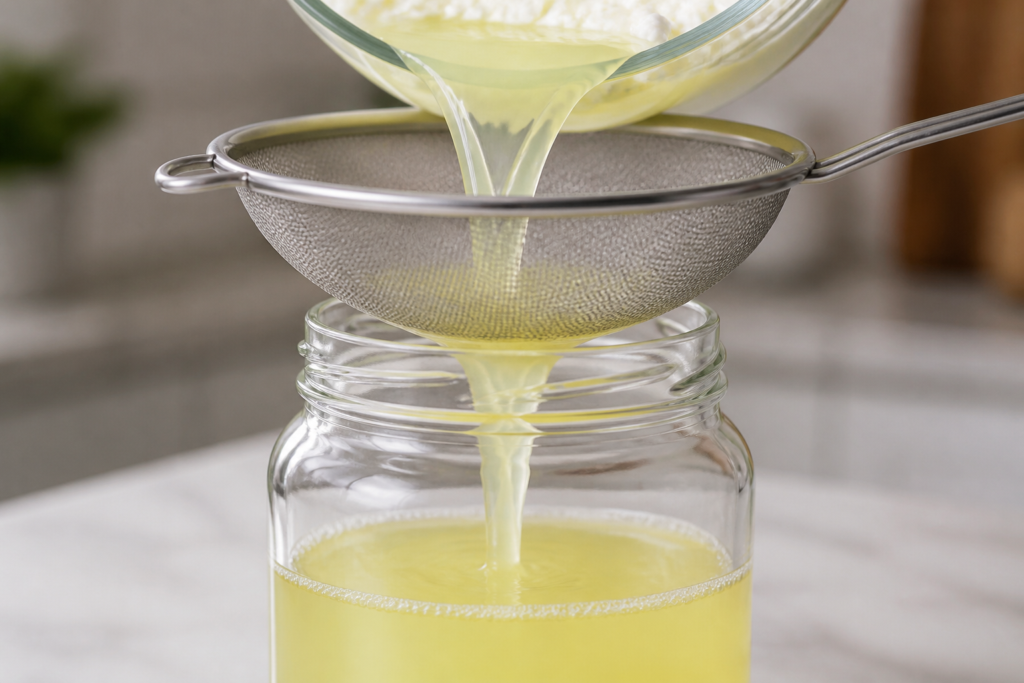
- Clean Extraction: Use a dedicated stainless steel cheese maker to strain your kefir. Using 304-grade stainless steel ensures your whey is collected without reactive metal contamination or environmental dust.
- Dilute for Safety: For your first application, mix equal parts kefir whey and distilled water (a 1:1 ratio). This buffers the acidity, making the solution significantly gentler.
- The 24-Hour Patch Test: Apply the diluted whey to your inner arm or behind the ear. Monitor the site for 24 hours for any signs of itching, peeling, or persistent redness.
- Hygienic Storage: Transfer your serum to a glass dropper bottle and keep it refrigerated. Discard any unused portion after 3–5 days to prevent spoilage.
If your skin thrives on the diluted version, you can gradually increase the concentration or incorporate it into DIY kefir face masks as a shorter, rinse-off treatment.
When to Stop: Recognizing an Acidic Reaction
Even with careful dilution, some skin types may find kefir whey too active. Stop use immediately if you notice:
- A sharp stinging or “burning” sensation that doesn’t subside within seconds.
- Splotchy redness that lasts more than 30 minutes post-application.
- Skin that feels “squeaky” clean, tight, or unusually parched.
Always inspect your fermentation before use. If the whey develops a musty odor, off-colors, or visible mold, discard the entire batch. Remember, kefir whey is a supplement to your routine, not a replacement for professional dermatological care.
By adopting a scientist’s mindset—prioritizing pH and precision—you can safely transform your fermentation byproducts into a powerful ally for a resilient, glowing skin barrier.
Related reading
Sources and further reading
- kefir whey pH skin safety – Discusses kefir's slightly acidic pH from lactic acid supporting skin barrier by maintaining low surface pH hostile to bacteria; warns over-fermented kefir may be too acidic and irritating; recommends plain, live, full-fat kefir and avoiding if too sour for facial use.