

The Physics of Fermentation: Why Small-Batch Glass Vessels Produce Superior Kefir
In a world of mass production, we are often told that “bigger is better.” But for a living colony of kefir grains, a 1,000-liter stainless steel tank is a hostile skyscraper—a cold, pressurized environment where delicate cultures struggle to thrive. By contrast, a small glass jar is a sanctuary. It offers the intimacy and stability that biological organisms require to reach their full probiotic potential.
Choosing small-batch glass fermentation isn’t just about embracing a “handcrafted” aesthetic; it is a technical necessity. The physical environment of the vessel—its surface area, pressure, and non-reactivity—directly dictates the health of the grains. When we prioritize the physics of the jar, we ensure the biological success of the kefir.
The Biological Limit of Scale: Why Grains Hate Vats
Kefir grains are not inert chemical catalysts; they are complex, living communities of bacteria and yeast. In massive industrial vats, the sheer weight of thousands of liters of milk creates immense hydrostatic pressure that can physically stress or crush the soft, rubbery structure of the grains.
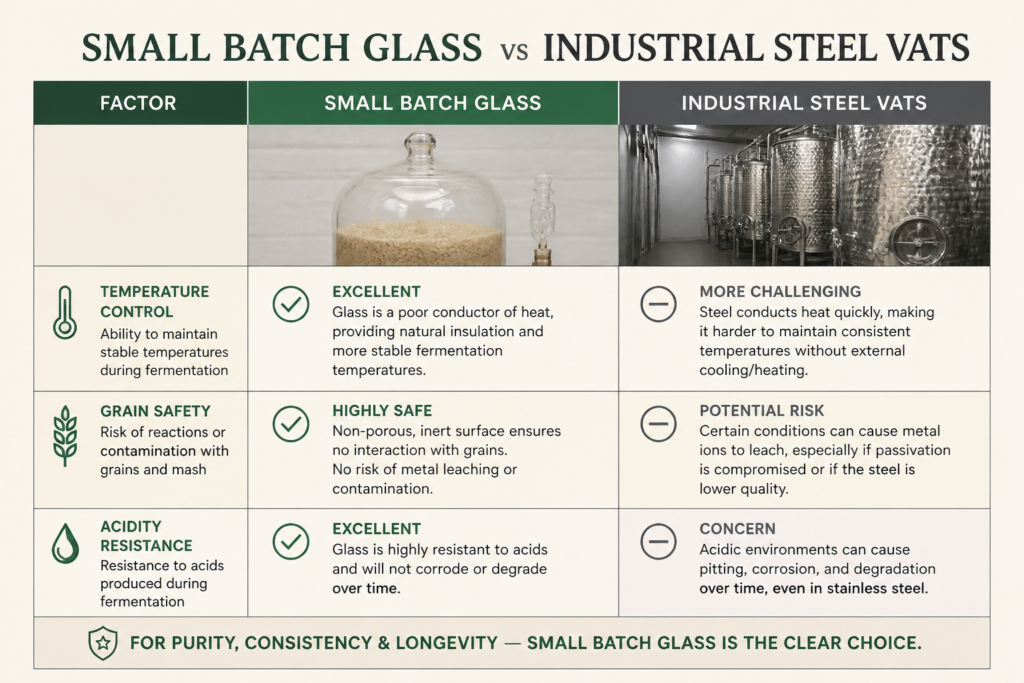
Furthermore, large-scale production struggles with uniformity. While kefir grains reach peak performance between 20°C and 30°C, industrial tanks often suffer from “dead zones” where temperature and milk circulation are inconsistent. This lack of uniform surface area means some grains may starve while others sit in over-fermented pockets. To maintain the delicate grain-to-milk ratio science, smaller environments are simply more reliable.
Glass: The Gold Standard for Non-Reactive Culturing
As kefir ferments, it naturally increases in acidity. This tang is the hallmark of a successful ferment, but it poses a challenge for the container. Glass is the gold standard because it is completely non-reactive. Unlike plastic, which can develop microscopic scratches that harbor unwanted bacteria, or reactive metals that can leach chemicals into the liquid, glass remains a neutral fortress.
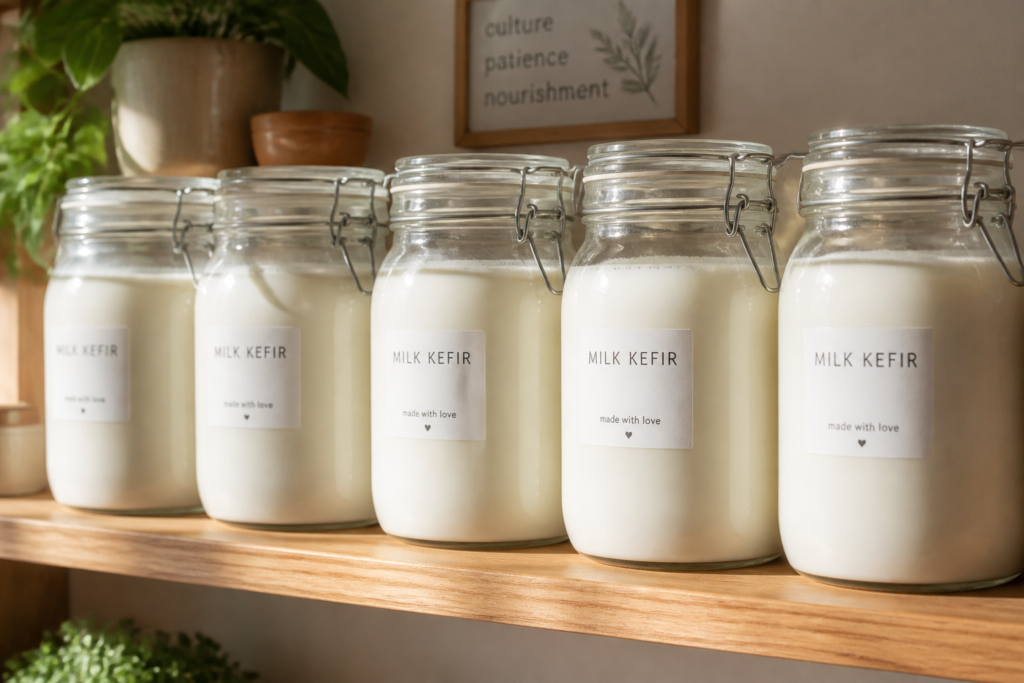
Using glass jars best for kefir grains ensures that no BPA or synthetic compounds interfere with the 24-hour fermentation cycle. It provides a sterile, smooth surface that protects the grains’ integrity from one batch to the next.
Surface Area and the Science of the Perfect Ratio
The geometry of a small vessel allows for superior gas exchange and thermal stability. In a small jar, heat distribution is nearly instantaneous, preventing the “hot spots” that occur in industrial mixing. This is critical because temperatures exceeding 40°C will permanently damage or kill kefir grains.
Small batches also allow for a precise, manageable ratio—typically 1 tablespoon of grains per 1/2 cup of milk. Maintaining this balance is much easier when you can see every grain. If you are scaling your production at home, using a milk kefir calculator can help you maintain this vital equilibrium without overwhelming the culture.
Visual Monitoring: Catching the ‘Middle Jar’ Consistency
Transparency is a quality control tool. In a glass jar, you can witness the “living process” in real-time. You aren’t relying on a sensor in a vat; you are using sensory cues to identify the exact moment of peak probiotic density.
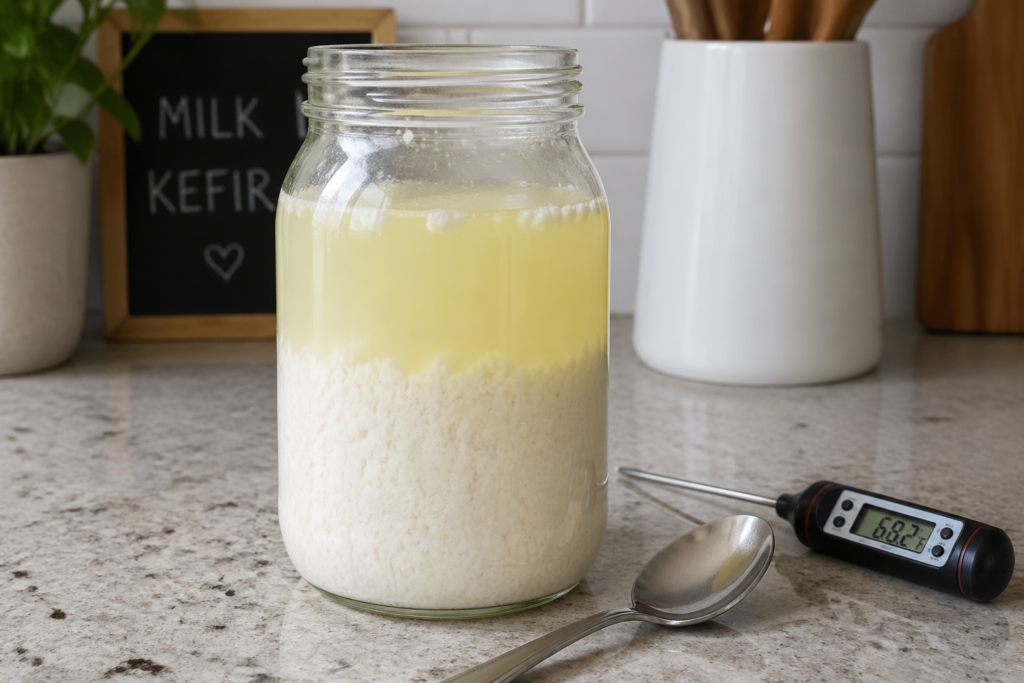
We look for the “middle jar” consistency: a creamy, gently thickened body where the first signs of whey separation appear. By understanding curds and whey, a craft producer can stop the fermentation at the 24-hour mark (at 24°C) to ensure the texture is silky rather than broken or chalky. This level of precision is the essence of the “handcrafted” (職人手作) philosophy.
Safety at Scale: Why Small Batches are More Secure
Small-batch production offers a unique safety advantage: isolation. In an industrial setting, a single contamination event can ruin thousands of liters. In a small-batch system, each jar is its own ecosystem. If one jar is off, it is easily identified and removed, protecting the integrity of the entire yield.
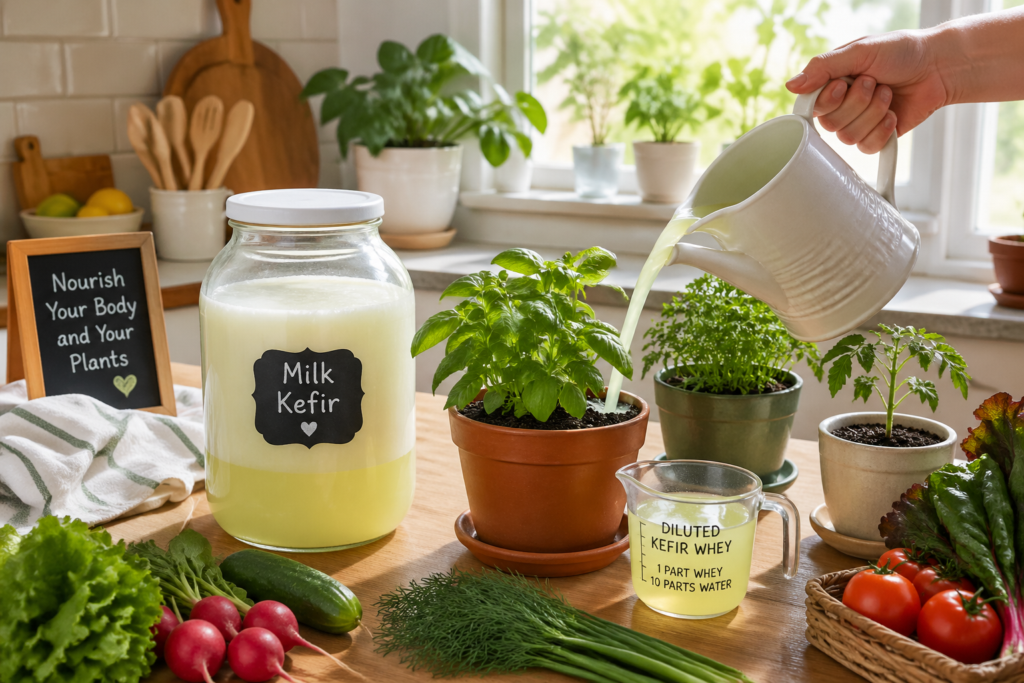
This controlled environment also keeps natural fermentation byproducts stable. For instance, the trace alcohol produced (approximately 0.08%) remains consistent across small batches. If a batch does over-ferment, the resulting whey doesn’t have to go to waste; many enthusiasts find success using kefir whey in your garden or kitchen as part of a zero-waste lifestyle.
The Result: Probiotic Vitality You Can Taste
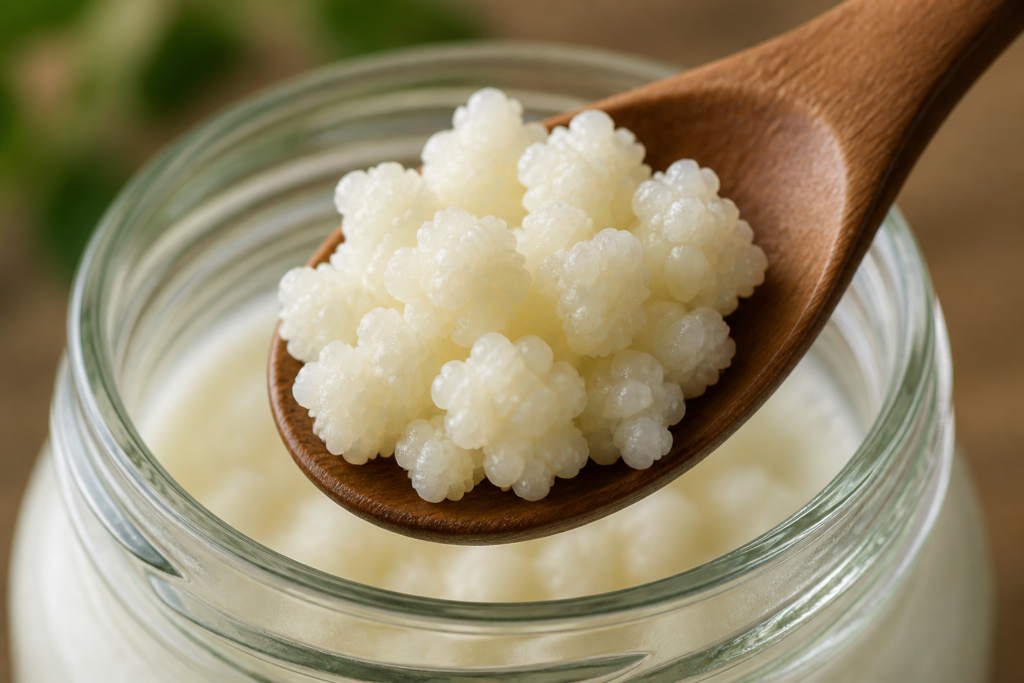
When you handle grains gently in a glass environment, the result is a superior product. Healthy grains should look like small, rubbery cauliflower florets. If they are vibrant, the kefir will be too—offering a complex flavor profile and verified probiotic counts that mass-produced drinks struggle to match.
Whether you are using non-reactive glass for water kefir or exploring how fermentation transforms soy milk kefir and isoflavones, the principle remains: the vessel is the foundation of quality. Handcrafted kefir isn’t just a label; it’s a technical commitment to the life within the jar.
For a visual look at the difference between craft-scale fermentation and industrial setups, watch this demonstration: small-batch fermentation video.
Sources and further reading
- small jars per serving – Instructs using sterilized glass jars (e.g., Mason jars) for kefir; suggests one jar per daily serving to maintain optimal grain-to-milk ratio, avoiding large single batches for family use.