


 By Nik, founder of 東歐嚴選|kefir.link and former chef · Updated 2 November 2026
Varenyky are Ukrainian dumplings named after the verb “to boil”, yet in some regions and families they have always been steamed. These are filled with lightly sweetened fresh cheese, steamed until the kefir dough puffs up soft, then turned in butter. Thick kefir makes the dough elastic and fluffy, and its acidity reacts with the baking soda to give the wrappers their tender lift.
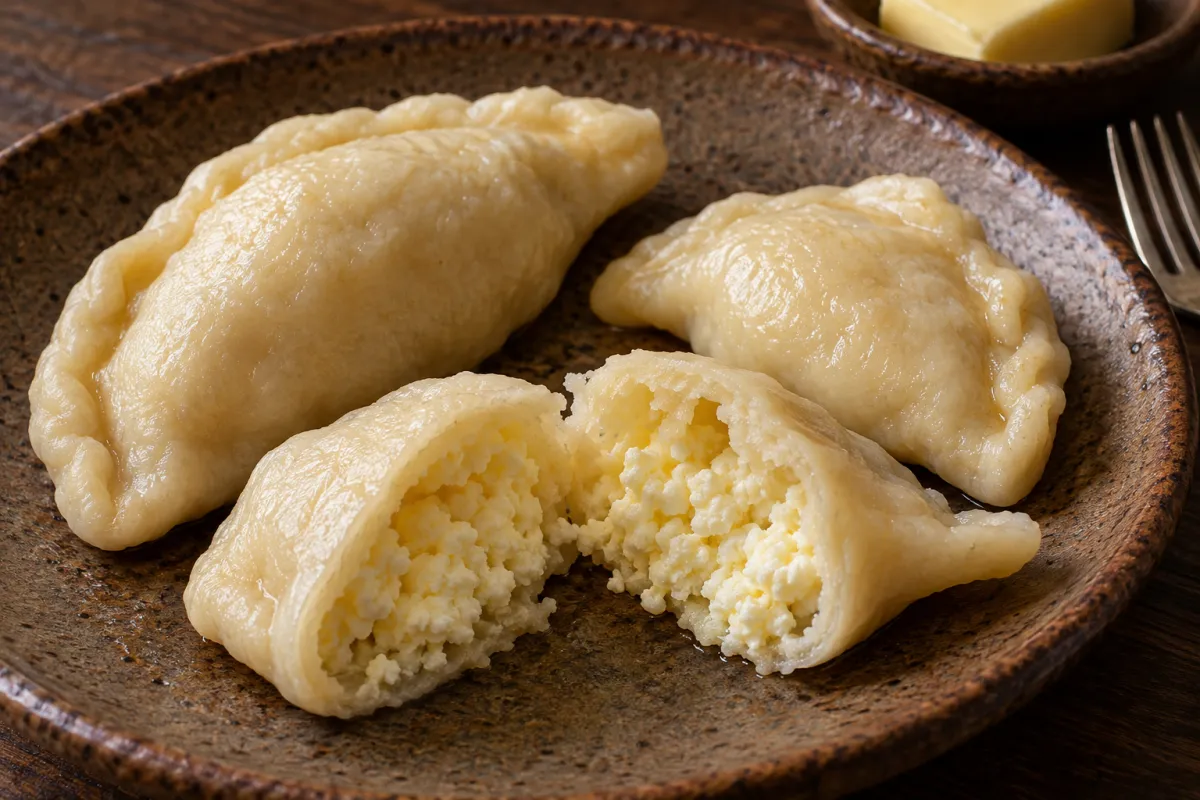
Cheese dumplings for the week before Lent
In Ukraine, varenyky are a dish for holidays and family Sunday lunches, filled with potato, mushrooms, liver or cherries and served with cracklings or sour cream. Cheese varenyky belong above all to Masnytsia, the week before Great Lent, when meat is no longer eaten but dairy and eggs still are. They were the main dish of that week, generously covered with butter or sour cream, and in the Poltava region steamed varenyky with sweet or salted cheese were made for it. Sweet cheese varenyky are eaten as a light meal rather than a dessert, with sour cream sweetened with honey or sugar.
Why the kefir dough needs speed
Kefir’s own acidity reacts with the baking soda and releases carbon dioxide, which keeps the dough soft. The reaction starts the moment the two meet, so the soda is not quenched in vinegar first and the flour goes in straight away; if the liquid stands for about 10 minutes without flour, the bubbles burst. Room-temperature kefir works best, because cold slows the reaction. Resist dusting in more flour, since too much flour and too much kneading make dense, rubbery dumplings.
Dry filling, firm seams, room to swell
A wet filling is hard to seal and can split the dumplings, so the cheese must be dry, and well-drained ricotta can stand in for farmer’s cheese. If the filling still looks watery, 1 teaspoon of semolina or starch soaks up the extra moisture. Dough rolled too thin tears as you pinch it, and a firmly pinched or braided seam holds the filling as the dumpling swells. Varenyky puff up a lot in the steam, so leave space between them, and allow longer than 5 to 7 minutes if your wrappers are thick. Besides sour cream, jam or condensed milk makes a sweeter topping.



Comments
No comments yet.
Comments could not be loaded.
Join the discussion
or