










 Buy this item and earn
🌍 Milk kefir: benefits and origins
- Benefits: Milk kefir contains a variety of probiotic bacteria and yeasts, protein and calcium, with a low sugar content. It is a familiar part of everyday eating in Europe. Its benefits include supporting digestion, regular bowel movements and metabolism. With more probiotics than many yogurts sold at PX Mart, it is also known as a drinkable source of probiotics.
- Origins: Kefir grains originated in the Caucasus Mountains around 2,000 years ago. Our milk kefir is made with 100% fresh milk and kefir grains. Prepared by a European chef, it brings traditional fermentation together with a layered, gently tangy flavor and soft bubbles.
🏆 SGS testing
- Live cultures: 57 billion live lactic acid bacteria per 100g—far more than PX Mart yogurts and Greek yogurt.
- Testing: Tested by SGS Taiwan and exceeding the CNS3058 national standard for fermented milk.
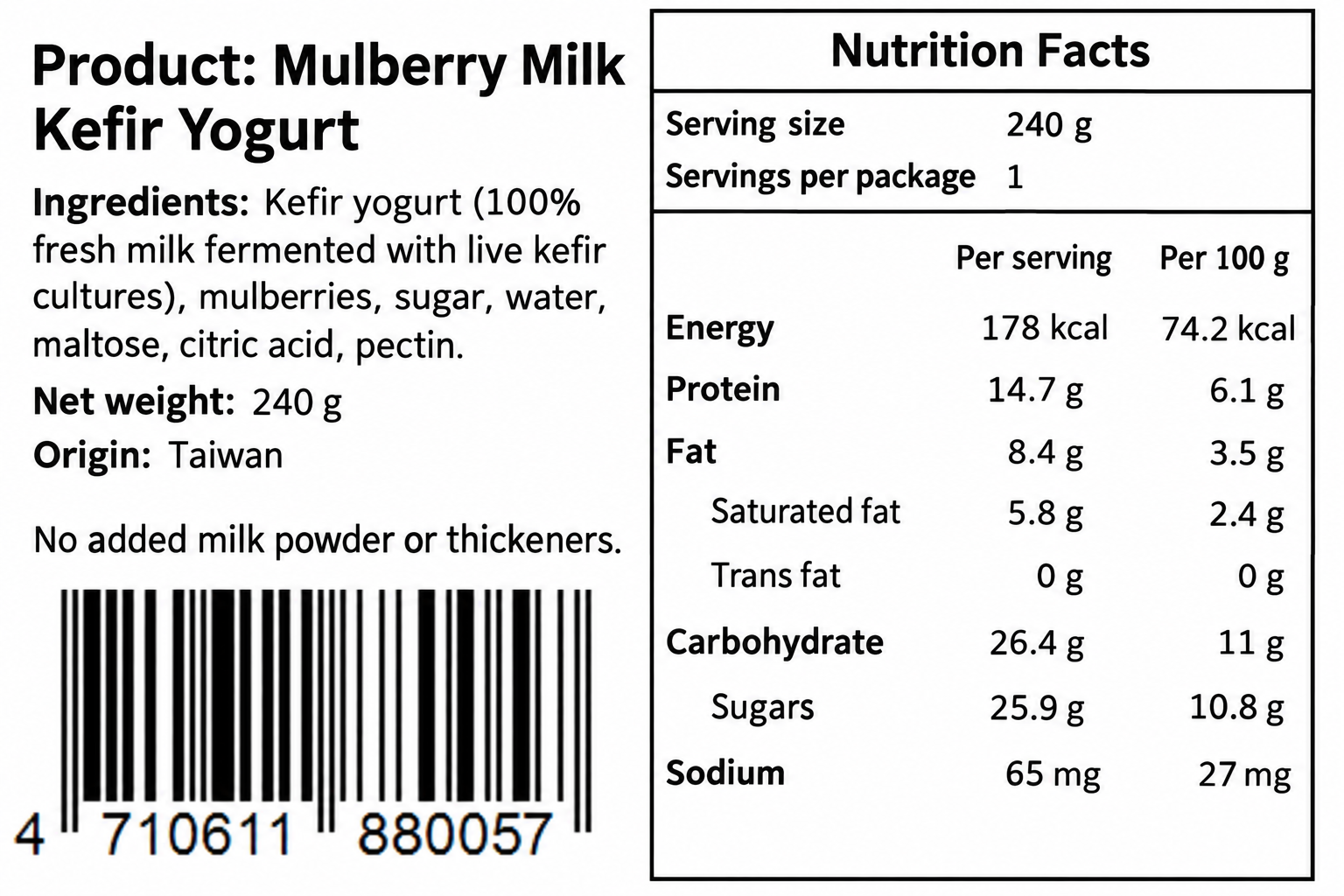
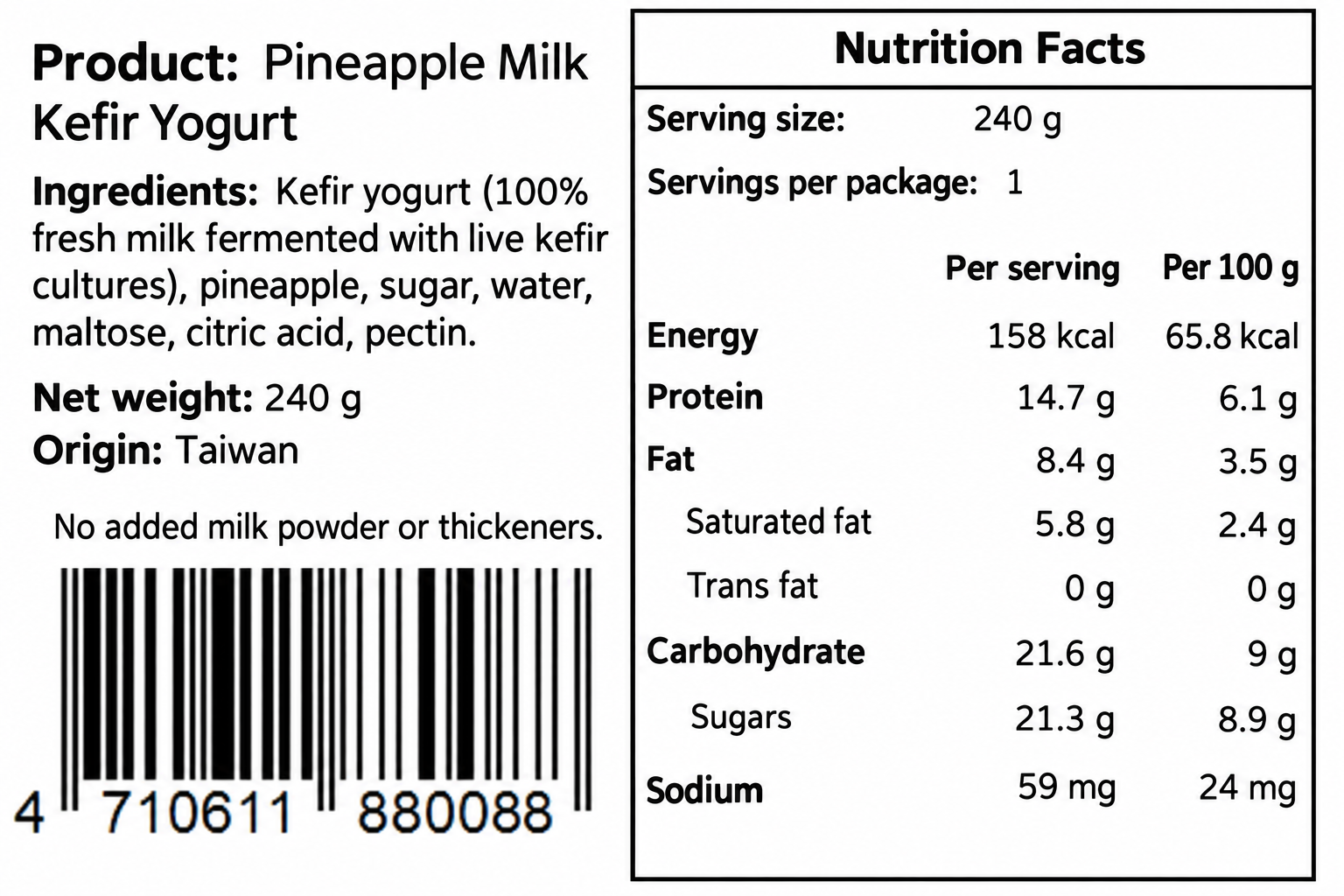
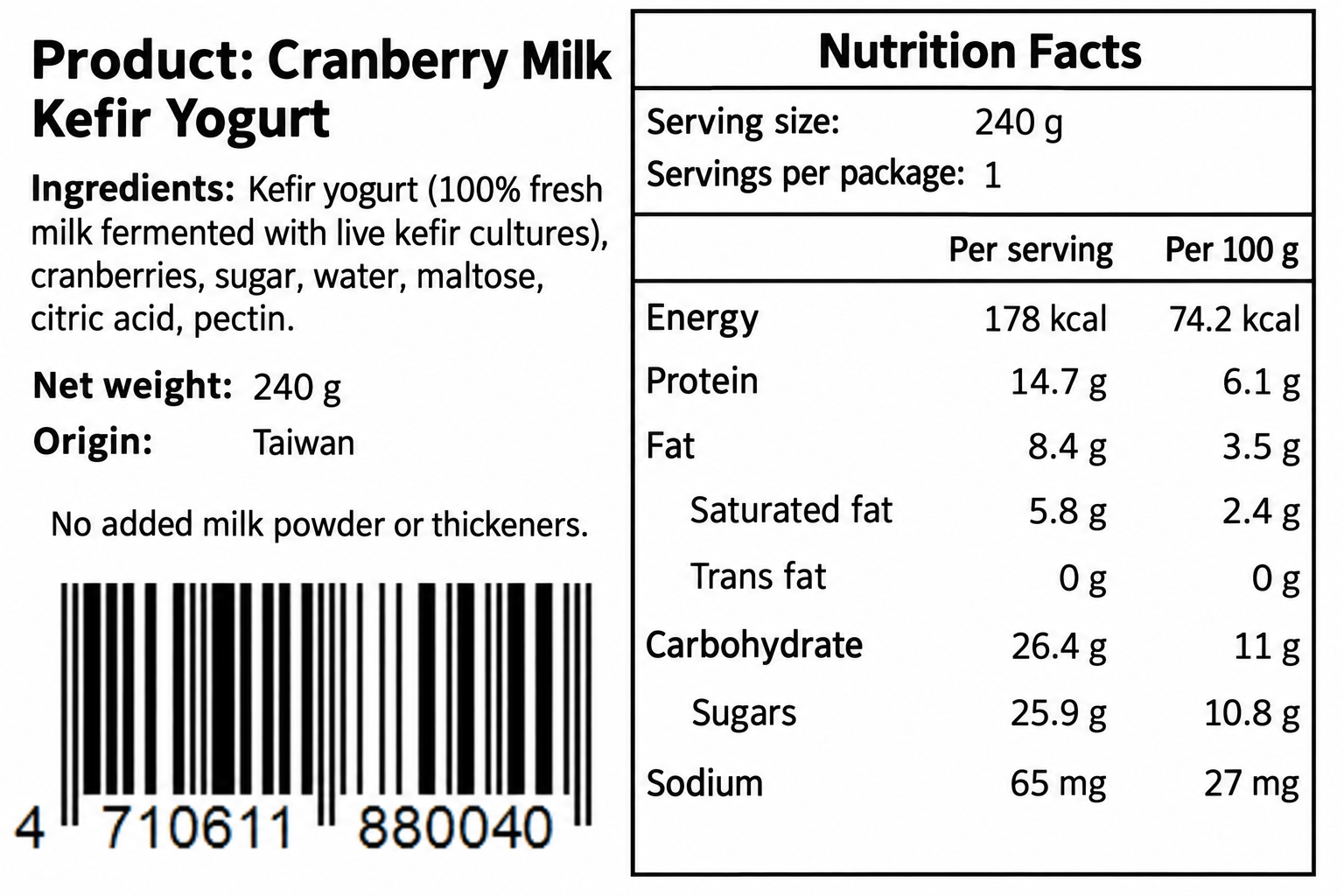
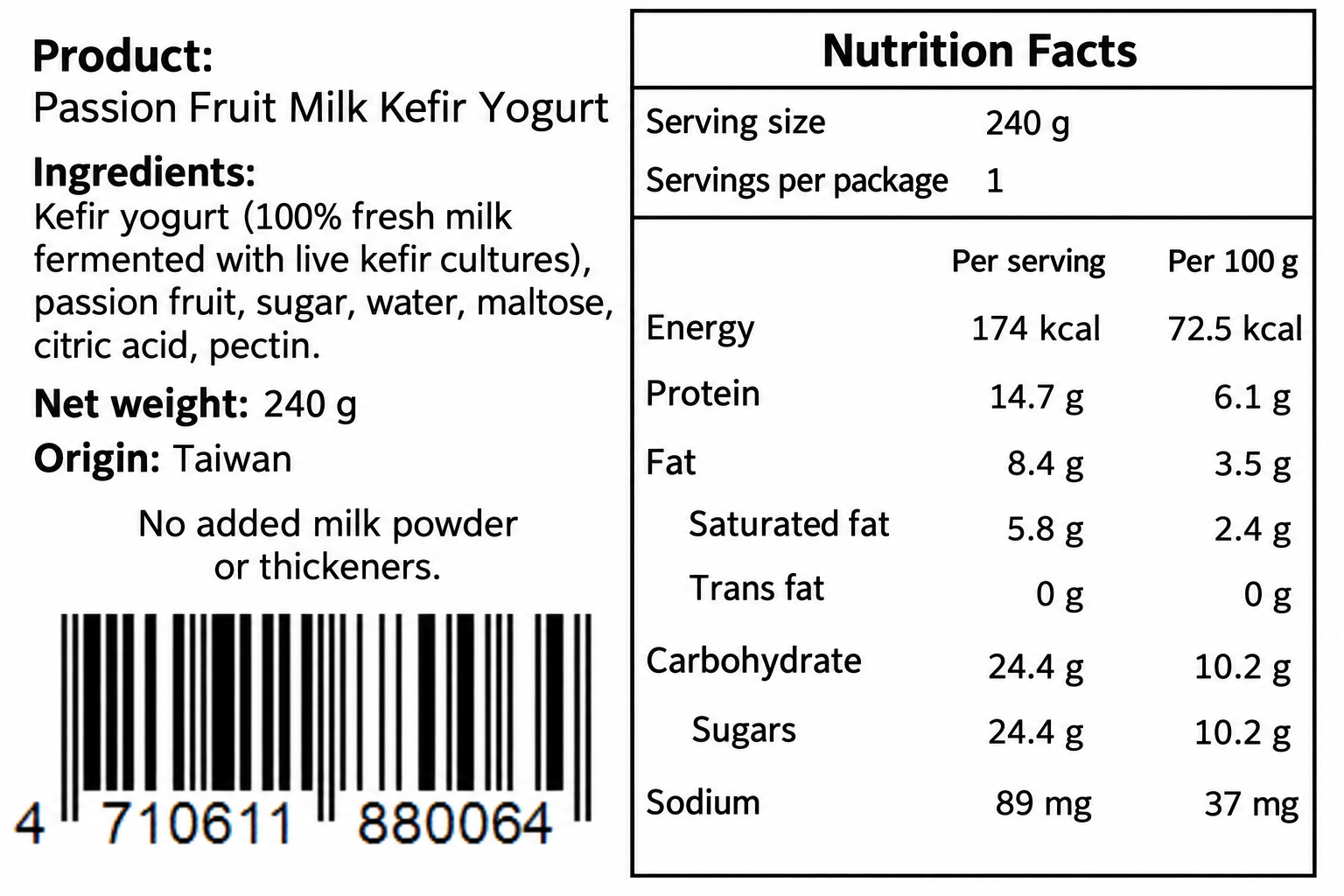
- Ingredients: Made with 100% fresh I-Mei milk. Our original milk kefir has no added artificial flavors, preservatives, milk powder or sugar. Fruit milk kefir contains natural fruit jam and a small amount of sugar for an approachable taste.
- Culture origins: Our kefir grains come from Germany, continuing a tradition passed down over hundreds of years.
📊 Regular yogurt, milk kefir and Greek yogurt
Regular yogurt
Preparation: frozen starter culture and milk powder.
Probiotic cultures: fewer, with lower activity.
Sugar and additives: most contain sugar, preservatives, artificial flavors and additives.
Protein: low.
Price: low.
Milk kefir
Preparation: live kefir grains and 100% fresh milk.
Probiotic cultures: the highest count and a wider variety.
Sugar and additives: original flavor has no added sugar, very little lactose, no additives and no flavors. Fruit flavors contain a small amount of sugar.
Protein: moderate.
Price: moderate.
Greek yogurt
Preparation: frozen starter culture and milk powder, followed by straining to remove whey.
Probiotic cultures: a moderate count, with lower activity.
Sugar and additives: low sugar; most contain preservatives, artificial flavors and additives.
Protein: high.
Price: high.
👨⚕️ Experts and further reading
- Dr. Berg: His YouTube videos discuss kefir’s nutritional value.
- Professor Lin of National Taiwan University: His book describes kefir as a “gift from the gods” and a high-quality fermented milk.
Further reading:
- The Best Probiotic Is Not Yogurt — Dr. Berg
- Kefir: A Gift from the Gods — Professor Lin
- Cultured: How Ancient Foods Can Feed Our Microbiome — Katherine Harmon Courage
- Homemade Yogurt & Kefir — Gianaclis Caldwell
🍴 How to enjoy milk kefir
- No added sugar: Our original milk kefir has no added sugar; it retains naturally occurring lactose from the milk.
- Drink it on its own: Enjoy its natural fermented flavor.
- Make a breakfast bowl: Add fruit, nuts and oats for a mix of textures.
- Blend a smoothie: Combine it with fruit and vegetables for a green smoothie or your own variation.
- Choose your moment: Enjoy it in the morning, as an afternoon snack or before a meal.
🛒 Where to buy kefir
- Ready to drink: Find it at selected organic shops and restaurants, or order online.
- Make it at home with live grains: Buy live kefir grains from a specialist fermentation supplier for active cultures and detailed guidance, helping you avoid unsuccessful batches and their risks.
- Powdered kefir starter: Available at some organic shops, but not at PX Mart.
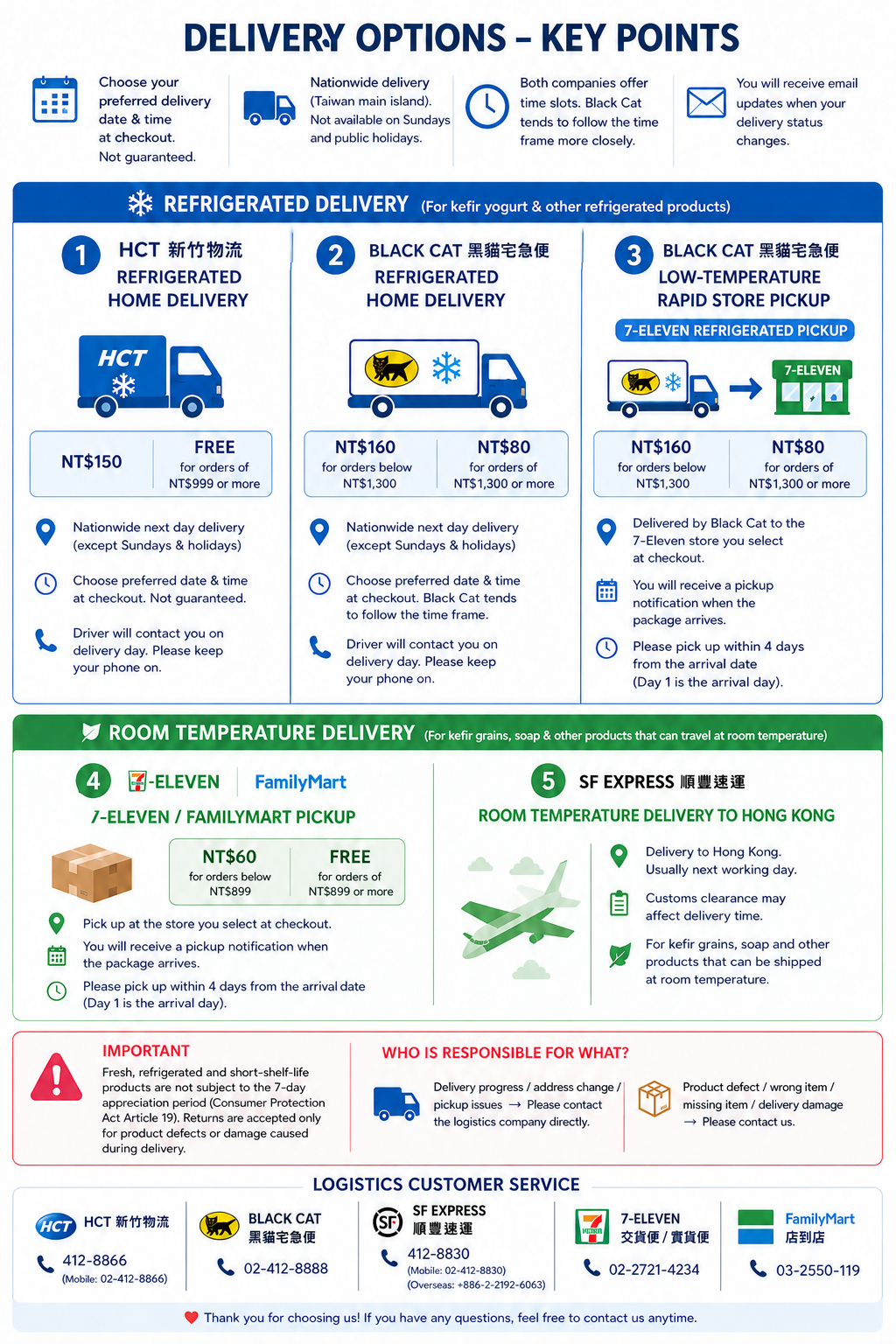
- Delivery: Please read our delivery information before ordering.
Which kefir should I choose?
- Water kefir for a smaller budget: Vegan, the lowest price and a longer shelf life, with a refreshing fizzy taste.
- Milk kefir for fitness enthusiasts: Protein to support muscle building, a thick texture and complete nutrition for the whole family.
- Soy kefir for vegetarians: A plant-based yogurt option for those watching sugar, with the highest probiotic count and suitable for people with lactose intolerance.
⚠️ Storage and quality
- Keep refrigerated: Store at 2–4°C to maintain fermentation balance and preserve the flavor.
- After opening: This is a live fermented milk. Drink it within three days of opening, as continued fermentation can change the taste.
- Open slowly: Release the bubbles gradually to prevent pressure from making the kefir overflow.
- Natural changes: Slight bottle swelling or clumping is part of natural fermentation and the product can still be enjoyed. Fermentation continues slowly in the refrigerator; enjoy it according to your taste.
- Milk allergen: This product contains cow’s milk and is not suitable for anyone with a milk allergy.
- First time: Start with 50g and allow your body to adjust gradually.
- Returns: The seven-day cooling-off period does not apply to fresh fermented food.
- Who can enjoy it: Children over one year old and pregnant women can consume it provided they have no relevant dietary restrictions or health conditions.
- Medical care: Kefir is a food, not medicine. If you are ill, seek medical care first.
More information from the product gallery
Bottles in the product photographs
The first photograph shows cranberry, mulberry, strawberry, original, pineapple, passion fruit and mango milk kefir. The bottle labels say 240ml, 6 billion lactic acid bacteria per bottle and lacto-vegetarian.
The pouring photograph shows original milk kefir served with granola. The upright bottle is labeled 500ml and 13 billion lactic acid bacteria per bottle.
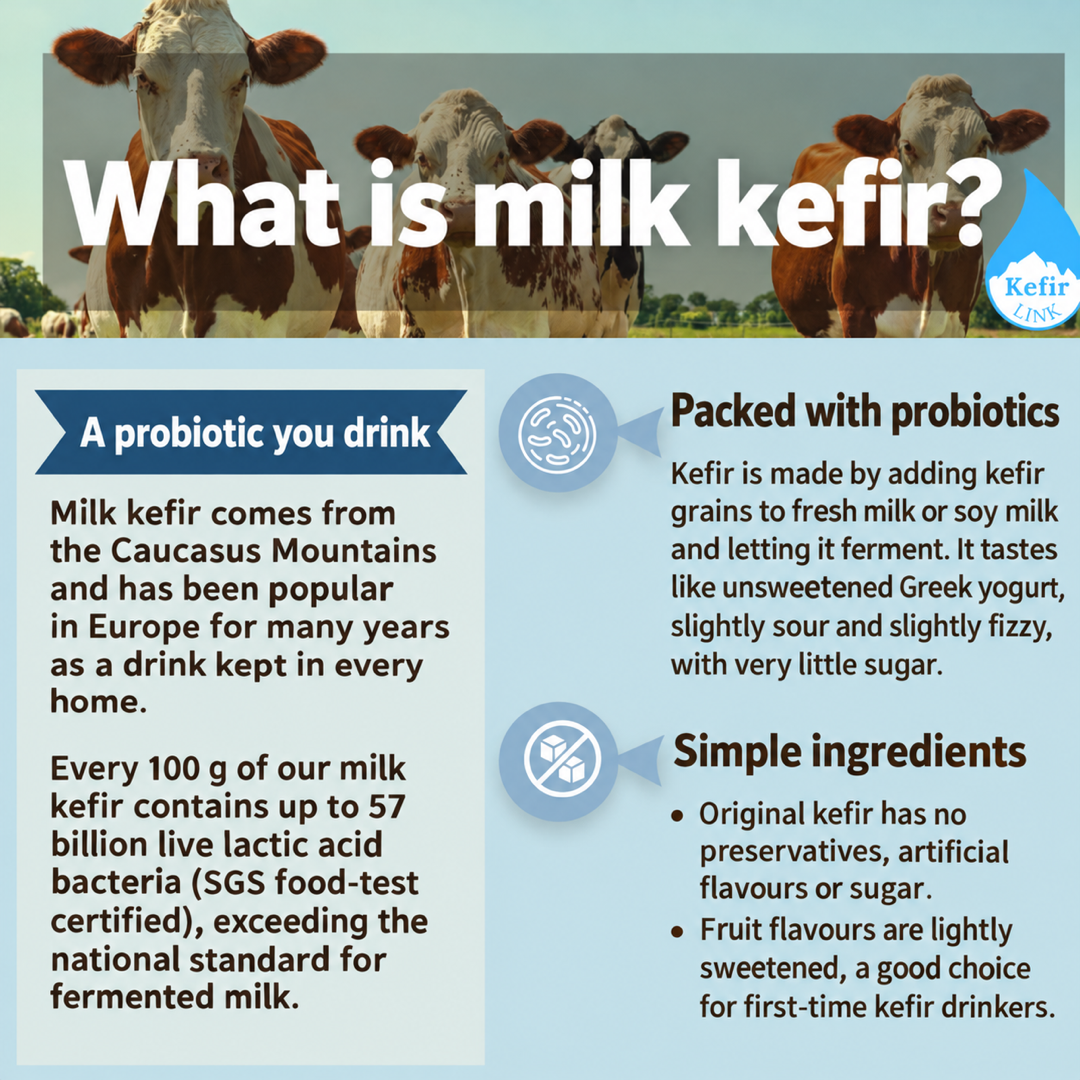
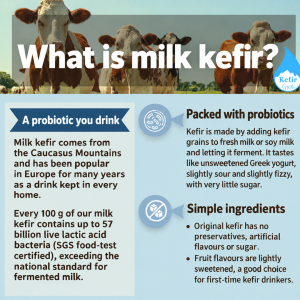
What is milk kefir?
Milk kefir comes from the Caucasus Mountains and has been popular in Europe for many years as an everyday household drink.
Kefir is made by adding kefir grains to fresh milk or soy milk and fermenting it. It tastes like unsweetened Greek yogurt, with a little tartness, a slight fizz and very little sugar.
Our milk kefir contains up to 57 billion live lactic acid bacteria per 100g, certified through SGS food testing and exceeding the national standard for fermented milk.
Simple ingredients: Original kefir has no added preservatives, artificial flavors or sugar. Fruit flavors have a little added sugar for flavor and are suitable for people trying kefir for the first time.
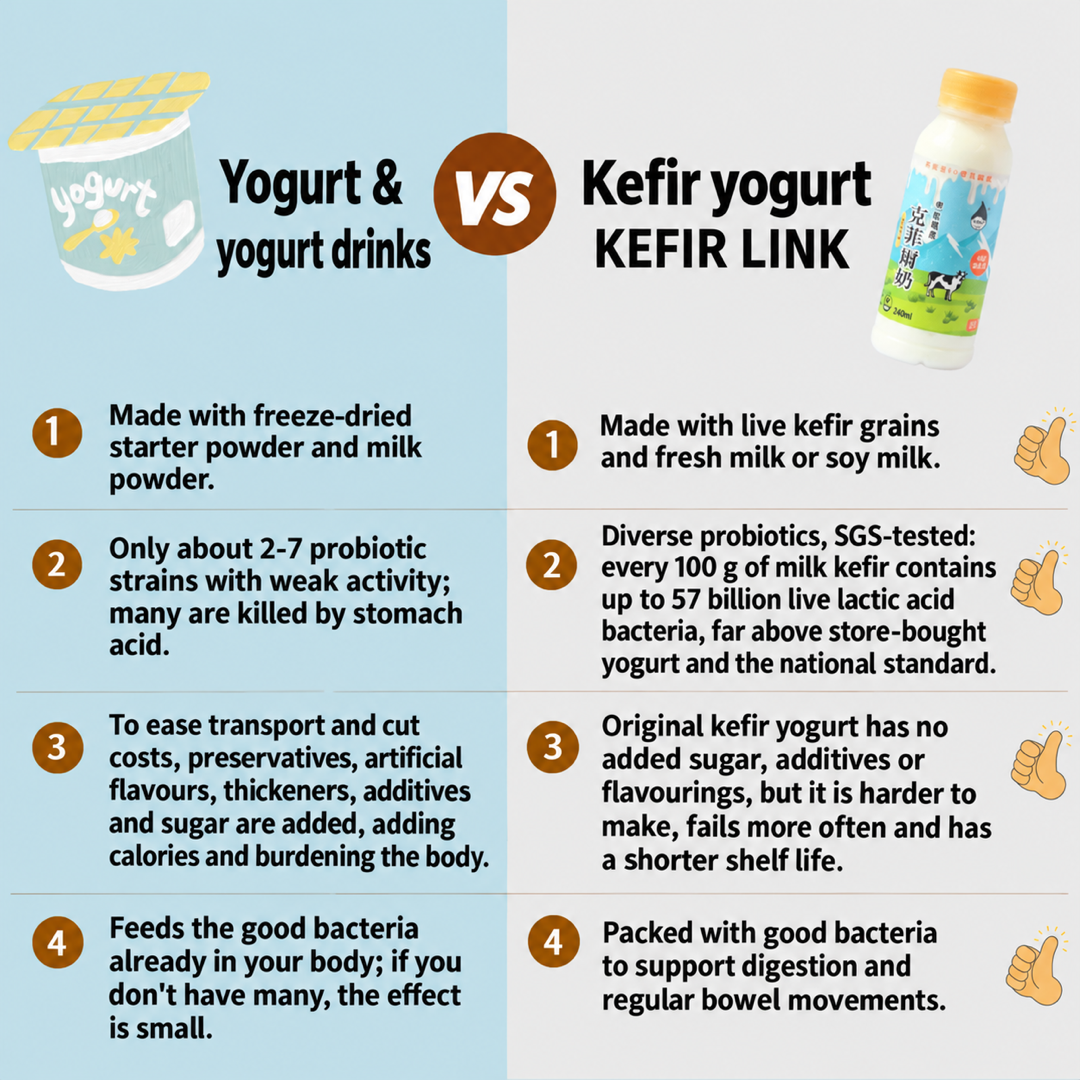
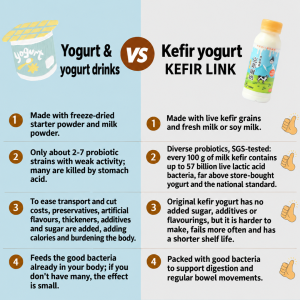
Yogurt and drinking yogurt compared with Kefir Link
- How they are made: Yogurt and drinking yogurt use frozen powdered cultures and milk powder. Kefir uses live kefir cultures with fresh milk or soy milk.
- Probiotic variety and activity: Yogurt and drinking yogurt have around 2–7 probiotic strains with lower activity; many are killed by stomach acid. Kefir has a diverse range of probiotics. SGS testing shows that our cow’s-milk kefir contains up to 57 billion live lactic acid bacteria per 100g, far more than yogurts on the market and the national standard.
- Ingredients and production: To make transport easier and reduce costs, yogurt and drinking yogurt have added preservatives, artificial flavors, thickeners, other additives and sugar, adding calories and putting a burden on the body. Original kefir yogurt has no added sugar, additives or flavorings, but production is more complex, has a higher failure rate and gives a shorter shelf life.
- Digestion: Yogurt and drinking yogurt feed the good bacteria already in the body; if there are few good bacteria to begin with, the effect is limited. Kefir contains plenty of good bacteria to help digestion and regular bowel movements.
SGS testing
The SGS graphic shows a testing pass and lists these bacteria:
- Enterobacteriaceae.
- Salmonella.
- Staphylococcus aureus.
- Listeria monocytogenes.
See our food test reports.
The tart taste, distinctive smell and bubbles
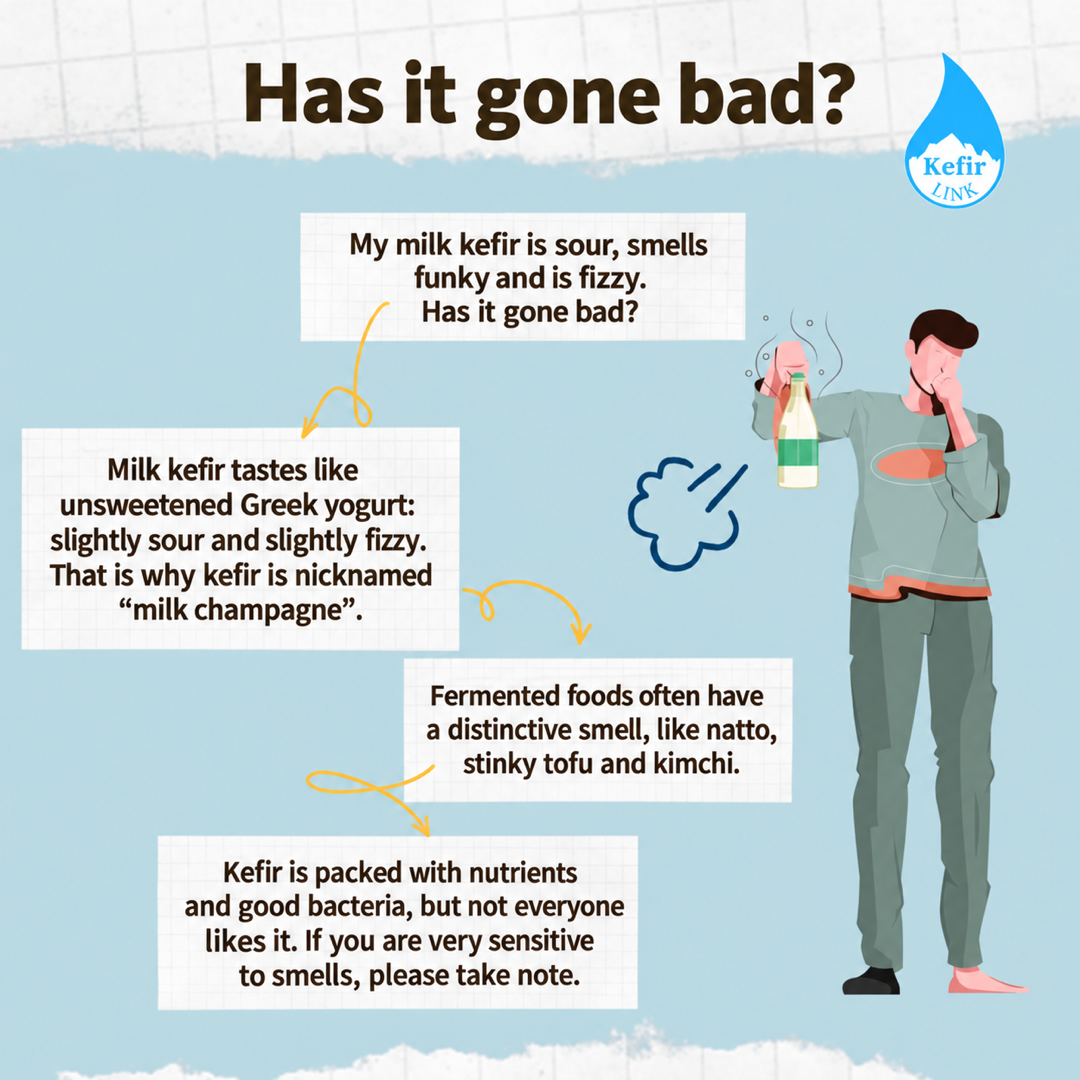
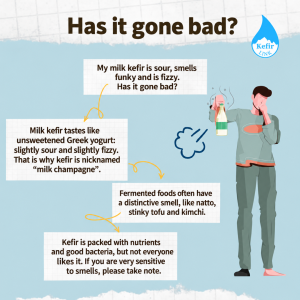
“My milk kefir tastes sour, smells strong and has bubbles. Has it gone bad?”
Milk kefir tastes like unsweetened Greek yogurt, with a little tartness and a slight fizz. This is where its nickname “milk champagne” comes from.
Fermented foods often have distinctive smells, as with natto, stinky tofu and kimchi. Kefir is nutritious and full of good bacteria, but its flavor is not for everyone. Please take particular note if you are sensitive to smells.
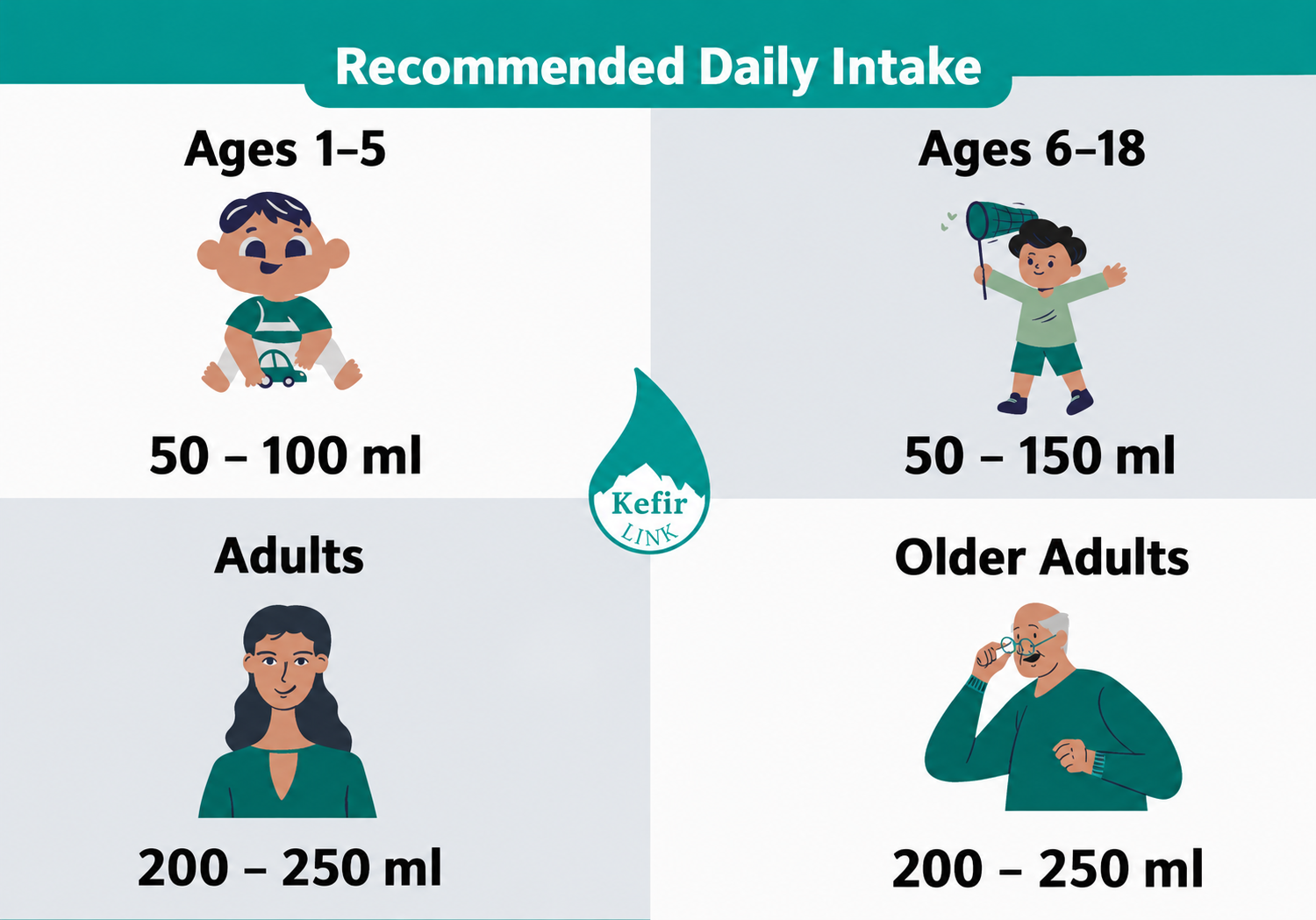
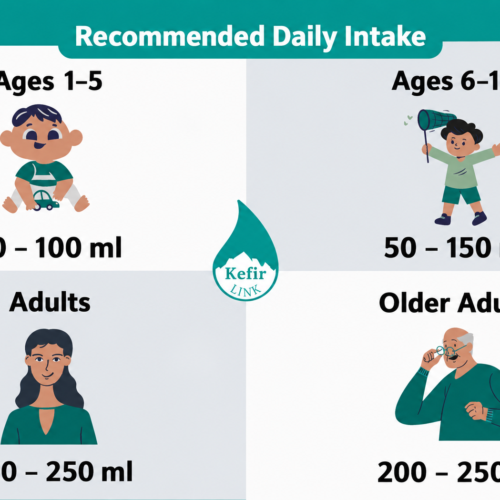
Daily suggested amounts
- Ages 1–5: 50–100ml.
- Ages 6–18: 50–150ml.
- Adults: 200–250ml.
- Older adults: 200–250ml.
For best results, drink on an empty stomach in the morning and before bed. If you have a sensitive stomach, drink after meals.
Before drinking, you can leave it at room temperature for 30 minutes to let it warm up.
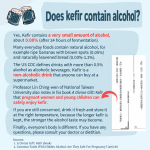
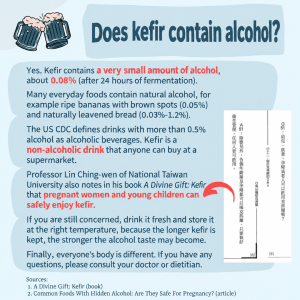
Does kefir contain alcohol?
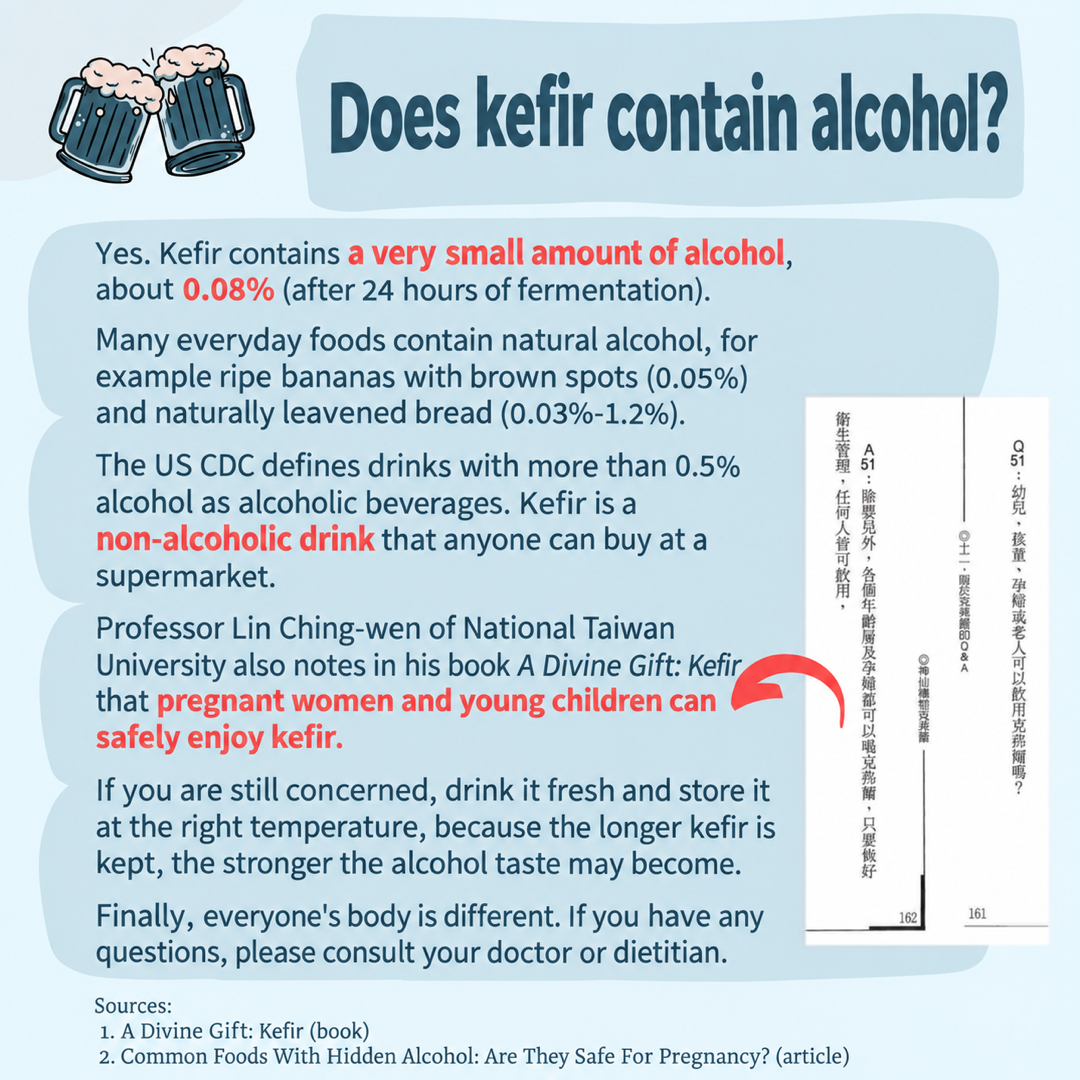
Yes. Kefir contains a very small amount of alcohol: about 0.08% after 24 hours of fermentation.
Many everyday foods contain naturally occurring alcohol, including ripe fruit such as bananas with dark spots (0.05%) and naturally leavened bread (0.03%–1.2%).
The graphic cites the U.S. CDC’s definition of an alcoholic beverage as containing more than 0.5% alcohol. It describes kefir as a non-alcoholic drink that anyone can buy in a supermarket.
Professor Lin Ching-wen of National Taiwan University also states in Kefir: A Gift from the Gods that pregnant women and children can consume kefir with confidence. The pictured book excerpt asks whether toddlers, children, pregnant women and older adults can drink kefir. Its answer says that, apart from infants, people of all ages and pregnant women can drink it, provided good hygiene is maintained.
If you are still concerned, drink it while fresh and pay attention to its storage temperature. The longer kefir is stored, the stronger its alcoholic taste may become. Everyone’s health is different; consult your doctor or dietitian if you have any concerns.
Sources named in the graphic: Kefir: A Gift from the Gods; “Common Foods With Hidden Alcohol: Are They Safe For Pregnancy?”
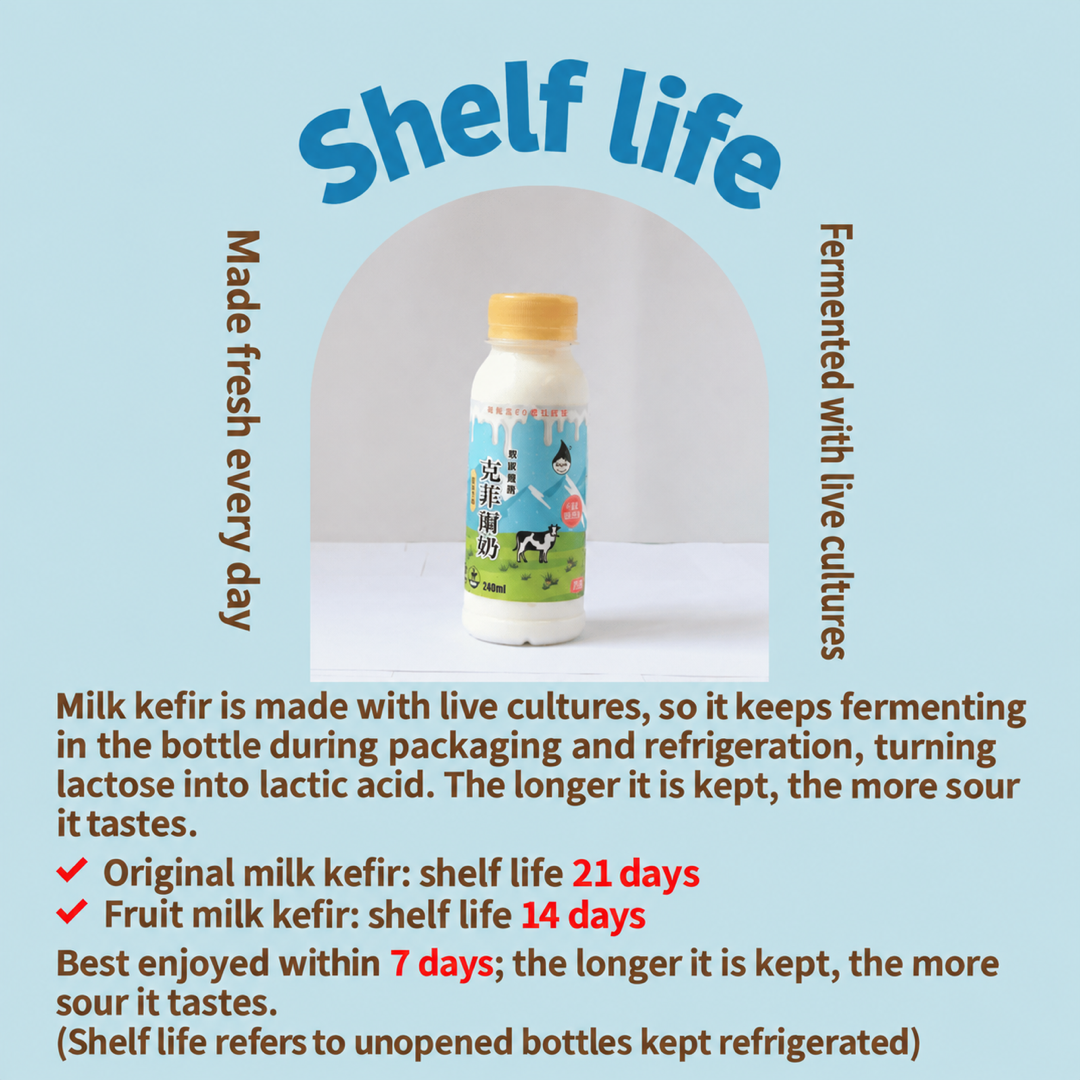
Shelf life and continued fermentation
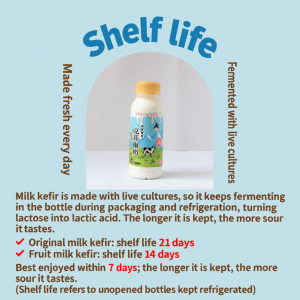
Made fresh every day using live cultures. Milk kefir continues fermenting in the bottle while packaged and refrigerated, converting lactose into lactic acid. It becomes more tart the longer it is stored.
- Original cow’s milk: Shelf life of 21 days.
- Fruit flavors: Shelf life of 14 days.
- Best flavor for both: Within 7 days; the taste becomes more tart over time.
- These periods apply while the bottle is unopened and kept refrigerated.




很好 有需要會在回購的
好喝 可惜價錢真的有點太高 很難支持下去
品質優異,良心賣家
有果粒香濃好喝,帶點氣泡飲的口感