
By Nik, founder of 東歐嚴選|kefir.link and former chef · Updated 2 November 2026
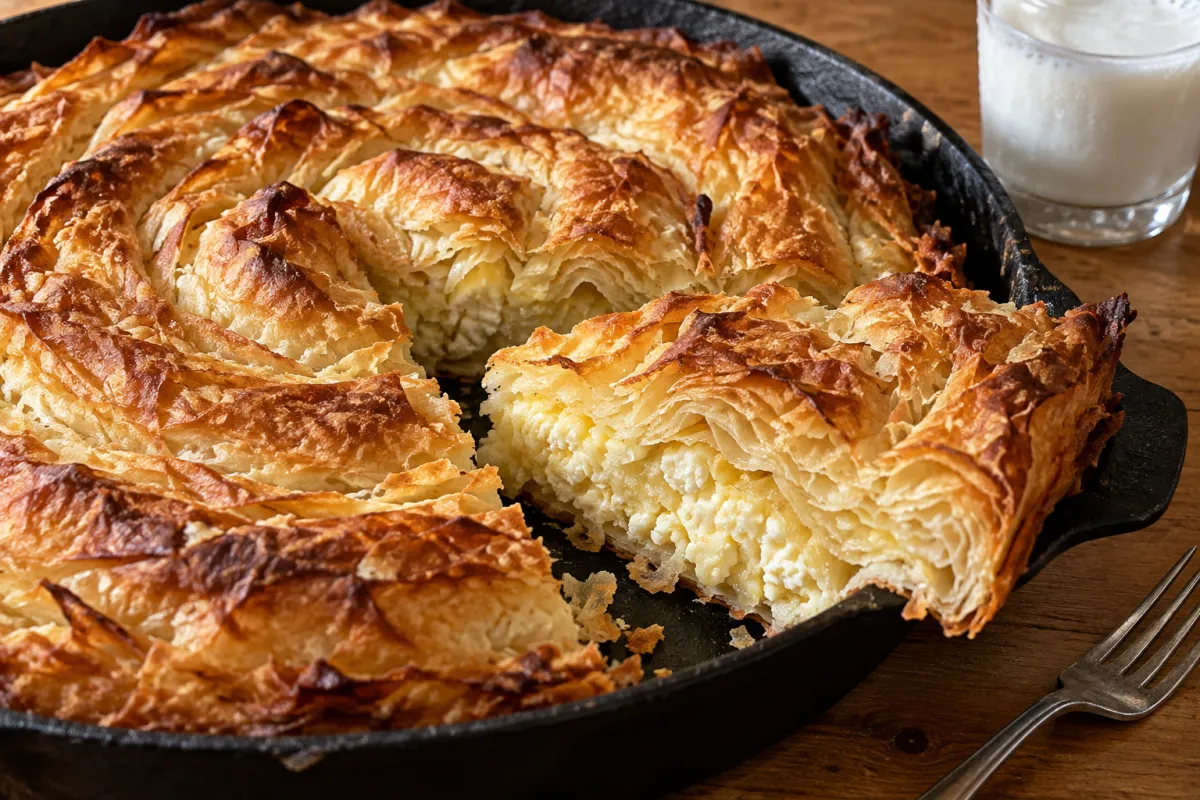
Banitsa is Bulgaria's breakfast pie: thin sheets of filo brushed with whisked egg, scattered with salty white cheese, rolled up and coiled into a snail in the pan. Bulgarians buy it from the bakery or bake it at home, and eat it hot or cold with plain yogurt or ayran. Here milk kefir is the liquid in the filling and in the final pour, soaking the sheets before the pie goes into the oven.
A pie for every holiday
The name comes from a South Slavic root meaning “to fold”, and similar pies are made in North Macedonia and southeastern Serbia. In Bulgaria, banitsa with no filling named means the white-cheese kind, and a filling of cheese, eggs and soured milk is often called home banitsa. Each holiday has its own version: a sweet one and a nettle or spring-greens one at Easter, vegetable or fruit on Christmas Eve, and pumpkin or egg-and-cheese at Christmas. On New Year's Eve the classic cheese-and-egg pie hides lucky charms, traditionally dogwood twigs whose buds carry wishes for health, love and luck.
How eggs and kefir set the filling
Egg proteins firm up as they heat, the same principle that sets a custard, and that is what holds the cheese filling together. A banitsa soaked in a milky liquid needs egg, or the sheets turn gluey. This kefir version uses baking powder, which carries its own acid, so the kefir supplies the liquid while the powder gives the gentle rise.
Spirals, layers and filo in Taiwan
The snail coil is one traditional shape, but banitsa is also made as several small spirals or in flat layers like lasagna. Pumpkin, apple, spinach and leek are common fillings when cheese is not the plan. In Taiwan, frozen Greek filo is sold in 450 g boxes, with sheets thinner than spring-roll wrappers. Outside Bulgaria, Greek feta made from sheep's and goat's milk is the practical stand-in for Bulgarian white cheese, and it is sold chilled in Taiwan. Taste the cheese before adding any salt.
Bulgarian cheese pie with kefir
Ingredients
Pastry and filling
- 200 g filo pastry Sold as filo or phyllo at imported-food shops and baking suppliers. Thaw fully as directed on the pack; allow extra time for thawing.
- 200 g feta cheese Or Bulgarian white cheese if you can find it. Drain and crumble.
- 2 eggs
- 150 ml plain milk kefir Use plain, unsweetened kefir.
- 70 ml sunflower oil
- 1 tsp baking powder
Egg topping and butter
- 1 egg
- 50 ml plain milk kefir Use plain, unsweetened kefir.
- 1 pinch salt Taste the cheese before mixing it with raw egg. Omit the salt if the cheese is already salty enough.
- 50 g unsalted butter Reserve a little for greasing the dish; cut the rest into small pieces.
You will need
- Oven
- 20 cm round baking dish
- Mixing bowl and whisk
- Pastry brush
- Clean kitchen towel
- Food thermometer
Instructions
Make the spiral pie
- Grease the round baking dish with a little of the measured butter.
- Whisk the 2 filling eggs, 150 ml kefir, sunflower oil and baking powder together until evenly mixed.
- Unroll the thawed filo and keep the sheets you are not using under a slightly damp kitchen towel so they do not dry out and crack.
- Make a pastry roll: stack 2 filo sheets, brush the top lightly with the filling egg mixture, scatter over some crumbled cheese and roll loosely from a long edge.
- Arrange the first roll in a coil at the centre of the dish. Fill and roll the remaining pastry the same way, adding each roll to the outside of the spiral in a single layer. Leave gaps between the rolls and save any leftover egg mixture for the topping.
- Whisk the topping egg, 50 ml kefir and optional pinch of salt with any leftover filling egg mixture.
- Pour the topping evenly over the pie, letting it run into the gaps between the rolls.
- Dot the remaining butter pieces evenly over the top.
- Let the pie soak for 10 minutes while you preheat the oven to 180°C (350°F).
- Bake for 30–40 minutes, until golden on top with a set filling; check that the centre reaches at least 71°C (160°F) with a food thermometer.
- Let the pie cool slightly, then cut into wedges.


Comments
No comments yet.
Comments could not be loaded.
Join the discussion
or