


 By Nik, founder of 東歐嚴選|kefir.link and former chef · Updated 2 November 2026
Butter chicken is North India's mild, silky curry: tender chicken in a thick red tomato gravy that is creamy and faintly sweet. Here milk kefir does the work of both yogurt and cream, first tenderising the chicken in the marinade and then turning the sauce smooth and gently tangy. Butter, garam masala and a little cane sugar keep the warm, rounded flavour the dish is loved for.
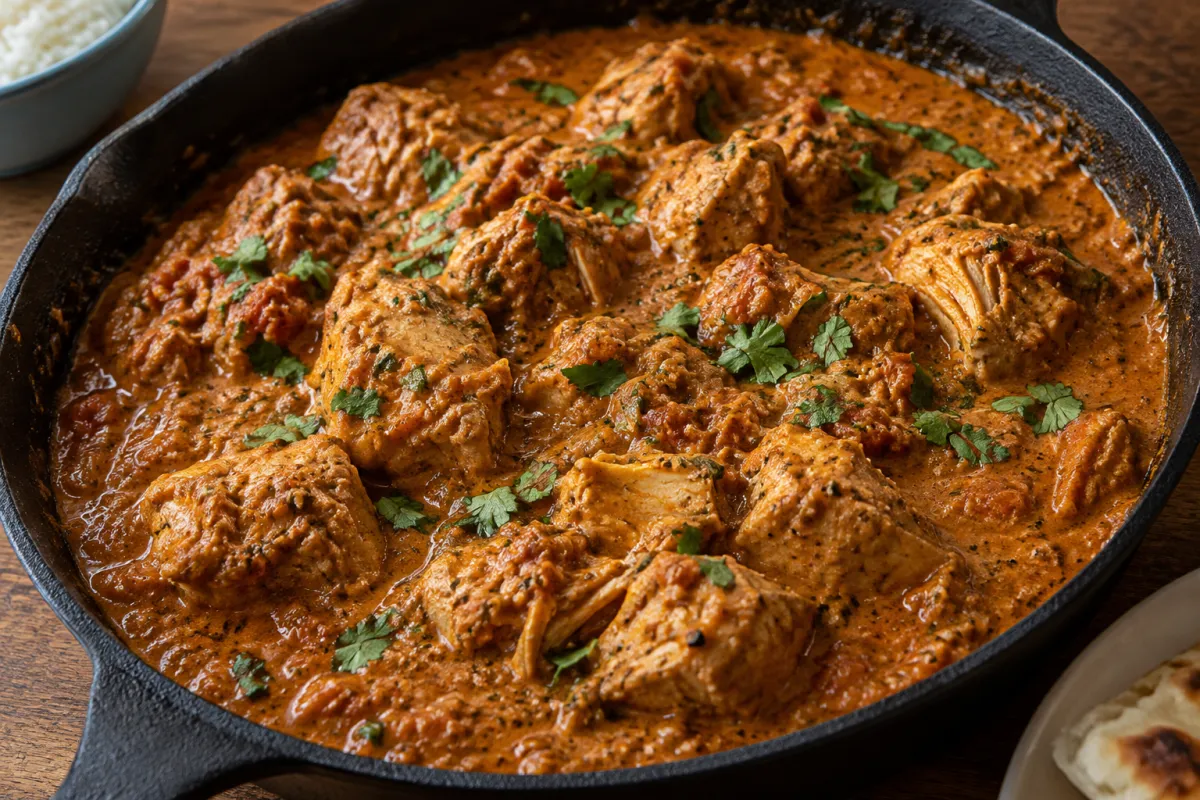
A Delhi curry born from leftover tandoori chicken
Butter chicken is closely tied to a restaurant in Old Delhi, and its fame grew in the 1950s, although several families still argue over who created it. The best-known story says it began as a way to use up leftover tandoori chicken by stirring it into a tomato sauce rich in butter. The early versions used bone-in chicken, crushed fresh tomatoes, very little spice beyond garam masala and a finish of freshly churned butter.
Today it is known as a dish of the Punjabi kitchen and is a reliable choice for a dinner party. Unlike chicken tikka masala, which is hotter and cooked with onions in oil, butter chicken has no onions, so the sauce stays mellow and silky.
Why fermented kefir beats milk and lemon
Indian cooks often leave chicken in a spiced yogurt marinade for four to six hours, preferably overnight. The acid in fermented dairy changes the structure of the meat's proteins and helps them hold on to water, while salt reduces the moisture lost during cooking. Kefir behaves the same way, so the chicken stays juicy in the pan. Milk soured with lemon juice is not a true substitute, because it lacks the lactic acid that fermentation produces.
A thick, smooth sauce without cream
Milk kefir is thinner than yogurt, so tomato paste gives the sauce its body. Kefir can split in a hot sauce, which is why it goes in at the end, off the heat, and the sauce is only warmed gently afterwards without bubbling. Serve it with basmati rice or naan and a simple cucumber and tomato salad. If you prefer a vegetarian version, cubes of paneer can replace the chicken.



Comments
No comments yet.
Comments could not be loaded.
Join the discussion
or