
By Nik, founder of 東歐嚴選|kefir.link and former chef · Updated 2 November 2026
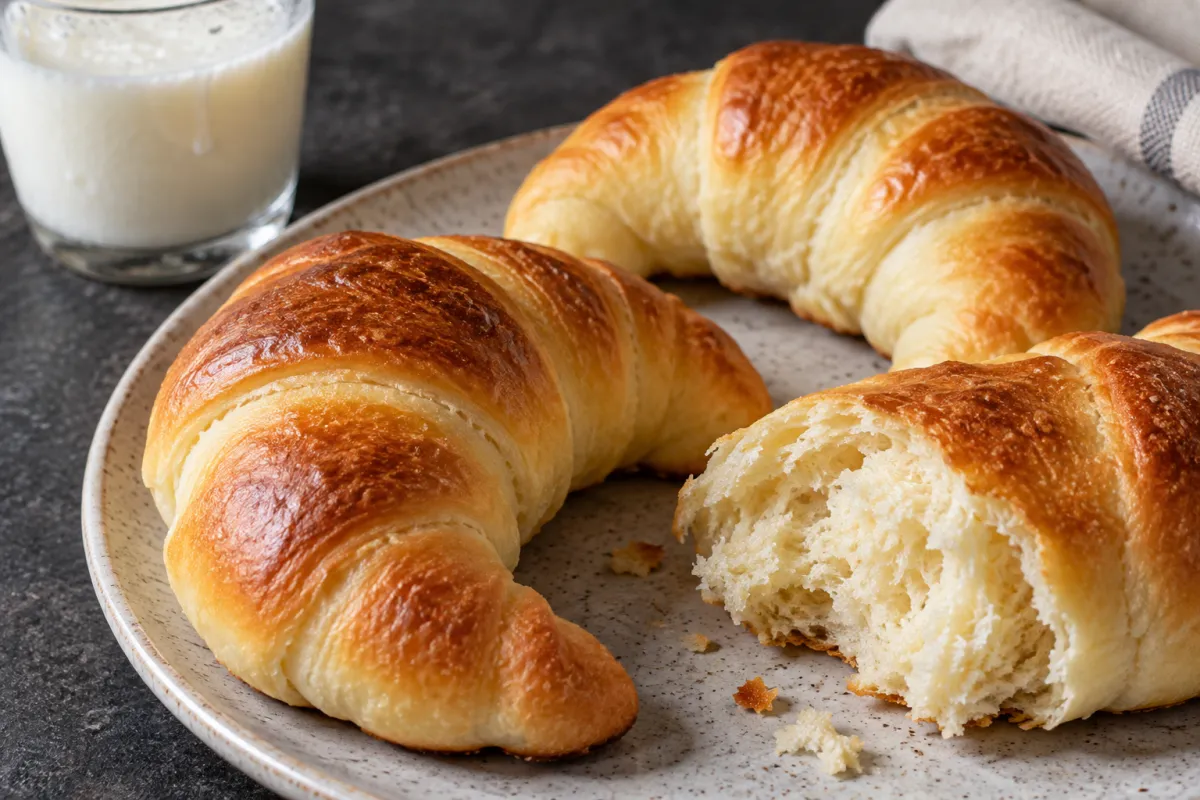
Kiflice are small, soft crescent rolls, popular in home kitchens across Bosnia, Croatia and Serbia, golden outside and tender as bread within. Here milk kefir moistens the dough, a swap that makes the rolls especially soft.
The crescent roll that came before the croissant
The crescent roll, called kipferl in Austria and kifla in the Balkans, is common across Central Europe, and Vienna recorded it as early as 1227. It was probably a monastery roll baked for Easter; the popular tale of its invention during an Ottoman siege may be wrong. The kipferl likely inspired the croissant, but it stays plain and bread-like rather than flaky. In Serbia, kiflice made with spelt flour, sheep's cheese and sesame are baked for Christmas on 7 January.
Why kefir goes into the dough
Milk and yogurt are the usual liquids in kiflice dough, and they keep it moist and pillowy. Kefir does the same job and many home bakers in the Balkans now prefer it: the rolls come out very soft and rise well, while yogurt gives a slightly denser roll. Dry kiflice are usually overbaked ones, which is why their colour, not the clock, decides when they come out. A short spell in a hot oven brings back the softness of a day-old roll.
Plain, savoury or sweet
Unfilled kiflice can stand in for bread beside a main dish, or go with coffee or tea as a snack. Serve them at breakfast or supper with yogurt or a glass of kefir or set them out for guests with beer and small savoury plates. For a savoury filling, use a firm or smoked cheese, feta mixed with egg, ham or mushrooms, then scatter sesame, caraway or coarse salt on top. Sweet versions take thick plum or apricot jam, hazelnut spread, ground walnuts with sugar, or chocolate. To fill them, put about a teaspoon of filling on the wide end of each wedge before rolling; overstuffed rolls leak in the oven.

Kefir crescent rolls
Ingredients
Dough
- 800 g all-purpose flour
- 7 g instant dry yeast
- 1 tsp sugar
- 2 tsp salt
- 100 ml plain water Lukewarm.
- 300 ml plain milk kefir Bring to room temperature before using.
- 100 ml vegetable oil Use a mild-flavoured oil.
- 2 eggs One whole egg and the other egg’s white go into the dough; save the yolk for brushing.
For brushing
- 50 g butter Melt and cool; brush some on the dough and the rest on the rolls straight after baking.
- 1 tbsp plain milk kefir Beaten with the reserved yolk.
You will need
- Mixing bowls
- Kitchen scale and measuring spoons
- Measuring jug
- Rolling pin
- Knife or pizza cutter
- Pastry brush
- Baking trays and baking paper
- Clean kitchen towel
- Oven
Instructions
Make the dough
- Mix the flour, instant yeast, sugar and salt in a large bowl.
- In another bowl, mix one whole egg and the second egg’s white with the kefir, lukewarm water and oil. Save the remaining yolk for brushing.
- Mix the dry ingredients into the wet ingredients a little at a time, then knead until the dough is smooth and elastic. If the dough feels stiff or dry, knead in a little extra kefir, 1 tablespoon at a time.
- Cover the dough and let it rise for about 60 minutes, briefly kneading it twice during the rise. Wait until it has visibly expanded before shaping; allow longer if needed.
Shape and bake
- Divide the dough into 4 equal portions, shape into balls and keep covered. Shape only enough rolls to fill one tray at a time.
- Roll each ball into a circle about 0.5 cm thick. Brush with some of the melted, cooled butter, saving the rest for the baked rolls.
- Cut each circle into 8 equal wedges. Roll each wedge from the wide edge to the point, then gently curve the ends into a crescent. Place on a tray lined with baking paper, leaving space between the rolls; the full batch makes 32 rolls.
- Cover the shaped rolls and let each tray rise for about 15 minutes. Preheat the oven to 200°C (400°F), with the fan off.
- Beat the reserved yolk with 1 tbsp kefir and brush it over the risen rolls, saving enough for the remaining rolls.
- Bake one tray at a time for 15–20 minutes, taking the rolls out as soon as they are golden, even if they brown sooner. Brush them with the remaining melted butter as soon as they come out of the oven. Shape the next tray and let it rise while the first bakes; two batches need about 40 minutes of oven time.


Comments
No comments yet.
Comments could not be loaded.
Join the discussion
or