


 By Nik, founder of 東歐嚴選|kefir.link and former chef · Updated 2 November 2026
Peasant bread is a same-day yeast loaf that needs no kneading and no shaping skills, yet bakes up with a spongy, moist crumb under a buttery crust. Mix it after lunch and it can be on the table for dinner. Here the water is replaced with the whey left over from straining milk kefir, which tastes a little like buttermilk and gives the yeast the mild acidity it likes.
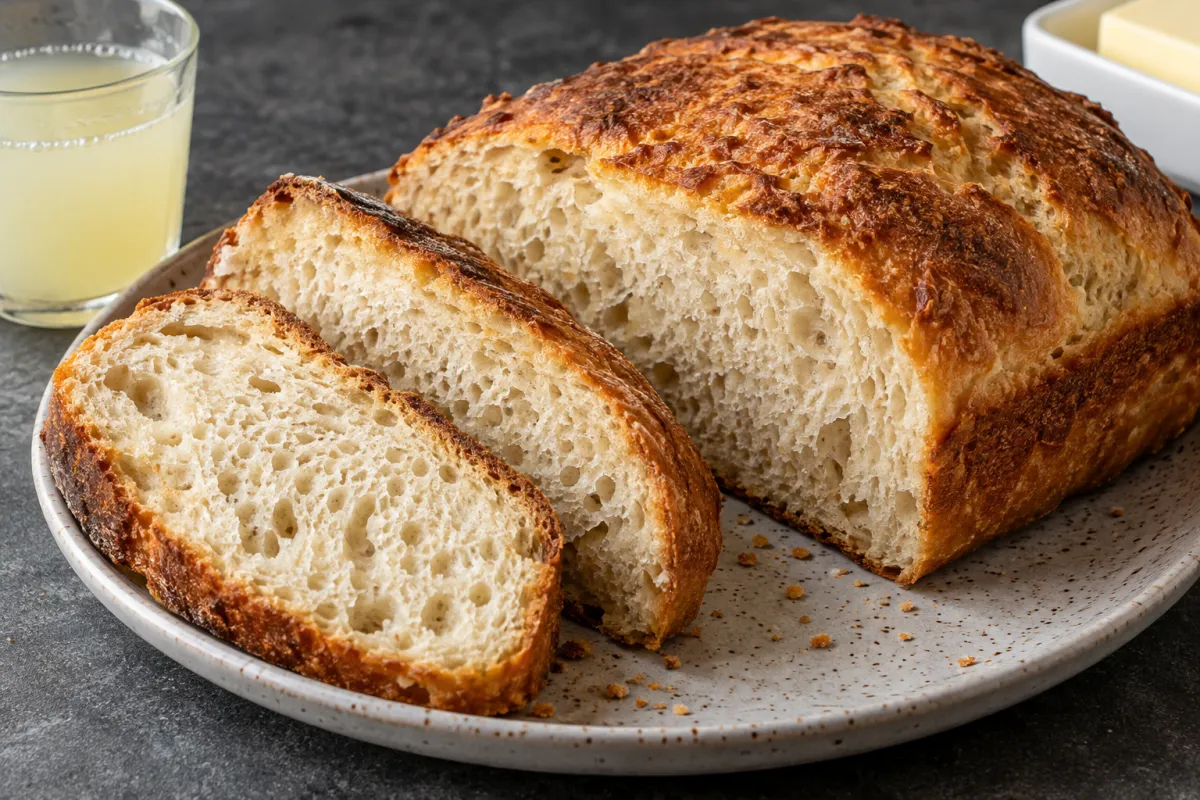
A simpler take on French bread
Peasant bread is a modern home-baking recipe: an older French bread method made simpler, with no kneading and no shaping, baked in well-buttered bowls. The butter does double duty, because it flavours the crust and lets the loaf fall right out. A loaf pan, as used here, gives even slices for sandwiches and toast. Toasted for breakfast with butter, cinnamon and sugar, it tastes a little like cinnamon toast from a bakery.
Why whey works and why the dough stays sticky
Whey is thinner than buttermilk but carries the same gentle tang, and some bakers use it in place of water in yeast breads. Yeast cannot ferment the lactose in dairy, so that milk sugar stays in the dough and helps the crust brown in the oven. Without kneading, time and plenty of liquid build the gluten instead, so the dough should be wet and sticky. Resist adding flour, but if the dough is soupy rather than holding together, use a little less whey next time, because flours absorb liquid differently.
Seeds, whole wheat and Taiwanese twists
For a heartier loaf, replace one-third of the flour with whole wheat. More than that makes the bread heavier and denser. Toasted sunflower, pumpkin and sesame seeds, red quinoa or flax all fold in well. For Taiwanese flavours, stir in lei cha tea powder, pork floss, seaweed powder, or black and white sesame with chocolate chips and nuts. If you have no whey, water, milk or soy milk can take its place.



Comments
No comments yet.
Comments could not be loaded.
Join the discussion
or