


 By Nik, founder of 東歐嚴選|kefir.link and former chef · Updated 2 November 2026
Poğaça are the small savoury buns sold fresh in Turkish bakeries for breakfast, golden on top and studded with salty white cheese and fresh dill. Kefir takes the place of yogurt in the dough and brings a gentle tang that suits the cheese. With baking powder instead of yeast, the buns go from bowl to oven with no rising time.
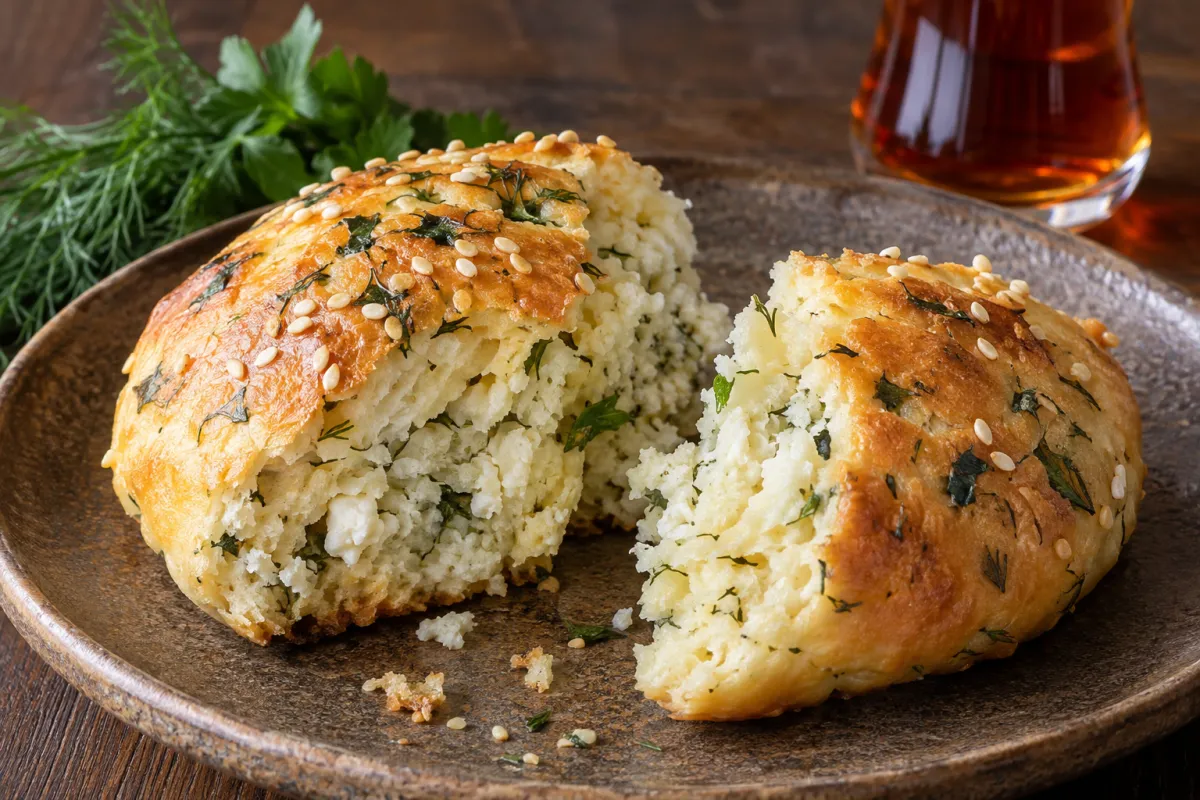
A breakfast bun with a glass of tea
Turkish bakeries and street stalls sell poğaça fresh from the oven, plain or filled with white cheese, olives, or potato and cheese. People eat them at breakfast or with afternoon tea, beside sliced tomato, cucumber, olives and a little jam. The name is traced to the Italian focaccia, a small piece of dough once baked in the ashes of a hearth. Every household has its own version, with or without yeast.
Kefir, vinegar and baking powder do the lifting
Yeasted poğaça are soft like bread rolls, while baking-powder poğaça are more crumbly, closer to a scone. Baking powder holds both an acid and an alkaline part, and double-acting powder releases gas twice: once when wet and again in the oven. Kefir is thick and tangy, so it moistens the dough generously without turning it into a batter. The splash of vinegar cannot be tasted after baking, but it helps the buns rise, keeps the centres from staying doughy and gives a shorter, crisper bite.
Too much flour makes poğaça dry and hard. Long kneading develops gluten and makes them bready. Stop adding flour as soon as the dough holds together and no longer sticks to your hands.
Choosing the cheese and herbs
In Turkey the crumbly, salty cheese that visitors call feta is simply white cheese, and Greek feta is the closest match outside Turkey. Choose a firm cheese and pour off any brine, because a wet, fatty cheese can melt, leak out of the dough and burn on the tray. Dry the washed dill and parsley completely, since wet herbs loosen the dough. Sesame seeds, black nigella seeds or dried dill can be sprinkled on top or mixed into the dough.


Comments
No comments yet.
Comments could not be loaded.
Join the discussion
or