


 By Nik, founder of 東歐嚴選|kefir.link and former chef · Updated 2 November 2026
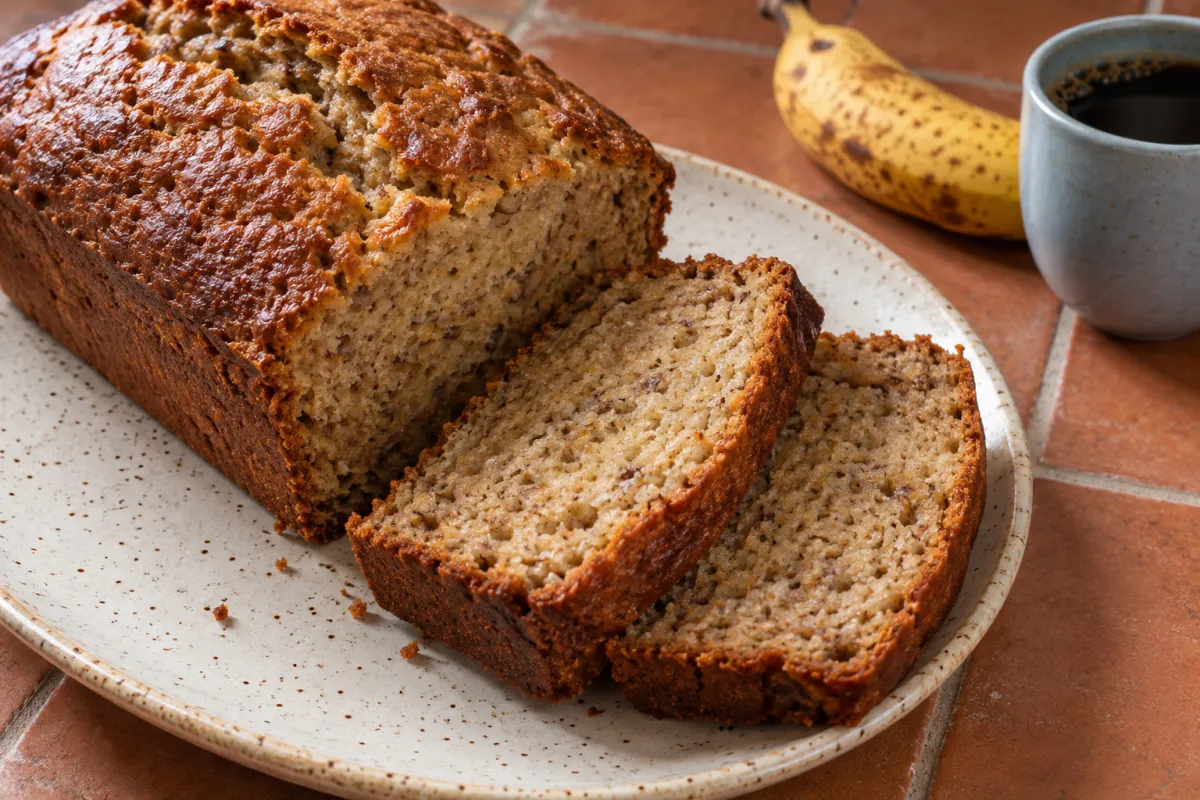
Banana bread began as an American way to use bananas gone brown on the counter: a sweet, moist loaf that needs no yeast. The riper the fruit, the sweeter the bread and the stronger its banana flavour. Milk kefir keeps the crumb moist, and its acid reacts with baking soda to make the bubbles that lift the batter.
From overripe bananas to the café counter
Bananas reached America in the 1870s, and banana bread was on sale in Kansas by 1881. By the early 1930s it was widespread in American cookbooks, helped by households that would not throw away even overripe bananas. A 1946 American version used sour milk or buttermilk during wartime rationing, so kefir carries on an old habit.
In 1890s Australia, banana bread meant a plain loaf made from dried green-banana flour. The sweet loaf became an Australian café classic in the 2000s.
What kefir does in the batter
Baking soda needs an acid to work, and kefir supplies it: the two react to make carbon dioxide, which lifts the loaf. The reaction starts as soon as they meet, so a soda batter should go into the oven straight away. A slightly curdled look once the kefir goes in is common and need not spoil the loaf.
Dark bananas, a cracked top and banana French toast
For a stronger banana flavour, choose fruit with mostly brown or black skins, as long as it has not started to rot. Resist adding an extra banana, because too much fruit makes the loaf gummy and heavy. A crack along the top is normal, since the leavening pushes the loaf up as it bakes, and loose foil will stop the top darkening before the centre is done. If the middle of a sliced loaf is underdone, skip the oven, where the edges would dry out; fry the slices on a griddle as banana French toast instead.



Comments
No comments yet.
Comments could not be loaded.
Join the discussion
or