


 By Nik, founder of 東歐嚴選|kefir.link and former chef · Updated 2 November 2026
Pogača is the round, golden loaf that Balkan cooks bake for weddings, holidays and special guests, and it is torn by hand rather than sliced. This one is a soft yeast bread made with milk kefir, which gives the crumb a mild, gentle sourness. Tear it once it has cooled and serve it with soft cheese or a cheese spread.
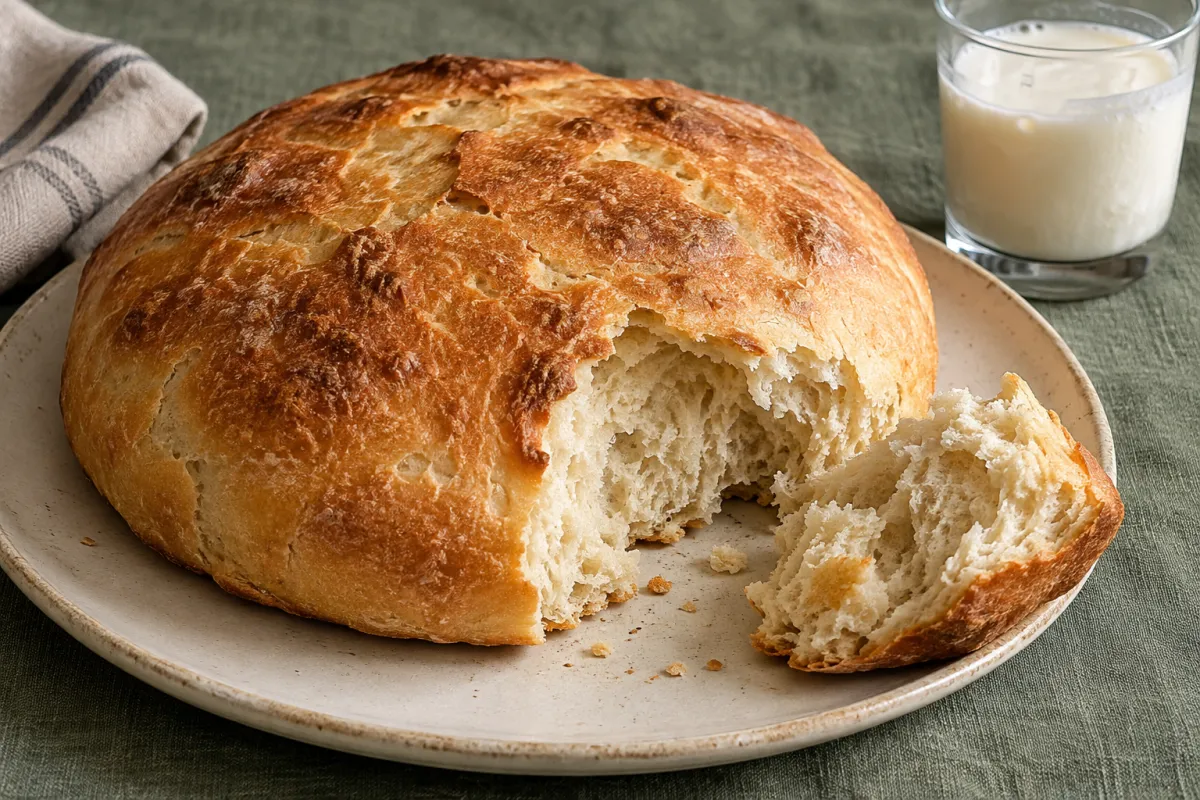
A hearth bread with many relatives
The name goes back to the Latin for bread baked on the hearth, and the first pogače were baked in the ashes of the fire before ovens took over. Some were unleavened and some were raised, so the word now covers a whole family. Croatia has a sweet Easter version, Serbia a Christmas loaf, and on the island of Vis it is a savoury pie filled with anchovies or salted fish, onion and tomato. The loaf here is the everyday savoury kind, raised with yeast.
Torn by hand, never cut
In Bulgaria, families make pogača for weddings, birthdays, religious holidays and special guests. In Slovenia's Bela krajina region, visitors are welcomed with a freshly baked pogača and wine; nobody cuts it, and the lines scored across the top make it easy to tear. Serbian cooks wrap the hot loaf in a kitchen cloth as soon as it leaves the pan, then break it by hand once it has cooled. It is eaten plain, with cheese or with jam, and Macedonian cooks serve it warm with kaymak, a thick clotted cream, as a starter.
What kefir and oil do in the dough
Kefir is thick, slightly fizzy and mildly sour, and in bread it leaves a hint of that sourness. The rising is done by the yeast, which turns sugars, mostly from the flour, into carbon dioxide along with acids and alcohol that add flavour. Oil makes the crumb tender by holding back gluten. The dough is meant to be very soft and sticky, and a drier dough rises less, so resist adding extra flour. The crumb keeps setting as the loaf cools, which is why tearing it too soon can leave the inside gummy.



Comments
No comments yet.
Comments could not be loaded.
Join the discussion
or