


 By Nik, founder of 東歐嚴選|kefir.link and former chef · Updated 2 November 2026
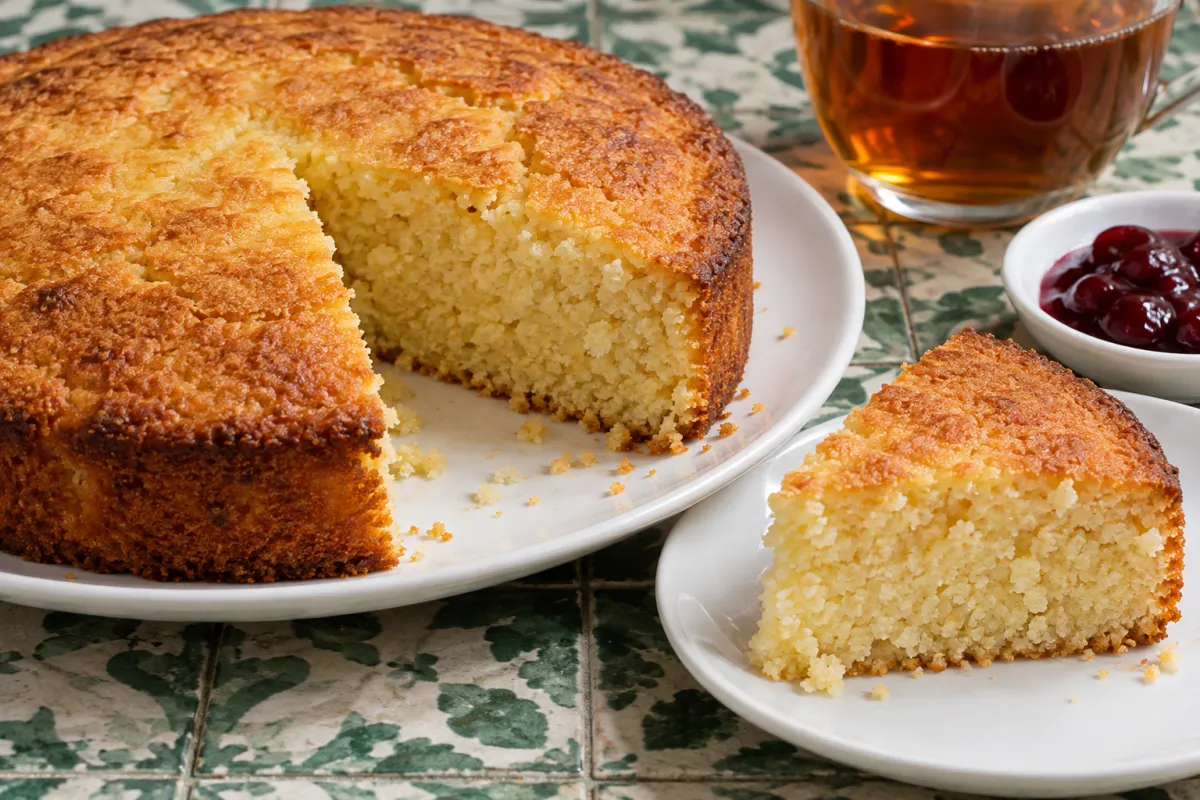
Mannik is the cake Russian families bake for tea: golden on top, soft inside, with a fine, pleasantly grainy crumb that tastes quite unlike sponge. It is made from semolina instead of flour, and before anything else goes in, the semolina soaks in milk kefir until it drinks up the liquid and swells. That one hour of waiting does most of the work.
The lazy cook's cake
Russians call mannik a lazy cook's cake, because there is no dough to roll out and no long whisking, only mixing and baking. The name itself simply means a cake made from semolina. It is a common breakfast and afternoon snack, and many home bakers make the plainest version for relaxed family tea. Greece has its own semolina cake too, soaked in citrus syrup.
Why the soak decides the texture
Dry semolina grains are hard, and they need time in the kefir to absorb the liquid and soften. Cut the soak short and the cake turns gritty and dense, and it may not rise properly. The soaked mixture is thick, so resist adding extra liquid, which makes the cake heavy, and stir in the butter and egg mixture only until evenly mixed. Overbaking is the usual cause of a dry mannik, and a deeper cake needs longer in the oven than a shallow one, so trust the skewer more than the clock. Let it cool before slicing, because the crumb needs time to set.
Jam, berries and a glass of tea
Serve mannik plain, or with apricot or plum jam, fresh berries or sweetened whipped sour cream, alongside hot black tea or a glass of kefir. For a moist version, pour 200 ml cold milk over the hot cake in its pan. Citrus zest, cinnamon, ginger or vanilla change the flavour, and raisins, nuts, candied fruit or chocolate can go into the batter.


Comments
No comments yet.
Comments could not be loaded.
Join the discussion
or