


 By Nik, founder of 東歐嚴選|kefir.link and former chef · Updated 2 November 2026
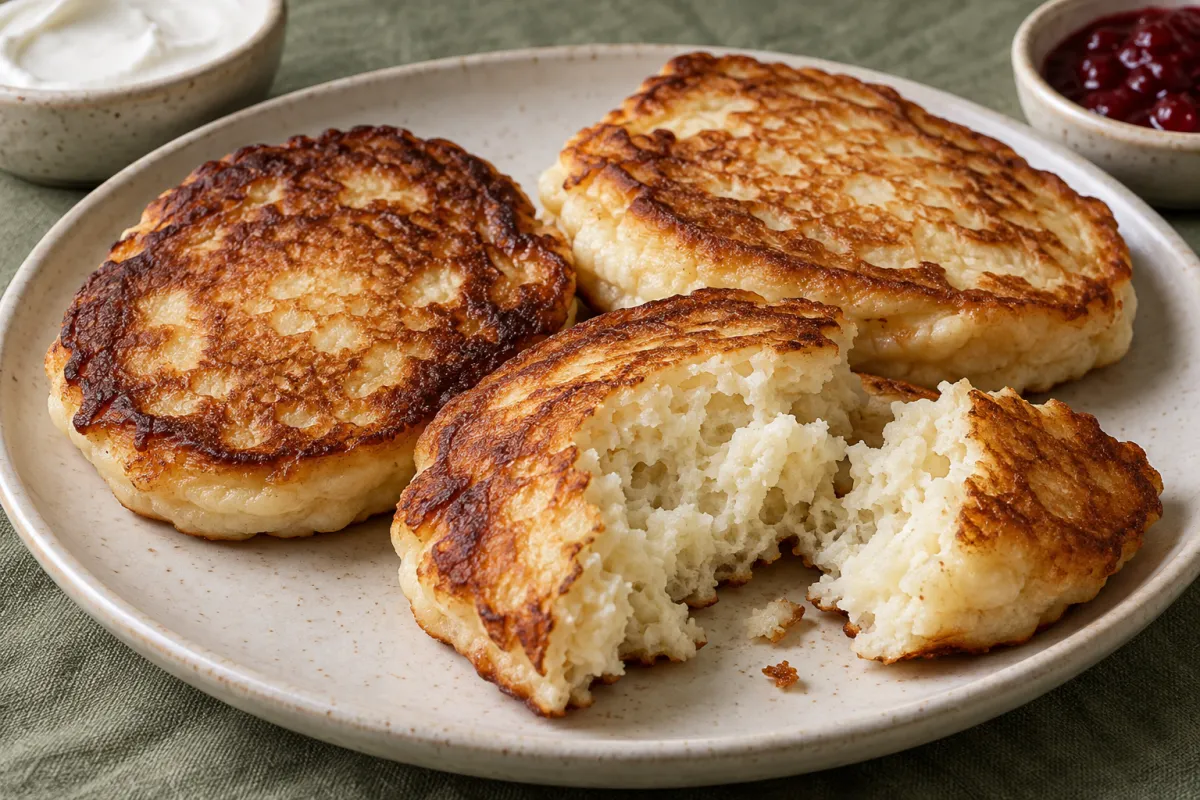
Oladyi are the small, thick pancakes of Russian, Ukrainian and Belarusian home kitchens, fried in oil until the edges turn crisp and golden while the centres stay soft and puffy. Kefir does the lifting: its acidity sets off the baking soda so the batter rises in the pan, and it adds moisture and richness.
A name first written down in 1470
The word for these pancakes is first recorded in 1470, and the dish appears in a 16th-century Russian household manual. Its root is an ancient Greek word meaning olive oil or an oily substance, which suits a pancake fried in oil. The Jewish name latke grew from the same word.
Oladyi are not blini. Blini are large and thin, made from a runny batter closer to a French crêpe, while oladyi batter is thick enough to hold a small round in the pan. The same name also covers fritters made from potato, carrot, beans, rice or summer squash.
Why the kefir is warmed and the batter left alone
Older recipes raised oladyi with yeast, which made them grow in the hot oil but meant a long wait for the dough. Today kefir and baking soda are the more common choice in Russia. Baking soda gives off carbon dioxide only when it meets an acid, and kefir supplies that acid, which plain milk cannot do. Cold kefir is less active, and very fresh, mild kefir gives less rise, so let it reach room temperature first. Once the batter has rested, leave it alone, because stirring it again makes the pancakes sink after they leave the pan.
How to serve them
Oladyi are best eaten straight from the pan while the crust is still crisp, with smetana, the Eastern European soured cream, or with berries, jam or a drizzle of honey. For a fruit version, fold a grated apple or a handful of raisins into the batter just before the baking soda goes in.



Comments
No comments yet.
Comments could not be loaded.
Join the discussion
or