
By Nik, founder of 東歐嚴選|kefir.link and former chef · Updated 3 November 2026
Poltava, a city in central Ukraine, has a monument to its favourite dumpling. On the main square stands a stone bowl holding twelve concrete halushky and an oversized ladle, as a symbol of family prosperity.
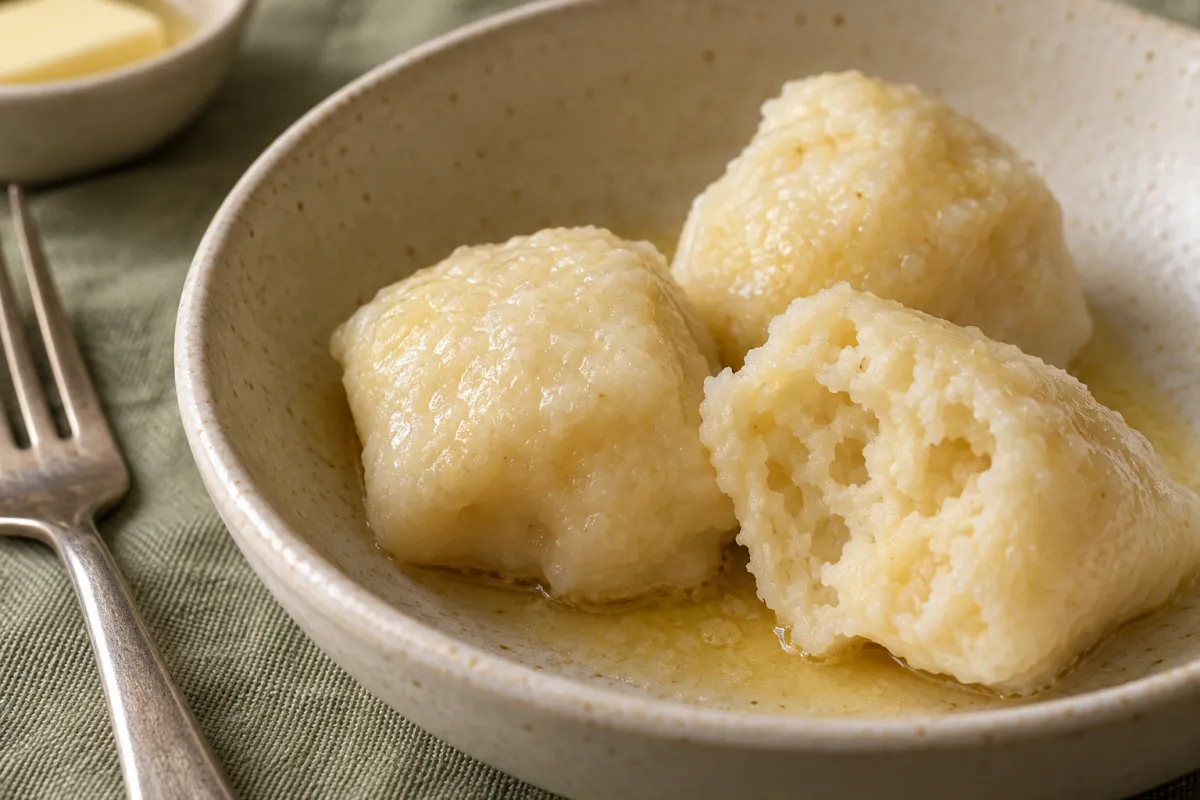
The real ones are small, soft pieces of dough with no filling, boiled in salted water and tossed in butter while hot. Milk kefir is what makes them light. Its acidity reacts with a little baking soda, and the gas puffs each piece to about twice its size in the pot. Halushky made with water alone come out noticeably denser.
Two habits keep them tender. The dough stays a little tacky, because extra flour makes the dumplings tough. They also leave the water a few minutes after they float, because longer boiling firms them up. In Ukraine they come to the table with sour cream, fried onions or stewed meat, and each soft dumpling soaks up a little of the sauce.
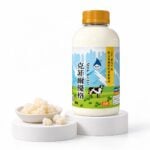
Poltava kefir dumplings
Ingredients
Dumplings
- 250 g plain milk kefir Bring to room temperature before using.
- 1 egg
- ½ tsp baking soda
- ½ tsp salt For the dough; use extra salt to season the cooking water.
- 400 g all-purpose flour Sift before using; have a little extra for dusting the work surface.
Butter coating
- 40 g butter
You will need
- Mixing bowl
- Kitchen scale and measuring spoons
- Sieve
- Whisk and mixing spoon
- Knife and chopping board
- Large saucepan and slotted spoon
Instructions
- In a mixing bowl, whisk together the kefir, egg, baking soda and salt for the dough.
- Gradually mix in the sifted flour with a spoon, then knead by hand to form a soft, pliable dough. A little stickiness is fine; avoid adding extra flour to make it completely dry.
- On a lightly floured surface, divide the dough in half and roll each half into a rope about 2 cm thick.
- Cut the ropes into pieces about 2 cm long; they puff up to roughly twice that size in the pot.
- Bring a large saucepan of water to the boil, adding salt to taste.
- Gently add the dumplings to the boiling water, leaving room for them to expand; cook in batches if needed.
- Stir gently once to loosen any dumplings stuck to the bottom.
- After the dumplings float, cook for another 3–5 minutes. Cut one open to check that the centre is cooked through, with no sticky raw dough.
- Use a slotted spoon to lift out the dumplings, drain well and transfer to a serving bowl.
- Toss each batch with a portion of the butter as soon as it is drained, then serve hot.


Comments
No comments yet.
Comments could not be loaded.
Join the discussion
or