
By Nik, founder of 東歐嚴選|kefir.link and former chef · Updated 2 November 2026
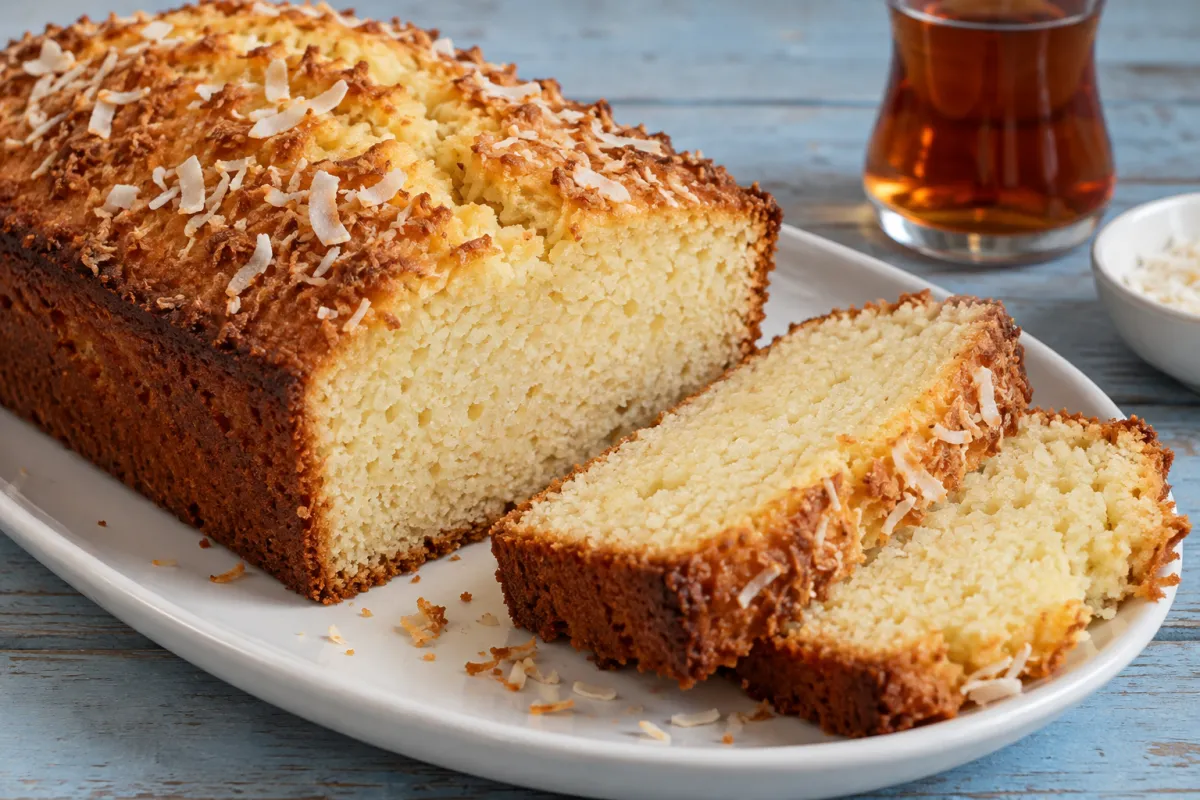
In Turkey, a coconut loaf like this one (Hindistan Cevizli ve Kefirli Kek) is an afternoon-tea cake. Grated coconut runs through a tender butter crumb, more bakes on top, and dried flakes go on after the oven. Milk kefir replaces plain milk and adds a mild tang that keeps the sweetness in check.
A loaf made for the tea tray
Turkish cooks file this cake with their afternoon-tea recipes, and coconut cakes are a favourite to set out for guests. The coconut flavour shows best beside a cup of tea or coffee. Most of the grated coconut is folded into the batter, and two spoonfuls are scattered over the top before baking. Dried flakes follow once the cake leaves the oven, so every slice carries coconut in the crumb and on the crust.
Soft butter, calm mixing and a patient oven
The cake rises on baking powder, which carries its own acid and alkali and works as soon as it is wet. The kefir has a different job. Cultured milk softens gluten and adds a gentle tang, and in a batter kefir behaves much like buttermilk, only slightly thicker and sharper.
Butter that takes a fingertip dent but still feels cool traps air when beaten with sugar into a pale, fluffy cream. Melted butter cannot hold those bubbles, and cold eggs can make the mixture split. Once the flour goes in, stir only until it disappears, because hard mixing knocks out air and toughens the crumb. Keep the oven door shut until the cake has set, then check that the centre springs back like the edges and a skewer comes out dry.
Buying coconut in Taiwan
Look for desiccated coconut, the dried coconut meat that baking shops sell for batters and decoration. In Taiwan it may be sold under the Chinese name for coconut powder, which is easy to confuse with other products. Coconut flour is pressed to remove fat and soaks up liquid, so it cannot stand in for grated coconut. Coconut-milk powder is different again, so check that the packet holds only dried coconut meat.
Turkish-style coconut kefir cake
Ingredients
For the cake
- 170 g unsalted butter Softened, not melted; extra for greasing the tin.
- 200 g all-purpose flour Extra for dusting the greased tin.
- 1½ tsp baking powder
- 1 pinch salt
- 175 g caster sugar
- 1 tsp vanilla sugar Vanilla-flavoured sugar, not pure vanillin powder.
- 3 eggs Bring to room temperature.
- 200 ml plain milk kefir Unsweetened and unstrained.
- 60 g unsweetened desiccated coconut Fine dried coconut, not coconut flour. Includes 2 tbsp reserved for the top.
For the topping
- 25 g dried coconut flakes
You will need
- Oven
- Loaf tin, approximately 23 × 13 cm
- Electric hand mixer
- Mixing bowls
- Sieve and spatula
- Kitchen scale, measuring jug and measuring spoons
- Wooden skewer
- Aluminium foil
Instructions
Prepare the oven and tin
- Preheat the oven to 180°C (350°F) with conventional top and bottom heat.
- Grease the inside of the loaf tin with a little butter, then dust lightly with flour.
Mix the batter
- Sift the flour, baking powder and salt together into a bowl.
- In another bowl, beat the softened butter and caster sugar until pale and fluffy.
- Beat in the eggs one at a time, mixing well after each addition, then mix in the vanilla sugar.
- Set aside 2 tbsp of the measured desiccated coconut for the top.
- Fold the sifted flour mixture into the butter mixture in three additions, alternating with the kefir in two additions, starting and ending with flour.
- Fold in the remaining desiccated coconut, stopping as soon as the batter is evenly mixed.
Bake and cool
- Spoon the batter into the prepared tin and sprinkle the reserved 2 tbsp desiccated coconut evenly over the top.
- Bake at 180°C (350°F) for about 60 minutes, checking from 40 minutes. A skewer inserted into the centre should come out without wet batter, and the centre should feel as set as the edges when gently pressed. Continue baking if the centre is still underdone.
- Scatter the dried coconut flakes over the cake after it comes out of the oven.
- Let the cake cool completely in the tin.
- Remove the cooled cake from the tin and cut into slices.


Comments
No comments yet.
Comments could not be loaded.
Join the discussion
or