



 By Nik, founder of 東歐嚴選|kefir.link and former chef · First published 8 January 2026 · Updated 3 November 2026
You open the jar or the bottle and there it is: something white on top. Is it mould? Can you still drink it? Most of the time it is one of three harmless things: whey, curds or a thin layer of yeast. If it is mould, the answer is simple: throw it all away. Here is how to tell them apart in a few seconds.
The short answer
- Clear yellowish liquid or thick white curds are whey and curds. That is normal kefir.
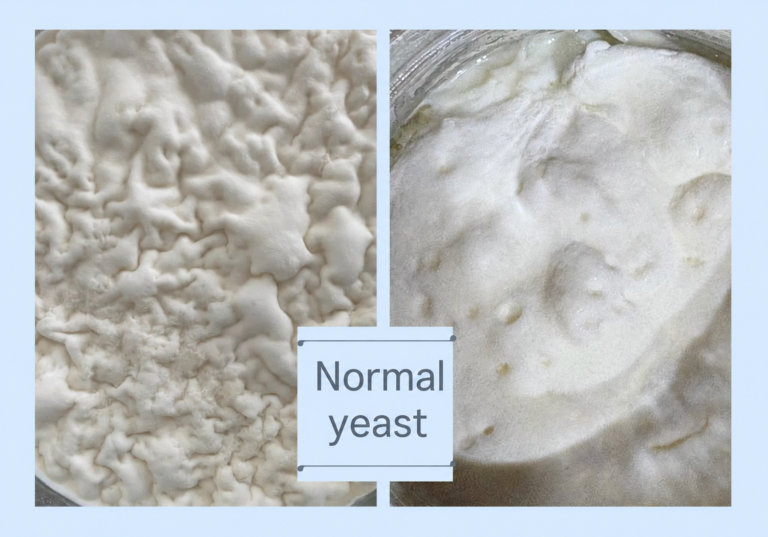
- A thin, smooth, white or beige film on a home jar is usually yeast. Skim it off, strain the batch and put it in the fridge.
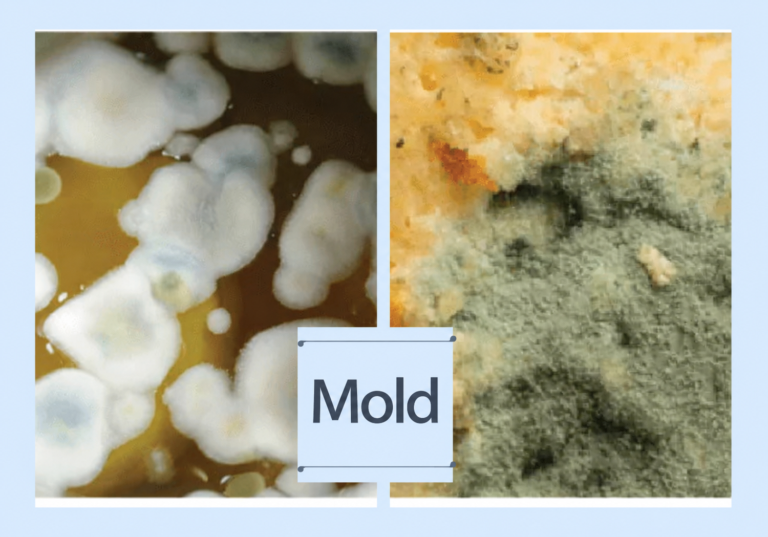
- Fuzzy, raised spots, or any pink, red, orange, green, blue, grey or black colour is mould. Throw away everything: kefir, grains and all.
- Look first: check the top with your eyes and keep your nose at a distance.
- A bottle you bought: if it shows mould or a strange colour, put it aside and send us a photo with the date on the cap.
What you see, and what it is
| What you see | What it is | What to do |
|---|---|---|
| Clear, yellowish liquid on top or at the bottom | Whey, the watery part of the milk | Stir it back in or pour it off. This is normal. |
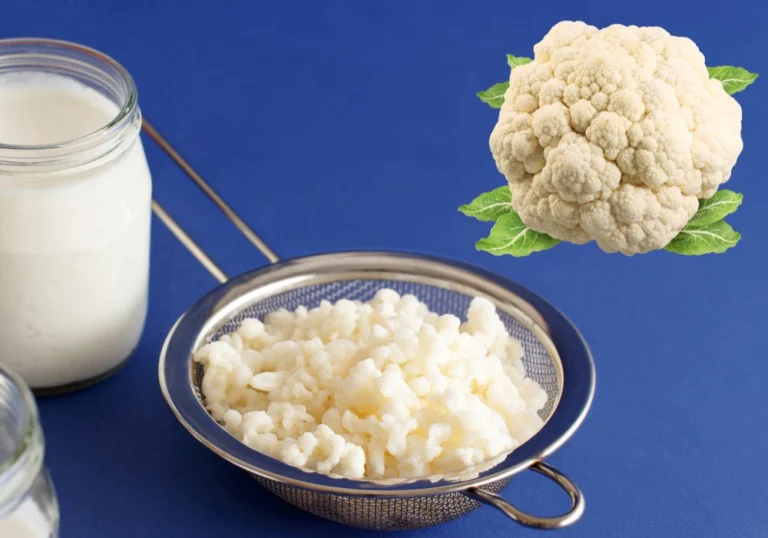
| Thick white curds, like soft tofu or cheese | The milk proteins, set by fermentation | Stir gently. If it is very thick and sour, use more milk or a shorter time next time. |
| Tiny white flecks in the kefir | Small curds or bits of grain | This is normal kefir. |
| A thin, flat, smooth white or beige film on a home jar | Usually yeast | Skim it off, strain, refrigerate. Cover the jar better next time. |
| A film that keeps getting thicker, wrinkled or spreading | Too much yeast, often from air and warmth | Throw that batch away. Keep the grains if they look and smell normal. |
| Fuzzy, raised or round spots, any colour including white | Mould | Throw everything away. |
| Pink, red, orange, green, blue, grey or black | Mould or unwanted microbes | Throw everything away. |
| A rotten smell instead of a sour one | Spoilage | Throw everything away. |
How we checked this guide
- Food-safety guidance: the US Department of Agriculture’s advice on mould in food, Taiwan’s Ministry of Health and Welfare on mould toxins, and University of California food-science guidance on yeast films in home ferments.
- Research on dairy spoilage: a review of the yeasts and moulds that grow on fresh dairy foods such as yogurt.
- Our own experience: the photos customers send us on LINE, and the care guide that comes with our grains.
The normal layers: whey and curds
Kefir keeps fermenting, even in the fridge. As it does, the milk proteins set and squeeze out a clear, yellowish liquid. That liquid is whey, and Taiwanese doctors say the same of the whey on yogurt: it is normal, and you can keep it (TVBS Health, in Chinese).
- Three layers (curds on top, whey in the middle or at the bottom) simply mean the kefir has fermented a little longer. Stir it before you strain or pour.
- Lots of whey and very sour curds mean the grains had too little milk or it was warm. More milk or a shorter time fixes it. See what to do when kefir is over-fermented.
A thin white or beige film: usually yeast
Kefir grains contain yeasts alongside the lactic acid bacteria. When the surface of a home jar is open to the air and the room is warm, yeasts can form a thin, smooth, white to beige film on top. It looks flat, smooth and slightly matte.
- Skim it soon: surface yeasts feed on the acid in kefir. Left to grow, they make it less sour and give it an off taste (UC Davis).
- What to do: skim the film off with a clean spoon, strain the kefir as usual and put it in the fridge. Put the grains into fresh milk.
- When to start fresh: if the film comes back thicker, wrinkled or spreading, or the kefir smells strange, throw that batch away.
- Next time: fasten the kitchen paper tightly with a rubber band, keep the jar in the shade and change the milk every 24 hours.
What mould looks like, and why you throw it all away
Mould is a fungus that grows where air meets food. On kefir it usually looks fuzzy, raised or spotty, often in round patches. It can be green, blue, grey, black, pink or orange, and it can also be white, so texture matters as much as colour.
- Throw out the whole jar: in soft, moist foods like yogurt, mould spreads below the surface with hidden threads, and bacteria can grow along with it. The US Department of Agriculture says to discard mouldy yogurt (USDA chart).
- The bin is the answer for cooking too: some moulds make toxins that stay in food after normal cooking (Taiwan Ministry of Health and Welfare, in Chinese).
- Grains too: mould in the jar means the grains are contaminated. Start again with new grains and clean, dry tools.
- Pink often means water: dry the jar, spoon and strainer completely, because wet tools are the most common way unwanted microbes get in.
A bottle of kefir you bought
- Normal: separated layers, a sour taste and a slightly swollen bottle. Tilt the sealed bottle gently to mix it.
- Set it aside: if you see mould, pink or blue-green colours, a rotten rather than sour smell, or a bottle that leaks or bulges a lot, put it aside and send us a photo with the date on the cap.
- Keep it fresh: store it at 2–4°C at the back of the fridge, pour it into a glass to drink, and finish an opened bottle within 3 days.
How to keep mould and yeast films away
- Dry tools: jar, strainer and spoon completely dry before they touch the grains.
- Covered jar: kitchen paper and a tight rubber band at room temperature, a closed lid in the fridge.
- Cool spot: about 20–26°C, out of the sun. See why temperature matters.
- Fresh milk on time: change it every 24 hours and put a finished batch in the fridge straight away.
- Clean fridge and cloths: wipe the fridge regularly and use fresh, dry dishcloths, because moulds also grow in the cold and musty cloths spread spores.
Frequently asked questions
Is the white layer on kefir mould?
Usually it is something normal. Clear liquid is whey, thick white lumps are curds, and a thin flat film is usually yeast. Fuzzy, raised or coloured spots are mould.
Can I scoop the mould off and drink the rest?
Throw away the kefir and the grains together. Mould spreads through soft dairy below the surface.
Is a beige film on my kefir safe?
A thin, flat beige film is usually yeast. Skim it off, strain and refrigerate; if it comes back thicker or smells odd, throw that batch away.
Why is there yellow liquid on my kefir?
That is whey. Stir it back in or pour it off; it is normal.
Can white mould look like yeast?
Yes, which is why texture matters: mould is fuzzy or raised, yeast film is flat and smooth. When in doubt, throw it out or send us a photo.
Should I smell it to check?
Look first. If you can see mould, keep your nose at a distance and throw it all away.
Not sure what you see?Ask on LINE




Comments
No comments yet.
Comments could not be loaded.
Join the discussion
or