


 By Nik, founder of 東歐嚴選|kefir.link and former chef · Updated 2 November 2026
Little balls of tangy kefir cheese sit in a jar of olive oil over a bed of dried herbs, firm on the outside and soft enough inside to spread on toast. They are the kefir cousin of labneh balls, the strained-yogurt balls kept under oil in Lebanese kitchens. Milk kefir brings the acidity, and the oil adds flavour and a smooth finish.
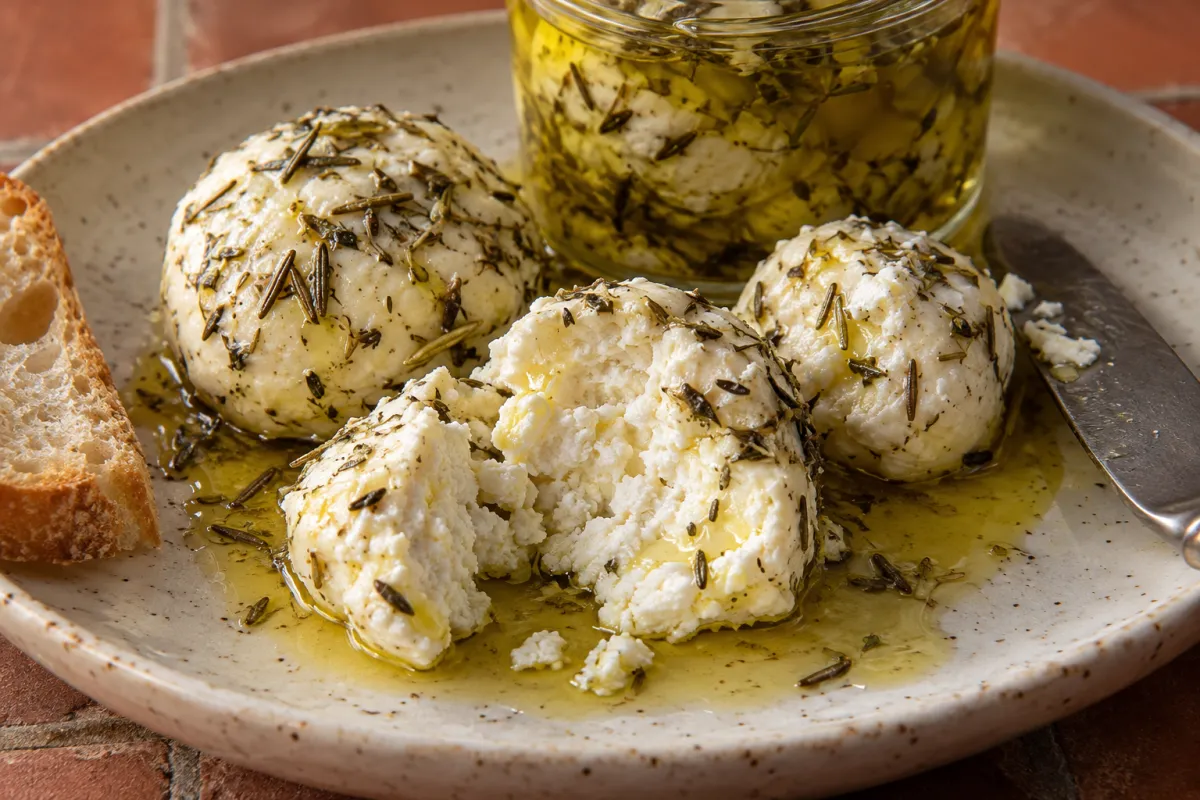
A Lebanese breakfast favourite
In Lebanon, labneh balls are a traditional part of mouneh, the home pantry. They are eaten at breakfast and at dinner with pita, olives, fresh mint, tomato, cucumber and a glass of tea. Cooks in the region also roll them in nigella seeds, sesame, chopped walnuts or dried mint, and set them out with other small dishes as part of a mezze. Kefir cheese works the same way, landing between Greek yogurt and cream cheese in texture, with more acidity than an ordinary soft cheese.
Why the balls need to dry first
Soft cheese will not hold its shape in oil unless the balls first dry uncovered in the fridge until the surface feels dry while the centre stays soft. The cheese has to be well drained, but squeezing the cloth to hurry it pushes fine curds through the weave and makes the cheese grainy. Fat matters too: kefir made from skim or low-fat milk holds too much water, and balls made from it turn chalky or collapse. Dried herbs are used instead of fresh ones, which add moisture, and they go in first so they do not float. If the cheese stays too soft to roll, serve it as a spread instead.
Coatings and ways to serve them
Dried oregano and thyme with lemon zest make one coating, and smoked paprika with chilli suits anyone who likes heat. Toasted sesame or herbes de Provence give the same plate another look. Cold olive oil turns cloudy and thick in the fridge, so take the jar out a little while before serving and the oil will loosen again. Spread the cheese on toast, crackers or bagels, or on fresh sourdough with a handful of sprouts.




Comments
No comments yet.
Comments could not be loaded.
Join the discussion
or