


 By Nik, founder of 東歐嚴選|kefir.link and former chef · Updated 2 November 2026
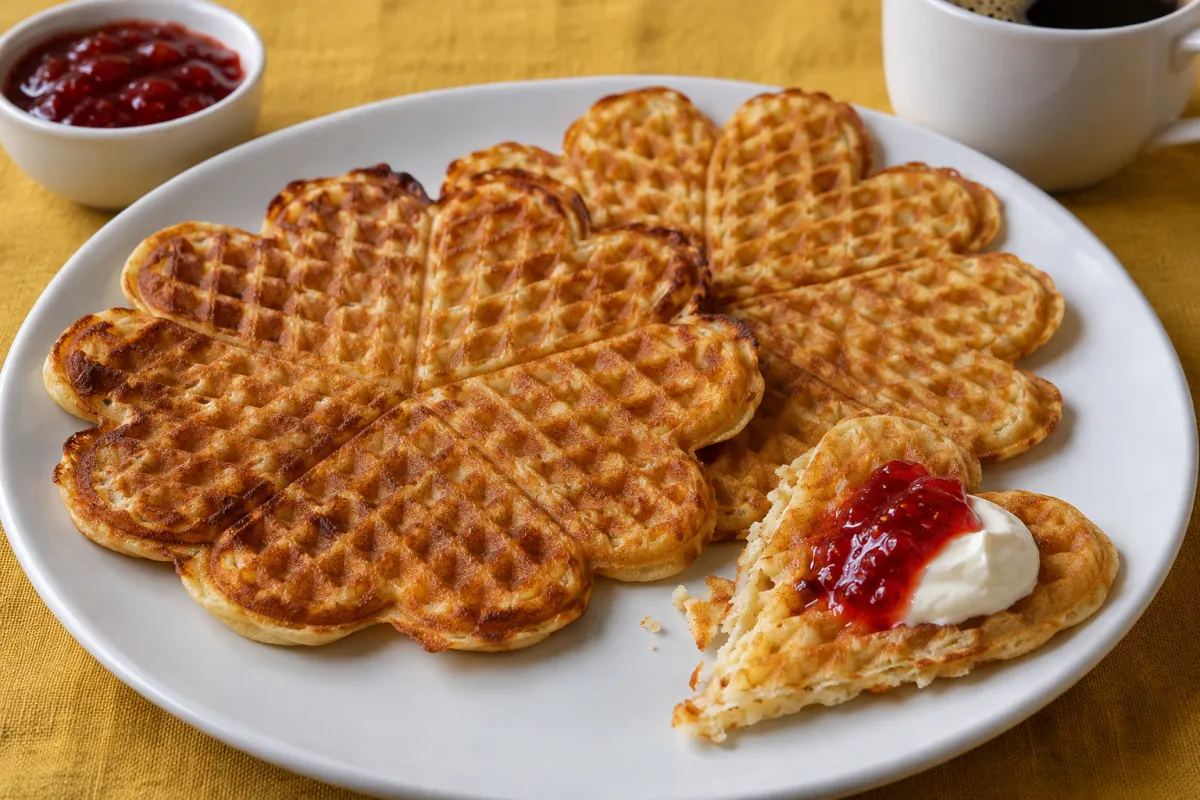
Norwegian waffles are thin, soft hearts, gently sweet, with small shallow squares instead of the deep pockets of a Belgian waffle. Norwegians eat them with sour cream and jam or with butter and brown cheese, at parties and on ordinary weekdays alike. Replacing part of the milk with kefir makes them softer and more flavourful, a swap that appears in many Norwegian recipes.
A borrowed treat that became Norwegian
Many Norwegians think of waffles as their own invention, but the dish came to Norway from elsewhere in Europe. The oldest known Norwegian waffle iron dates from 1685, and an estate inventory from 1737 already lists two of them. Nobody knows exactly when waffles became common, but for a long time they were festive food, served at weddings, christenings and holidays. Today they are eaten all over the country, and even Norway's Waffle Day was borrowed from Sweden.
Why kefir batter uses two raising agents
Baking soda is a base, and it only releases its carbon dioxide when it meets an acid. Norwegian bakers who put a soured dairy product such as kefir in the batter often use both baking soda and baking powder, because the two react differently to acid. With milk alone, baking powder is enough. Full-fat milk and real butter also make a difference, while skimmed milk gives a flatter result.
Resting lets the batter swell, and Norwegian recipes ask for anywhere from 15 to 30 minutes. A rested batter is easier to cook and bakes up airier. Grease both plates of the iron well and leave each waffle alone for at least two minutes, because it is ready when it releases easily and turns golden.
Jam, brown cheese or cured ham
The traditional topping is sour cream with strawberry or raspberry jam. Just as popular is butter with Norwegian brown cheese, made by boiling down whey until it caramelises, and some people add a spoonful of jam on top. For a savoury plate, Norwegians also serve waffles with sour cream and cured ham, and for dessert with strawberries, vanilla ice cream and chocolate sauce. Many Norwegian recipes flavour the batter with ground cardamom or vanilla. Cool the waffles on a rack if you like them a little crisp, because stacked warm waffles turn softer.



Comments
No comments yet.
Comments could not be loaded.
Join the discussion
or