
By Nik, founder of 東歐嚴選|kefir.link and former chef · Updated 2 November 2026
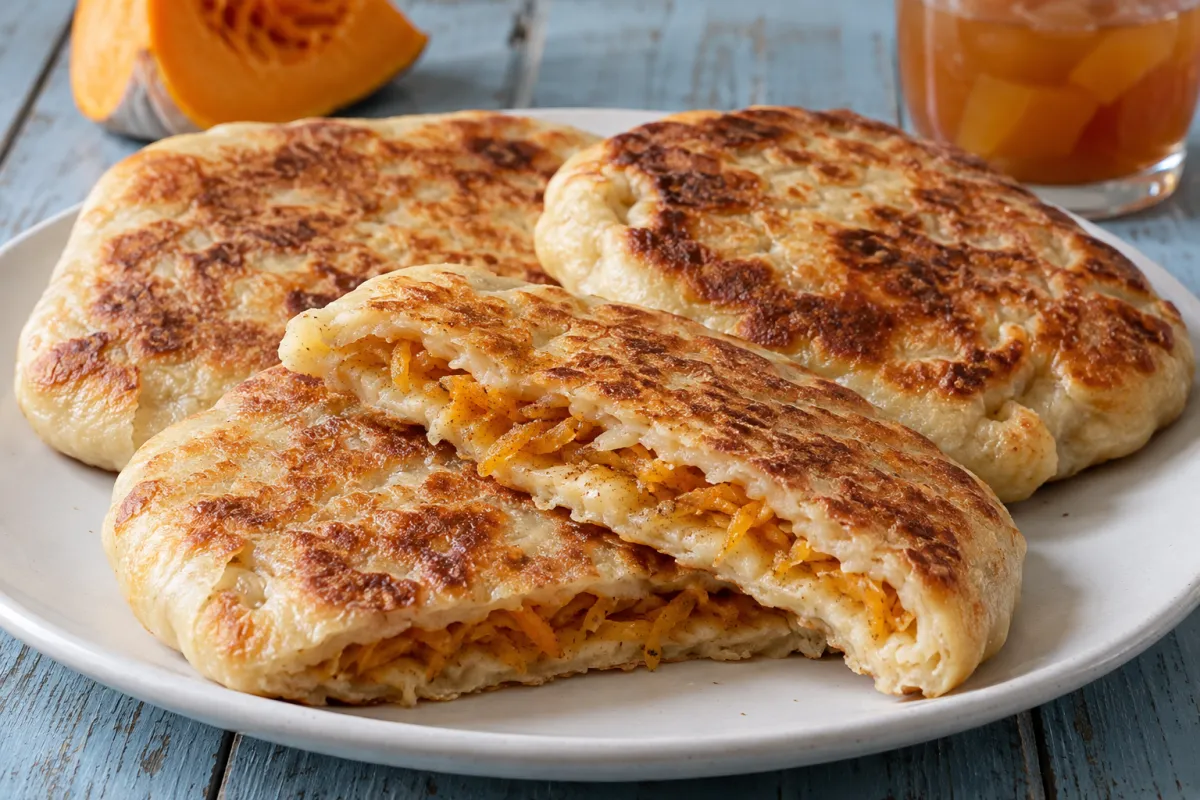
Plăcinte are Moldova's thin filled breads, and this pan-fried version wraps grated pumpkin, sugar and cinnamon in a soft dough, then brushes each golden round with butter while it is hot. Milk kefir and a little baking soda make the dough soft, tender and easy to roll thin.
One name for many Moldovan pies
Plăcinte are made across the whole of Moldova, filled with cheese, meat, fruit, potato, cabbage or pumpkin, and they are part of the country's recognised cultural heritage. The word comes from the Latin placenta, meaning cake, and before that from the Greek word for a flat cake. One name covers several shapes: a thin sheet folded into an envelope, a coiled spiral, or a pie baked in a tray. In central and southern Moldova, cooks fry them in a pan from a single stretched sheet, just like these pumpkin breads. Peasant families once kept plăcinte mainly for holidays, and today they are everyday food as well as festive food.
From cheese whey to kefir
Moldovan flatbreads were originally made with whey left over from making fresh cheese. Kefir is a good modern stand-in for that whey and makes the dough more tender. The dough rests while the pumpkin is prepared, and that rest makes it easy to roll very thin. Grated raw pumpkin releases juice, and a wet filling makes the parcels hard to shape. That is why the pumpkin is salted, left for a few minutes and squeezed firmly before the cinnamon sugar goes on.
Which pumpkin to buy and how to serve it
Kabocha, sold in Taiwan as chestnut pumpkin, has finer, floury, sweeter flesh and less moisture than ordinary pumpkin, so it gives a drier filling. In Moldovan shops, sweet plăcinte come with pumpkin, apple or sour cherry fillings and are eaten warm, by hand. At home, serve them with sour cream, or with a cup of tea or cocoa. They also travel well as a portable snack, or make an unusual breakfast.
Moldovan pumpkin kefir flatbreads (Plăcinte)
Ingredients
Dough
- 400 g all-purpose flour
- 200 ml plain milk kefir
- 1 egg
- 1 tbsp sugar
- 30 ml vegetable oil
- ½ tsp salt
- ½ tsp baking soda
Pumpkin filling
- 500 g kabocha (chestnut pumpkin) Weigh after removing the skin and seeds.
- 3 tbsp sugar
- 1 tsp ground cinnamon
- 1 pinch salt
For shaping and frying
- 2 tbsp all-purpose flour For dusting the work surface; use only as needed.
- 3 tbsp vegetable oil Add a little to the pan for each batch.
- 45 g butter For brushing on the hot flatbreads.
You will need
- Large mixing bowl
- Coarse grater
- Rolling pin
- Frying pan with a lid and spatula
- Kitchen scale and measuring spoons
Instructions
Make the flatbreads
- Mix the kefir, egg, sugar for the dough, 30 ml oil, ½ tsp salt and baking soda in a bowl.
- Add the 400 g flour gradually, kneading until the dough is soft and smooth.
- Cover the dough and rest for 30 minutes while you prepare the pumpkin.
- Coarsely grate the peeled, seeded pumpkin and mix with the pinch of salt for the filling. Leave for 10 minutes, then squeeze out the juice thoroughly.
- Mix the sugar for the filling with the cinnamon in a separate bowl; keep it aside to sprinkle over the pumpkin as you fill each bread.
- Divide the rested dough into six equal pieces and keep them covered. Dust the work surface lightly with the extra flour and roll one piece into a thin round.
- Place one-sixth of the squeezed pumpkin in the centre and sprinkle with one-sixth of the cinnamon sugar, keeping the edges clear. Fold the left and right edges over the filling, then the top and bottom, and pinch the seams shut.
- Set the parcel seam-side down and gently roll it as thin as you can without tearing the dough.
- Heat a little frying oil in the pan over medium-low heat. Add the bread seam-side down and cover with the lid. Fry for 4–5 minutes, then turn and cook for another 2–3 minutes, until both sides are golden, the pumpkin is tender and the dough is cooked through.
- Brush each flatbread with butter while hot. Shape and fry the remaining breads in the same way, adding a little frying oil between batches. Serve warm.


Comments
No comments yet.
Comments could not be loaded.
Join the discussion
or