


 By Nik, founder of 東歐嚴選|kefir.link and former chef · Updated 2 November 2026
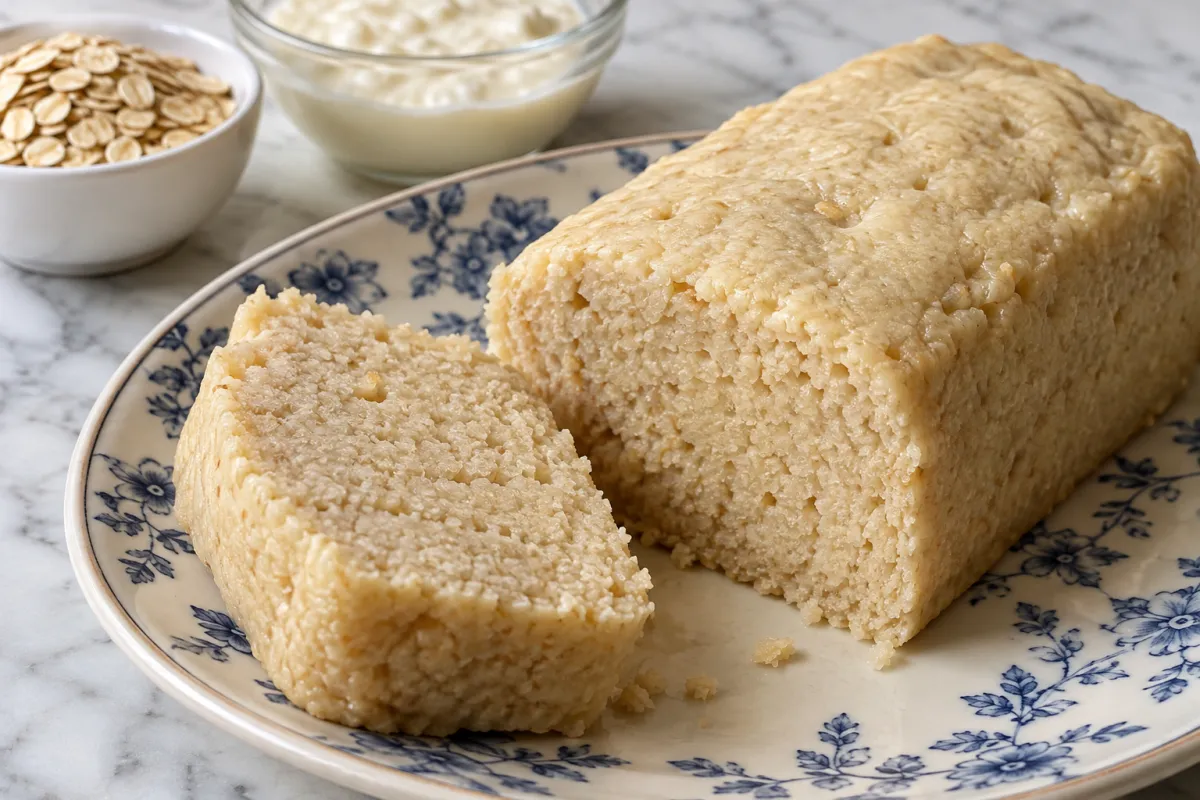
Japanese mushi-pan is a soft, moist steamed cake, and this one is made from quick oats soaked in soy kefir, whisked with an egg and steamed for about 12 minutes. Japanese cooks often add yogurt to oat steamed cakes, because it makes the crumb moister than milk or soy milk and adds a slight sourness; soy kefir plays that part here. Serve it warm for breakfast or as an after-school snack.
From horse-drawn wagons to convenience stores
Mushi-pan is steamed rather than baked and is raised with baking powder, unlike Chinese mantou, which relies on yeast. In the 1950s, horse-drawn wagons sold it on Japanese streets. Today it fills the shelves of bakeries, convenience stores and supermarkets, in flavours from brown sugar and matcha to chocolate. Families eat it for breakfast or as an after-school snack.
Soak the oats, then mash them
Oats need time in liquid before they can make a light cake. Oats soaked for 10 minutes and then mashed rise tall and fluffy; soaked but left whole, they give a lower, firmer, nubbly cake, and unsoaked oats make it hard and crumbly. Fine quick oats also work better than large rolled flakes, which do not turn fluffy. That is why the soaked oats are stirred hard before the egg goes in. A wheat-flour cake is mixed gently, but oats need this extra work.
Cloth on the lid, a small container
Baking powder carries its own acid and base, so it needs only liquid and heat to release gas and does not depend on the kefir’s sourness. Wrapping the lid in a cloth matters on high heat, because water dripping from the lid makes the top soggy. A smaller container gives a thicker and fluffier cake, and a mug or cupcake mould works too. For a cocoa version, use 40 g of oats and 10 g of cocoa powder. Once the cake has cooled, a spoonful of strawberry fruit spread makes a fruity topping.





Comments
No comments yet.
Comments could not be loaded.
Join the discussion
or