


 By Nik, founder of 東歐嚴選|kefir.link and former chef · Updated 2 November 2026
German home bakers call it simply kefir cake (Kefir-Kuchen): a dark cocoa sponge baked in one tray, cut into squares and brushed with a thin glaze of butter, sugar and cocoa. Oil and a whole bottle of milk kefir make the batter, so there is no butter to cream. The kefir's acid also does the lifting, working with baking soda to give a soft, open crumb.
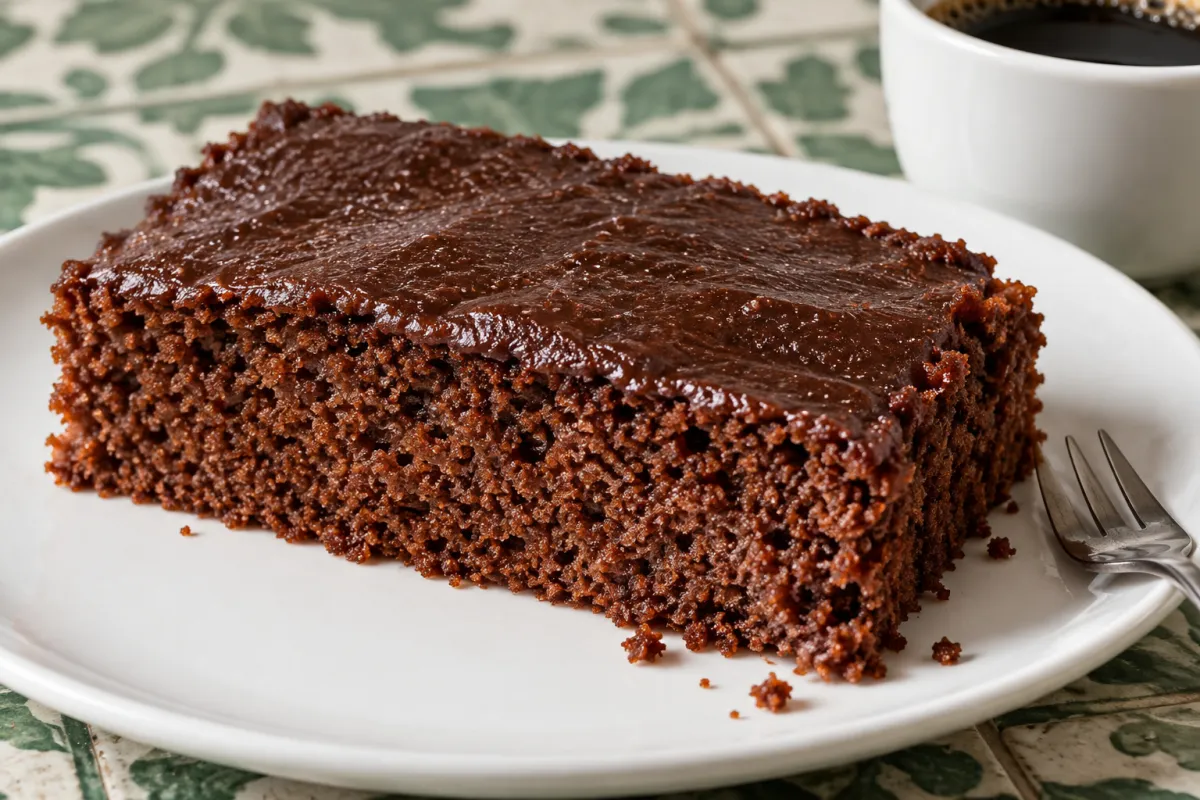
A tray cake from German and Czech kitchens
The same cake turns up across the border in Bohemia, where it is a home sheet cake that many young Czech bakers learn first. Kefir itself sits between milk and a thin drinking yogurt, tangy and sometimes slightly fizzy. In both countries, cooled squares go out with coffee or tea.
Why the batter goes straight into the oven
Baking soda releases carbon dioxide as soon as it meets an acid such as kefir, so the rise begins in the bowl. A batter left standing loses much of that gas before it reaches the oven, which is why Czech bakers spread the batter and bake it at once. Measure the soda in level spoonfuls, because too much makes large bubbles that collapse, a coarse crumb and a metallic taste.
Most cocoa sold in Taiwan is alkalized and not acidic enough to set baking soda working, so the kefir supplies the acid. Plain milk is no substitute, because without the kefir's acid the soda cannot rise and the cake bakes darker and denser. Baking powder cannot replace the soda spoon for spoon either.
Glazes, toppings and add-ins
Let the cake cool completely before brushing on the butter glaze, so it stays thin and shiny. Czech bakers often add coconut, which should go on after the glaze sets, or it soaks the glaze up. A thin layer of jam under the glaze makes the squares juicier. Some bakers stir nuts or raisins into the batter, or serve whipped cream on the side.


Comments
No comments yet.
Comments could not be loaded.
Join the discussion
or