


 By Nik, founder of 東歐嚴選|kefir.link and former chef · Updated 2 November 2026
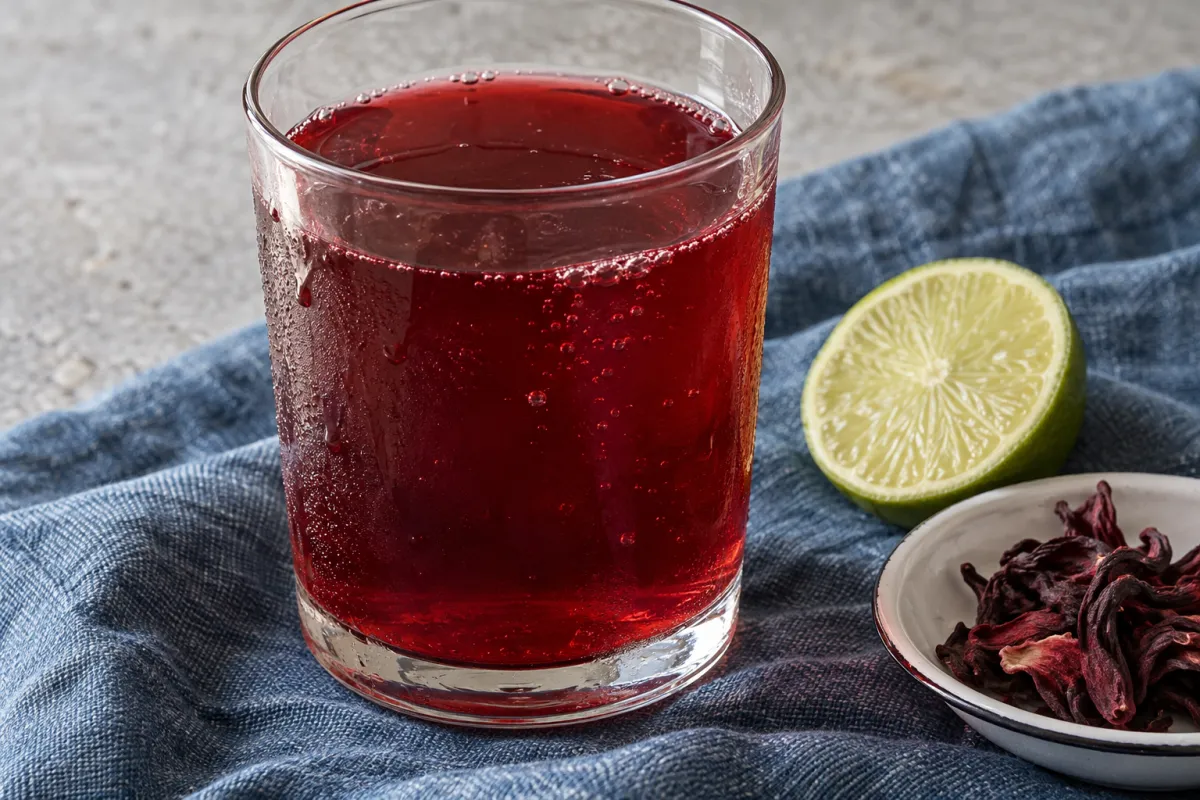
A spoonful of dried hibiscus turns pale water kefir pink as it steeps, then a deep ruby red, with a tart edge much like cranberry. Lime keeps the flavour bright, and a little honey softens the sourness. That honey also feeds the yeast still living in the kefir, which fills the sealed bottle with fine bubbles.
One flower, many red drinks
Hibiscus is native to Asia and Africa and reached Mexico aboard the galleons that sailed between Manila and Acapulco. There it became agua de jamaica, a red summer drink of hibiscus, water, sugar and ice that is never fermented. Water kefir brewers have their own versions. Some steep hibiscus, sweeten and cool it, ferment it with the grains and serve it over ice with mint, while others mix a cooled infusion of hibiscus, ginger and lemon into finished kefir.
Where the bubbles come from
Even after the grains are strained out, yeast and bacteria remain in water kefir. The yeast eats sugar and gives off carbon dioxide, and a sealed bottle traps that gas in the drink, while lactic acid adds the clean sour taste. Honey works well here because it goes only into the bottle, not into the jar where the grains live.
A flat bottle usually means too little sugar, a cool room, too little time, a tired starting kefir, a leaking cap or too much empty space at the top. Water kefir ferments best at a steady 20 to 25°C, and cooler rooms simply need longer. Serve it well chilled over ice with a wheel of lime.
Roselle and limes in Taiwan
In Taiwan, hibiscus is the familiar roselle, dried for tea and cooked into jam. The red part sold as the flower is really the calyx, and fresh calyces are an October and November crop in Taiwan. The rest of the year, dried roselle does the job, and farmers' associations in Taitung sell it in small packs. Limes are easy to miss in Taiwanese shops, because they are often sold as seedless lemons.


Comments
No comments yet.
Comments could not be loaded.
Join the discussion
or