
By Nik, founder of 東歐嚴選|kefir.link and former chef · Updated 3 November 2026
Roselle, the deep red calyx behind sweet-sour roselle tea and roselle jam, has one more use. Sealed in a bottle of water kefir for a day, it makes a ruby red soda with a tart edge much like cranberry.
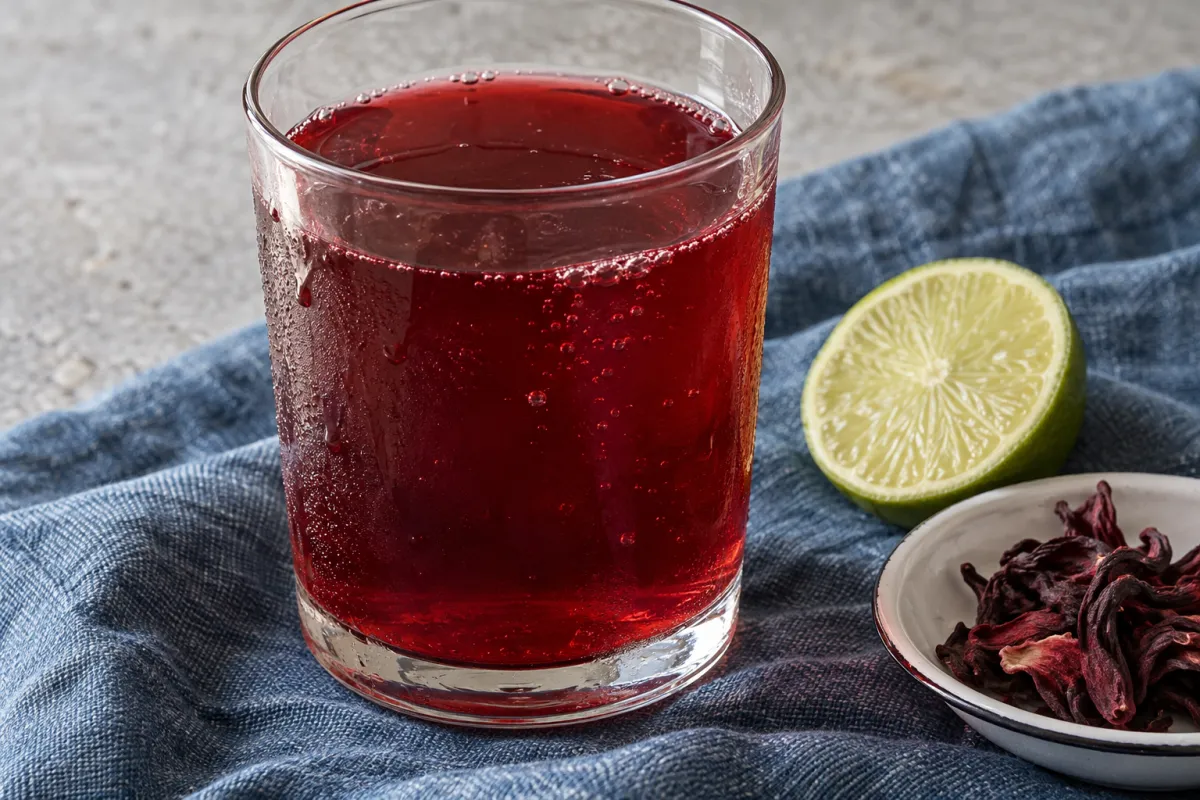
In Mexico the same flower becomes agua de jamaica, an iced summer drink that is never fermented. Yeast is still alive in water kefir after the grains are strained out, and it feeds on the honey in the bottle. The gas stays trapped under the lid as fine bubbles, and lime keeps the flavour bright.
As the calyces steep, the colour deepens from pink to ruby. The gas also builds pressure, so the drink goes into bottles made for carbonation and moves to the fridge as soon as it starts to fizz. Opened slowly over the sink, it pours out cold over ice, with a wheel of lime on the rim.
Hibiscus water kefir
Ingredients
- 1000 ml plain water kefir Use fresh, unflavoured water kefir: ready-made, or homemade with the grains strained out.
- 1 tbsp dried hibiscus Use food-grade dried roselle for tea or cooking.
- 1 lime Juice only; also sold in Taiwan as seedless lemon.
- 2 tsp honey
You will need
- Swing-top bottles rated for carbonation, free of cracks or chips
- Glass jug and spoon
- Funnel and fine-mesh strainer
Instructions
- Clean and sanitize the bottles, lids, jug, spoon, funnel and strainer, following the instructions for the equipment and food-contact sanitizer.
- Squeeze the lime juice into the glass jug.
- Add the honey and water kefir to the lime juice and stir until the honey dissolves.
- Add the dried hibiscus to the pressure-rated bottles, dividing it evenly if using more than one bottle.
- Pour the mixture into the bottles, leaving about 3 cm between the liquid and each bottle opening, then close the lids. If there is more liquid, use another bottle; do not fill to the brim.
- Place the bottles out of direct sunlight at 20–25°C (68–77°F) for about 24 hours of second fermentation. Check for bubbles as described in the next step, since each batch ferments at a different pace. In a warm room above 25°C (77°F), as in a Taiwanese summer, check after 6 hours; it may be ready in 12.
- Every 8 hours, slowly open each lid over the sink to check for bubbles and release pressure, then close it again. At the first hiss or visible fizz, refrigerate the bottle immediately; do not wait for 24 hours.
- Refrigerate the bottles until the drink is cold throughout.
- Slowly open the chilled bottles over the sink, then pour through a fine-mesh strainer into glasses to remove the hibiscus.


Comments
No comments yet.
Comments could not be loaded.
Join the discussion
or