


 By Nik, founder of 東歐嚴選|kefir.link and former chef · Updated 2 November 2026
Roasted sweet potato has a dense, soft texture and a simple sweetness, and here it becomes a cool, creamy cheesecake with tender cubes of roasted potato scattered over the top. Strained kefir cheese is soft like fresh cream cheese and as pleasantly sour as kefir itself, which keeps the sweetness in balance. Gelatin does the setting in the refrigerator, so the oven stays off.
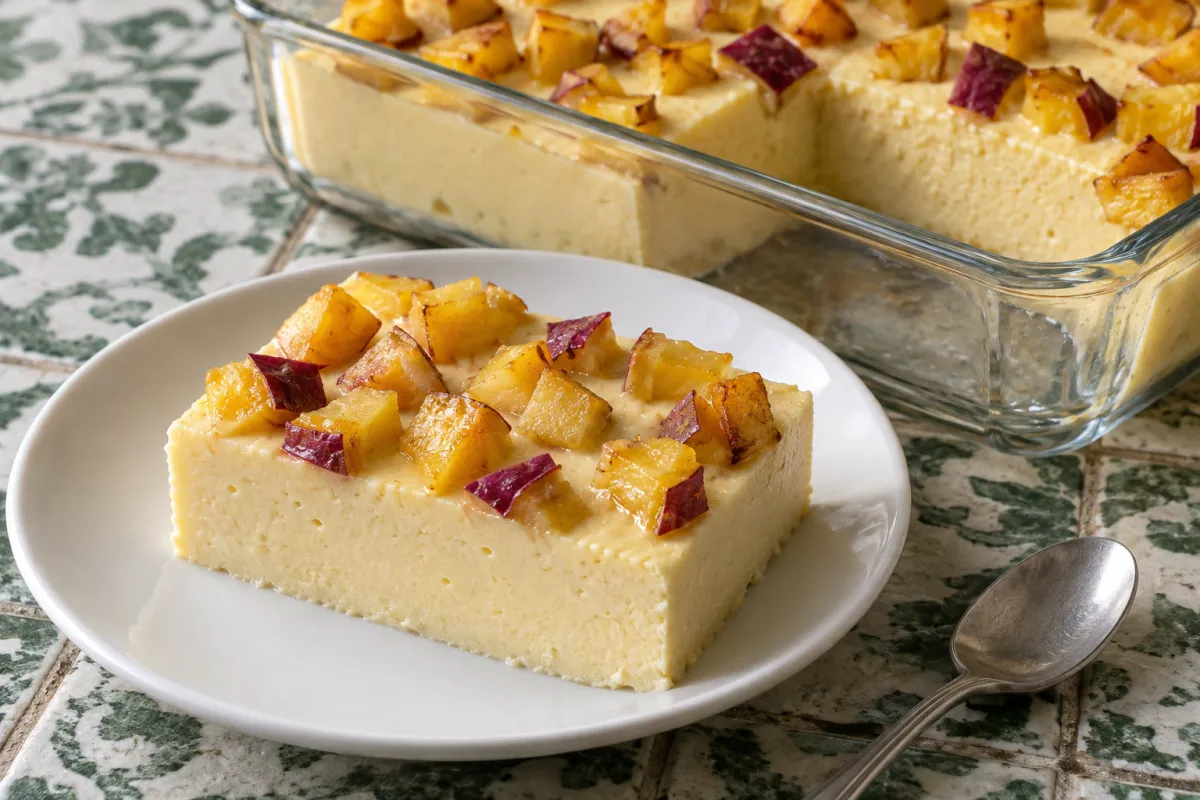
From a winter street snack to a chilled cake
In Japan, roasted sweet potato is the classic autumn and winter street snack, once sold from small trucks carrying a stone roasting pot and usually eaten just as it is. Japanese home bakers also fold it into no-bake cheesecakes, because the potato's faint sweetness suits the refreshing sourness of fresh cheese and yogurt. One two-colour Halloween version adds a purple sweet-potato layer over a black cocoa biscuit base. An autumn version folds in sweetly cooked apple and finishes with caramel apple on top.
Why slow roasting makes a sweeter potato
Sweet potatoes turn their starch into sugar fastest at around 70°C, so long, gentle heat makes a sweeter potato than quick cooking. Wrapping the potatoes in foil gives very moist, tender flesh with soft skin, while unwrapped potatoes turn out fluffier and drier. If you are roasting your own, wrap them in foil and bake at 180°C for about an hour, then check with a skewer, because thick and thin potatoes cook at different speeds. A masher can replace the food processor if you like a filling with more texture.
Kefir cheese and gelatin, the quiet partners
Kefir cheese is simply kefir with the whey drained away, and straining time decides its texture. An overnight strain gives a creamy cheese, a day or two gives a firmer one, and pressing it under a weight can make it crumbly. Gelatin needs cold and time to bind the filling, and it loses its setting power in boiling liquid. Agar is not a simple swap, because it starts setting at room temperature, mixes poorly with cold ingredients and sets firmer.



Comments
No comments yet.
Comments could not be loaded.
Join the discussion
or