


 By Nik, founder of 東歐嚴選|kefir.link and former chef · Updated 2 November 2026
In Russia, chocolate kefir cake is everyday home baking, the sort of cake set out with a pot of tea. This version brightens the cocoa batter with orange juice and finishes with a pourable chocolate glaze. Plain milk kefir is thicker and more acidic than milk, and its gentle sourness suits chocolate.
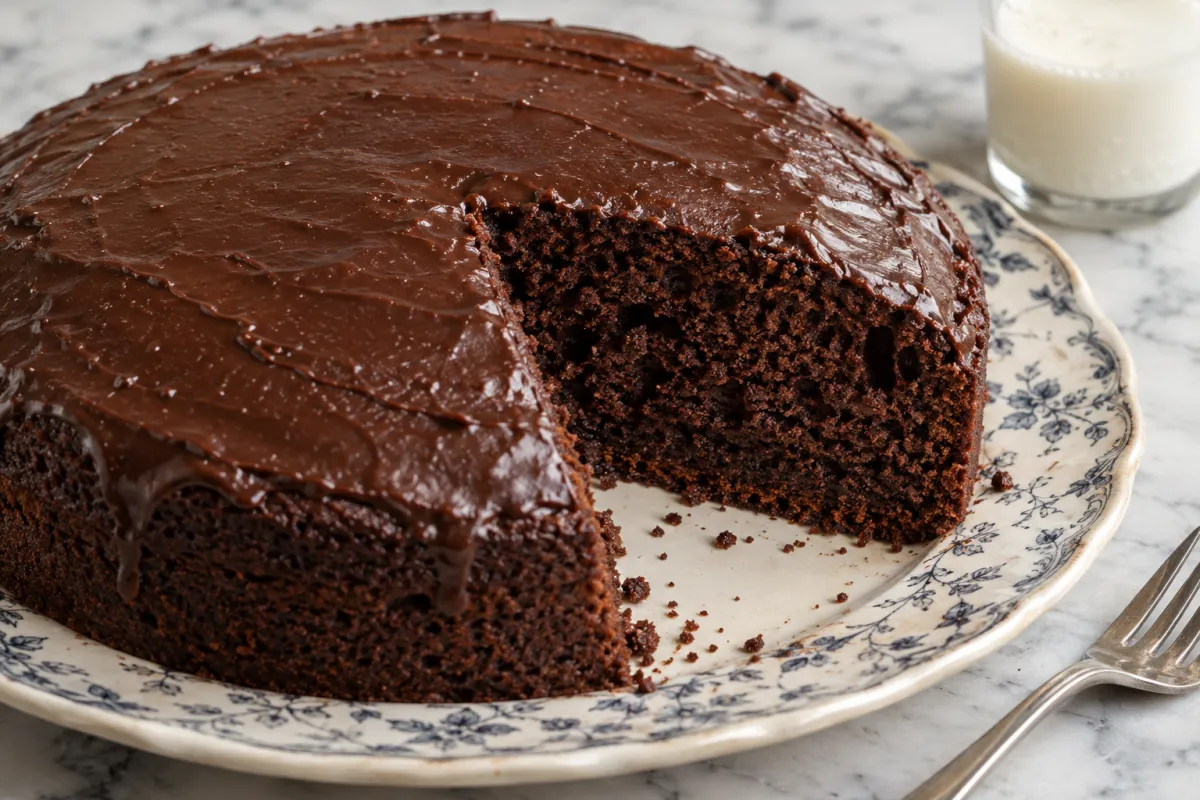
A tea-table cake with an orange twist
Russian home bakers glaze chocolate kefir cake with chocolate, or slice it into layers and fill it with cream. Orange does not appear in the Russian tea cakes, but it turns up in English and Greek versions. In a cake batter, kefir works much like buttermilk. The oil in the batter helps keep the crumb soft after the cake has cooled.
Why baking powder, not soda
Baking soda needs an acidic ingredient such as kefir, yogurt or lemon juice before it releases carbon dioxide. Baking powder already holds its own acid and base, so it works without help from the kefir. Many soda-and-kefir cakes must go into the oven as soon as they are mixed, because the reaction starts straight away. This cake is raised with baking powder alone. Mix only until the batter is smooth and no flour shows.
Cocoa, chocolate and swaps
When a recipe simply asks for cocoa, either natural or Dutch-process cocoa generally works. Natural cocoa is acidic, while Dutch-process cocoa has had its acid neutralised, so the two give a different colour and flavour. In Taiwan, buy unsweetened baking cocoa rather than sweetened drinking-cocoa mixes, and check the label for the words alkalised or Dutch-processed; the colour alone will not tell you.
Chocolate chips for the glaze are easiest to find at baking suppliers. For a different finish, pour melted dark chocolate over the cooled cake instead of the glaze.



Comments
No comments yet.
Comments could not be loaded.
Join the discussion
or