


 By Nik, founder of 東歐嚴選|kefir.link and former chef · Updated 2 November 2026
Baursaki are small pieces of fried dough at the heart of Kazakh hospitality, and no festive meal there is complete without them. They come out of the oil golden and puffed, with a soft, airy centre, and they suit a cup of milk tea as well as a savoury meal. In this home version, warm milk kefir supplies the acid that makes the baking soda foam, adding air to a yeasted dough.
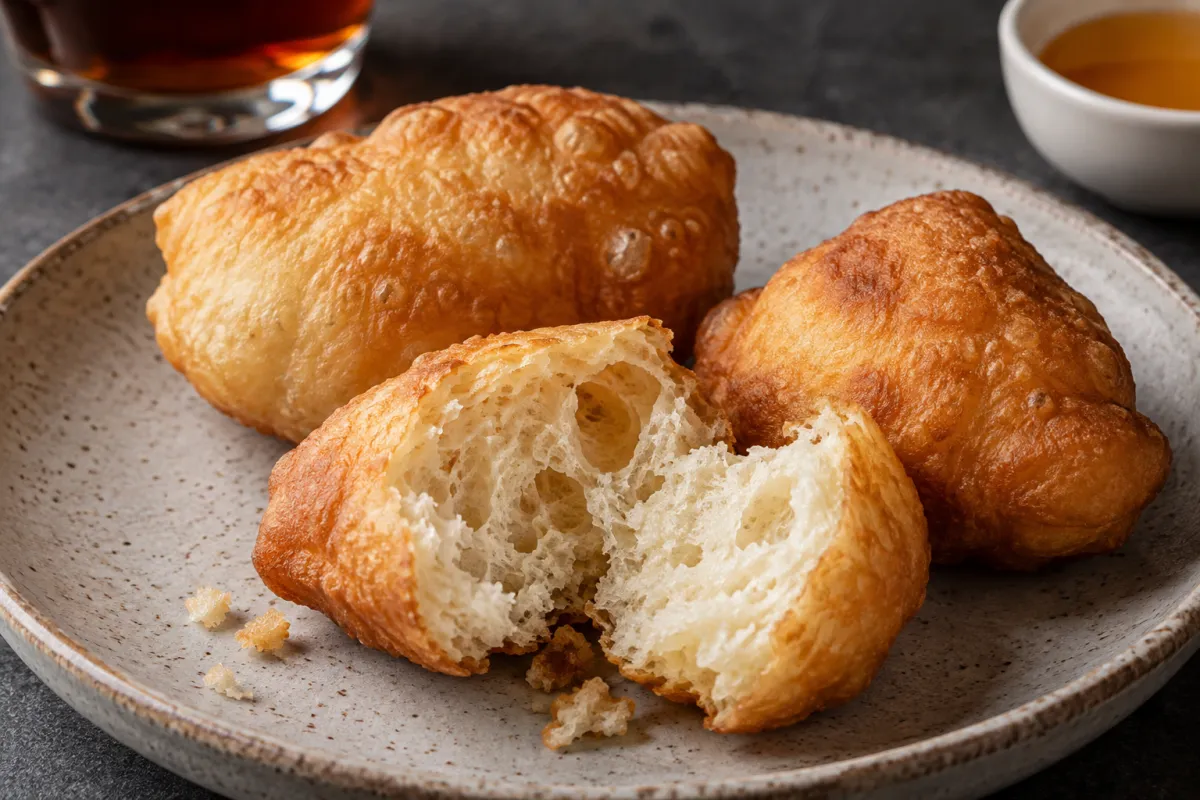
A bread of kinship, made for the steppe
No one knows exactly when baursaki first appeared, but historians link them to steppe nomads who needed food that was quick, filling and easy to carry. Nomads could not carry a large oven, so they cooked in a kazan, a single large pot. The name is tied to Kazakh words for kinship, brotherhood and unity.
Among Kazakh herders in Xinjiang, the host spreads a cloth in the middle of the home and pours the breads onto it as milk tea is served. Milk tea and baursaki are so often served together that they are spoken of as a pair.
Soft dough and steady oil
The dough should be soft, but it should not stick to your hands. A stiff dough will not rise and fries up hard. Warm the kefir only to about 35–38°C, like fresh milk, because yeast dies above 55°C. Let the dough rise just once, since dough that rises again gives pale, oil-soaked pieces.
Oil at 170–180°C lets the centre cook through while the crust colours. Hotter oil browns the outside and leaves the inside raw, cooler oil makes the breads greasy, and too many pieces at once pull the temperature down.
Round for guests, sweet or savoury
Shapes vary by family and region: round, triangular, square, oval or diamond. In many homes, square pieces are for the family and round ones are made for guests. Serve them with main dishes and salads to soak up the juices, or with tea, plain, dusted with powdered sugar or dipped in honey or jam. Because tea comes after the meal, they often double as a simple dessert. Some cooks bake them at 190°C for 15–20 minutes for a paler, softer crust.




Comments
No comments yet.
Comments could not be loaded.
Join the discussion
or