


 By Nik, founder of 東歐嚴選|kefir.link and former chef · Updated 2 November 2026
Syrniki are small fried pancakes made mostly of fresh curd cheese, golden outside and soft and creamy within, and in Russia and Ukraine they are a favourite breakfast. Ukrainians call them syrnyky. Sour milk kefir loosens the dry curd into a thick batter and adds a gentle tang, while a spoonful of sour cream or jam on top supplies the sweetness.
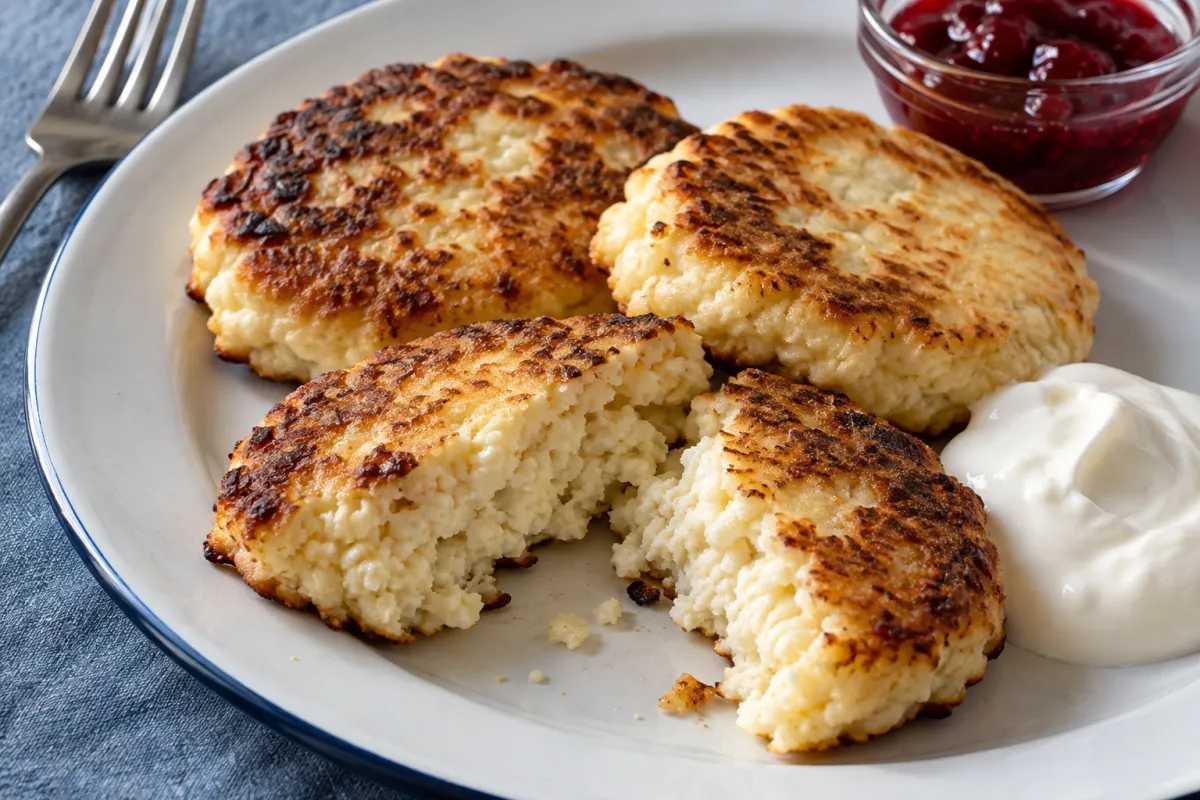
Cheese pancakes made from curd
The name comes from an old word for cheese, which in medieval Rus meant the fresh curd now called tvorog. Syrniki are first mentioned in the sixteenth century, when the dish looked more like a curd-filled pancake. The fried form we know today appeared in the second half of the nineteenth century. Several countries claim the dish, and no one has recorded exactly where it began. Families still eat them warm or cold, with sour cream, honey, jam, condensed milk, fresh fruit or berry sauce.
Dry curd is the secret to tender centres
Tvorog is much drier and crumblier than cottage cheese or ricotta, and that dryness lets the curd take a splash of kefir and still hold together without much flour. Wet cheese needs extra flour, which makes the pancakes doughy and less tender. If you use ricotta, drain it overnight in a cloth-lined sieve in the refrigerator first. You can also make fresh curd at home by heating milk, adding white vinegar just before it boils and straining the curds through a cloth. The batter stays soft, so spoon it into the pan and shape it there rather than rolling it by hand.
Patient heat and a little restraint
Fry syrniki steadily rather than fast, so the inside cooks through. A pan that is too cool leaves them greasy, and a pan that is too hot browns them before the centre sets. Sugar caramelises and burns quickly, which is why the batter stays only lightly sweet. For variety, stir in a small amount of raisins, chopped dried apricots, poppy seeds or coconut flakes.



Comments
No comments yet.
Comments could not be loaded.
Join the discussion
or