


 By Nik, founder of 東歐嚴選|kefir.link and former chef · Updated 2 November 2026
Under a spoonful of smooth, seedless strawberry sauce sits a pale milk jelly scented with vanilla and carrying the gentle sourness of kefir. It is a light, chilled dessert from Russian home cooking, eaten as an afternoon snack with tea or on a hot day. Gelatin sets it in the fridge, so the oven stays off.
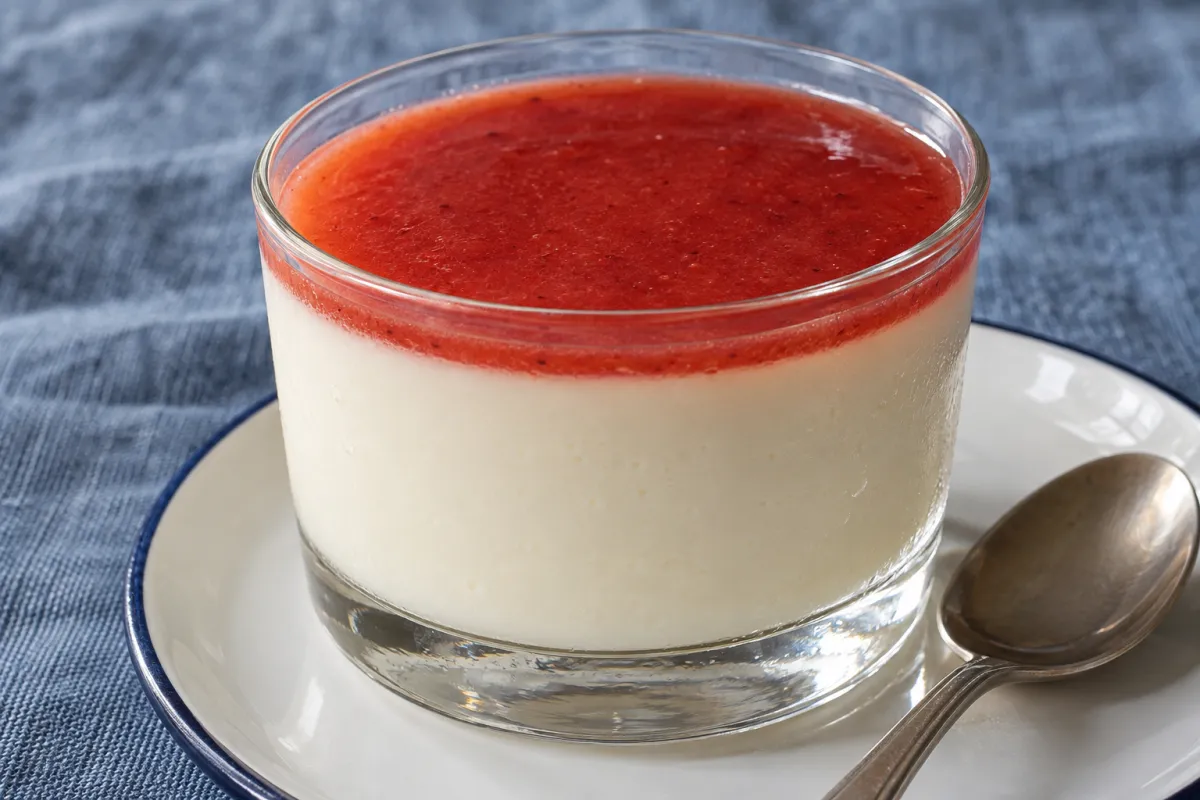
A light dessert after a heavy meal
In Russia, kefir jelly is an afternoon snack: kefir, sugar and gelatin set in small pots, sometimes with berries, nuts or citrus zest. Berry versions are also served as a light finish after a filling meal. In Estonia, a kefir-and-cherry jelly follows the heavy Christmas dinner, and because both kefir and cherries are slightly sour, the sugar goes in to taste. A more festive variation sets white and pink layers in a mould, then turns the jelly out and slices it.
How gelatin turns kefir into jelly
As dissolved gelatin cools, its proteins form a network that traps water, and the liquid becomes a gel. Sugar, milk and cream help that network form, while strong acidity weakens it. Gelatin powder added straight to the dairy clumps and turns grainy, which is why it soaks in cold water first. The warm gelatin then goes into the kefir in a thin stream with constant whisking, because if it meets the cold kefir all at once, it seizes into threads.
Strawberries on top, and fruits to avoid
Frozen strawberries can replace fresh ones in the sauce: boil them for 1 minute and let them cool before blending, unless the pack says they are ready to eat. Strawberries, blueberries, raspberries, apples and oranges are all safe to pair with gelatin. Raw pineapple, kiwifruit and papaya are not, because they contain enzymes that break down gelatin and keep the jelly from setting; cook them for about 5 minutes first or use canned fruit. Plain yogurt can replace the sour cream.




Comments
No comments yet.
Comments could not be loaded.
Join the discussion
or