


 By Nik, founder of 東歐嚴選|kefir.link and former chef · Updated 2 November 2026
Khychiny are thin, round flatbreads from the Karachay and Balkar cooking of the Caucasus, wrapped around a filling and cooked in a pan rather than baked. The classic filling is mashed potato with cheese, and each bread leaves the skillet spotted with brown before it is brushed with butter and stacked. Kefir makes the dough soft and easy to roll, and with a little baking soda it gives the bread a light, tender bite.
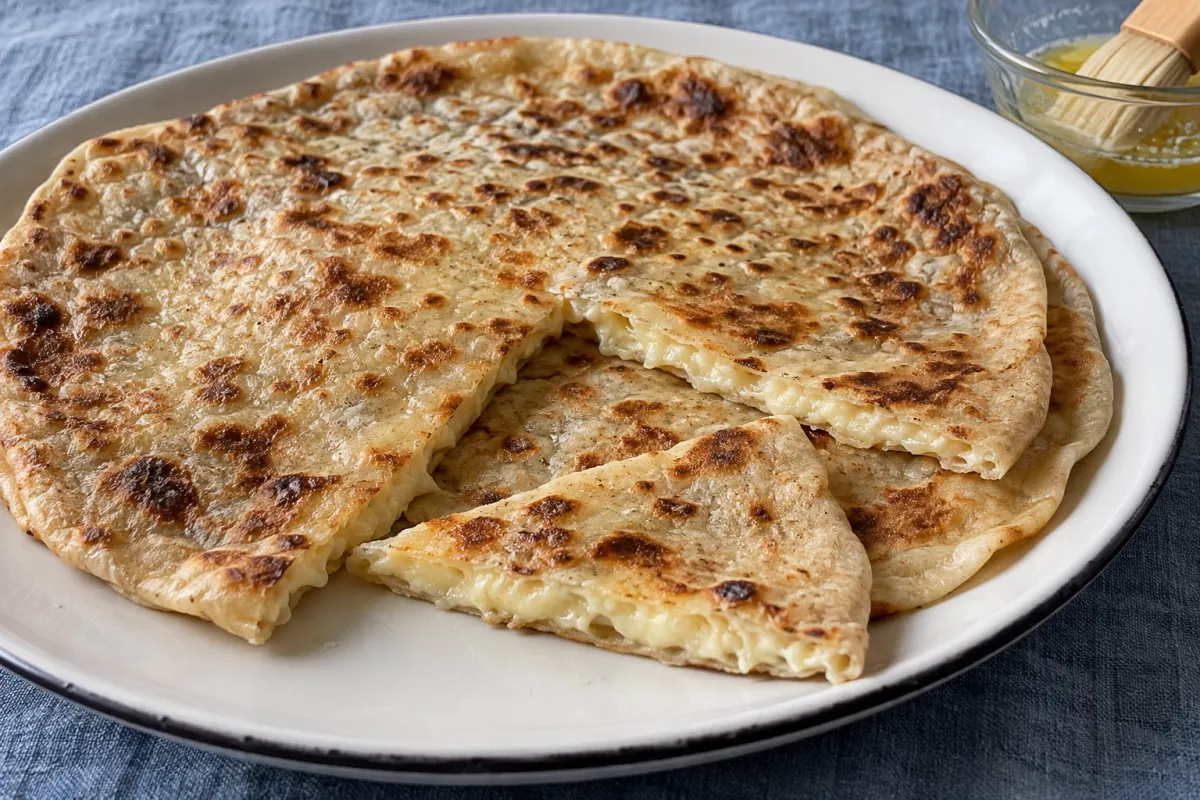
A round golden bread that says welcome
Khychiny are festive food and hospitality food. The round golden bread is linked with the sun, generosity and abundance, and an invitation to come for khychiny is a sign of a generous host. The breads reach the table hot and heavily buttered, stacked and cut through into quarters, and everyone eats them by hand. A glass of ayran, the local fermented milk drink, is the usual partner. Potato with cheese is the classic filling, but there are about 40 others, with meat, cheese, nettles or beet leaves inside.
Two mountain styles and one thin dough
Balkar khychiny are made from a plain dough of water, flour and salt, rolled very thin, cooked on a dry hot pan and buttered afterwards. Karachay khychiny use kefir, ayran or milk and come out puffier, and some are fried in a little oil or ghee. A kefir dough cooked on a dry pan, as here, is a common home version. Either way the bread stays thin, usually 3 to 5 mm. It may balloon in the pan, which is normal, and it settles again afterwards.
Why the dough tears and how to keep it whole
Wet cheese can tear the dough, so squeeze any excess liquid out of the cheese before you mix the filling. Mash the potato gently too, because overworking potatoes ruptures their cells and releases starch, which makes the filling gluey and harder to wrap. If the filling still breaks through as you roll, leave the bread a little thicker, or work in a little flour if the dough feels too soft; too much flour makes it tough. Adyghe cheese is traditional, but mozzarella works well in its place.



Comments
No comments yet.
Comments could not be loaded.
Join the discussion
or